Solar procurement activity in Hawaii ran at roughly 2.6 solicitations per month over the past year. In the last 30 days, it hit 8, a 3.1x spike that reflects something more structural than a procurement calendar quirk: three independent deadlines converging on the same summer window, each capable of reshaping the state's energy future on its own, all arriving at once.
The largest single force is Hawaiian Electric's Integrated Grid Planning RFP, filed July 17, 2026, under PUC Docket 2024-0258. The solicitation seeks 1,650 GWh of solar and renewable energy alongside 465 MW of grid-forming storage across Oahu, Hawaii Island, and Maui, with projects targeted for service between 2031 and 2034. Hawaiian Electric described it as one of its largest-ever energy solicitations, and it lands on top of an already-crowded pipeline. The prior Stage 3 RFP awarded 15 projects totaling 1,170 MW and 2,144 MWh of storage; two of those, Puuloa Solar and Kuihelani Solar Phase 2, received PUC approval as recently as June 2026 and are still in power purchase agreement negotiations.
The second clock is federal. New federal law requires that solar projects break ground by July 5, 2026 to qualify for investment tax credits. Several Kauai and Hawaii Island solar farms were projected to miss that cutoff. For developers who had already arranged financing around the credit, the deadline did not create urgency, it ended options. The projects that could move did move; the ones that couldn't are now recalculating.
Source: NationGraph.
The third clock is the one Governor Josh Green had to stop himself. The Hawaii legislature passed Act 24, capping the state solar tax credit at $40 million per year and sunsetting it entirely by 2030. Hawaiian Electric VP Brendan Bailey said the cap threatened projects already baked into financing. The Hawaii Solar Energy Association pushed back hard, and on June 11, 2026, Governor Green signed Executive Order 26-02, preserving the state credit for 2026 and protecting more than $400 million in ongoing projects. The reprieve is real, but it is also temporary: the underlying tension between the legislature's fiscal concerns and the development pipeline's credit dependency has not been resolved.
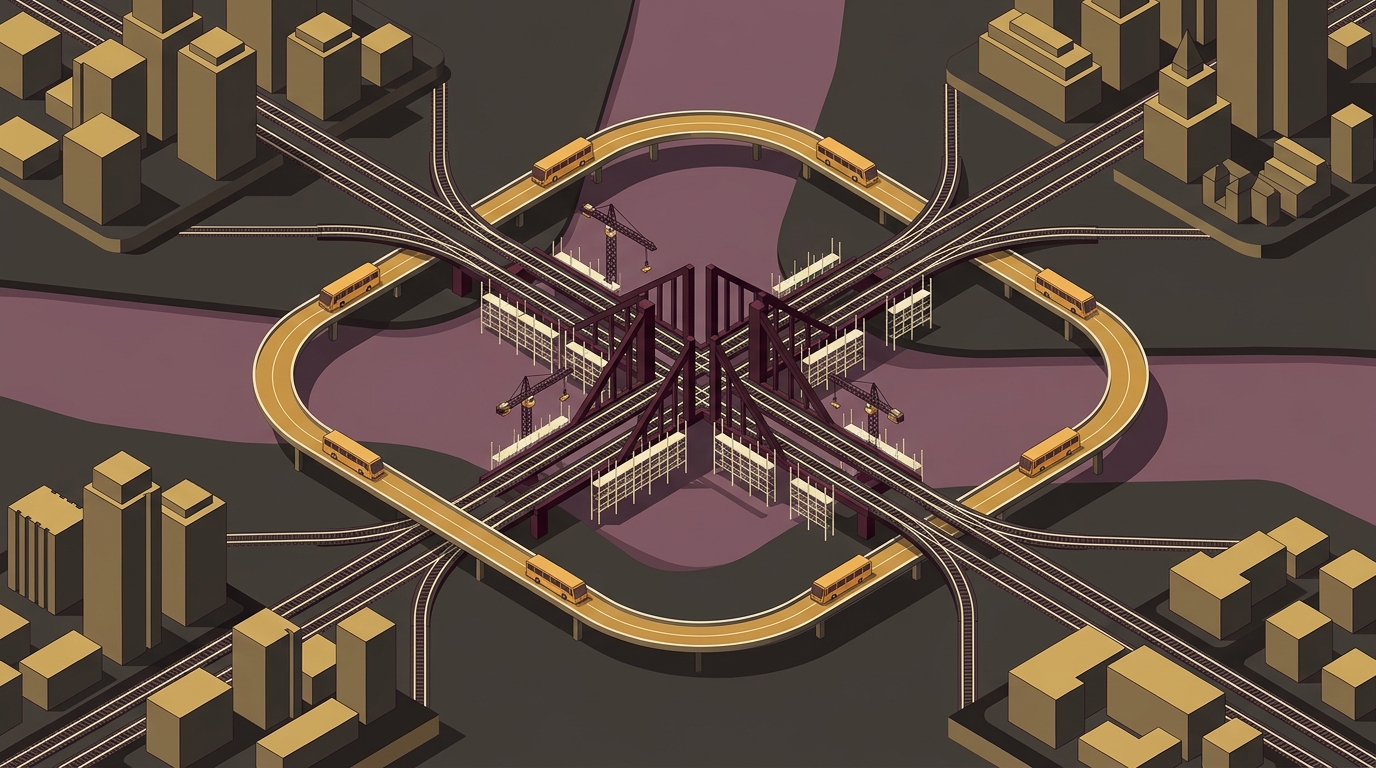
What holds all of this together operationally is the CREDIT Task Force, established by Executive Order 25-10 in November 2025, which coordinates cross-agency permitting and review for renewable projects caught between the competing deadlines. The task force is the bureaucratic equivalent of a traffic controller at a four-way intersection where every light is green at the same time.
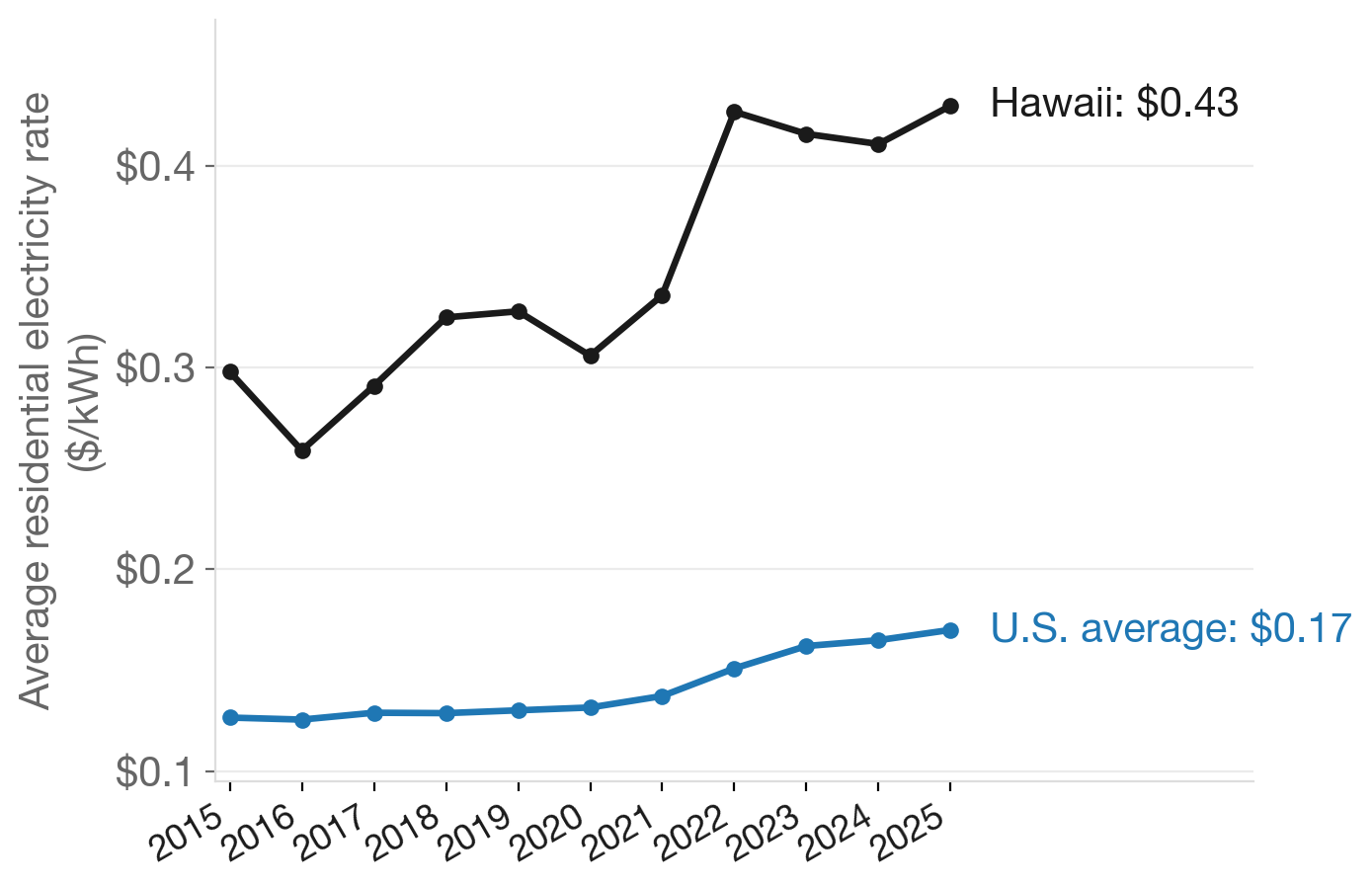
The economics underneath this urgency are unlike anywhere else in the country. Hawaii's residential electricity rate sits at roughly $0.43 per kilowatt-hour, the highest in the United States, which means the financial case for solar closes faster and more completely than in any mainland market. Ninety-six percent of residential rooftop installations in Hawaii include battery storage, a figure that reflects both grid fragility and customer sophistication. The state runs on island grids with no interconnection to external power, meaning imported oil still backs firm generation when the sun goes down. Every percentage point of renewable penetration displaces a fuel import.
Governor Green's Executive Order 25-01, signed in January 2025, moved Hawaii's 100% renewable portfolio standard target from 2045 to 2035, a decade of compression by executive action. The legislature codified a parallel mandate through SB 589, requiring the PUC to set a goal of 50,000 new distributed energy resources before 2031. A DOE Grid Infrastructure Deployment and Resilience grant of $16.25 million, awarded to Hawaii DBEDT for the period October 2024 through September 2029, has disbursed only about $400,000 so far, meaning the bulk of that federal capital is still entering the pipeline rather than working in it.
For anyone living in Hawaii, the near-term signal to watch is the IGP RFP response deadline and the PUC's subsequent review process. The projects selected will define what the grid looks like on all three major islands through the mid-2030s. For rooftop customers, the more immediate question is whether the legislature revisits Act 24 in the 2027 session, and whether the state credit survives in a form that still pencils out for residential projects after 2026's protected window closes.
The compressed timeline was partly chosen and partly forced. The 2035 RPS target requires a pace of buildout that would have seemed implausible five years ago. The federal credit cliff and the legislative near-miss made an already fast schedule faster. Hawaiian Electric's IGP RFP is the mechanism that translates that urgency into signed contracts. What the next 90 days of responses look like will tell the industry whether Hawaii's solar machine can actually run at the speed the calendar now demands.