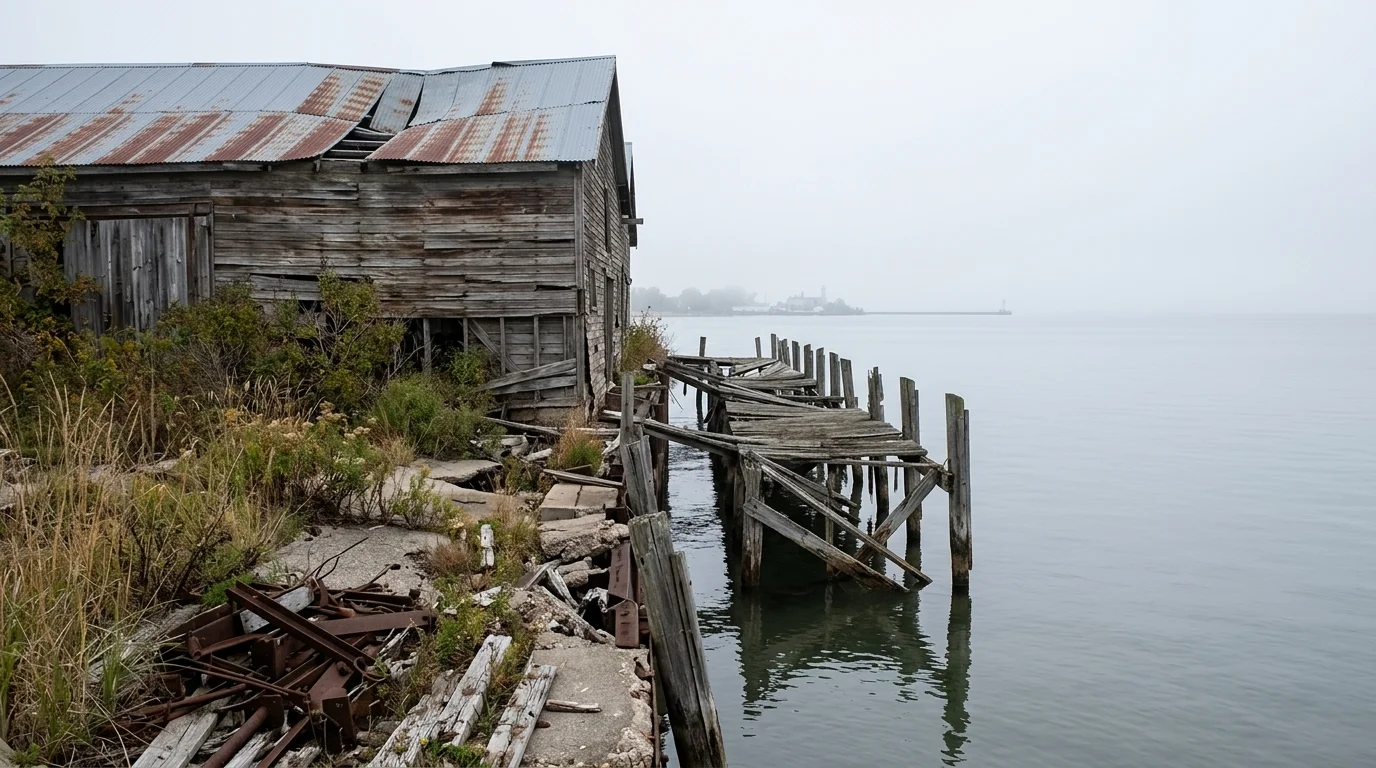
An abandoned fish processing building and crumbling marina at Beaver's Landing, Michigan, are finally getting cleaned up, as a community organization moves to reclaim a waterfront site that has sat as a derelict remnant of the state's collapsed commercial fishing industry.
The group has posted a solicitation through the Michigan Inter-governmental Trade Network seeking contractors to handle what is likely a combination of structural demolition, hazardous material abatement, and shoreline debris removal. The specific sponsor and full funding source have not been publicly identified in the posting, though the use of Michigan's intergovernmental procurement platform indicates a public or quasi-public entity is leading the effort.
The site is a product of a familiar story along Michigan's more than 3,000 miles of Great Lakes coastline. The state's commercial fishing industry peaked in the mid-20th century before collapsing amid pressure from invasive species, overfishing, and the rise of sport fishing. Hundreds of small shoreline processing operations closed between the 1970s and 2000s, leaving behind contaminated buildings, leaking fuel tanks, rotting docks, and debris that has never been cleared. State and federal programs, including the EPA's Great Lakes Restoration Initiative, which has directed roughly $500 million per year toward the region since 2010, have made cleaning up these sites a priority. But in rural Michigan, local governments often lack the staff to manage complex environmental remediations, leaving community groups and nonprofits to take the lead.
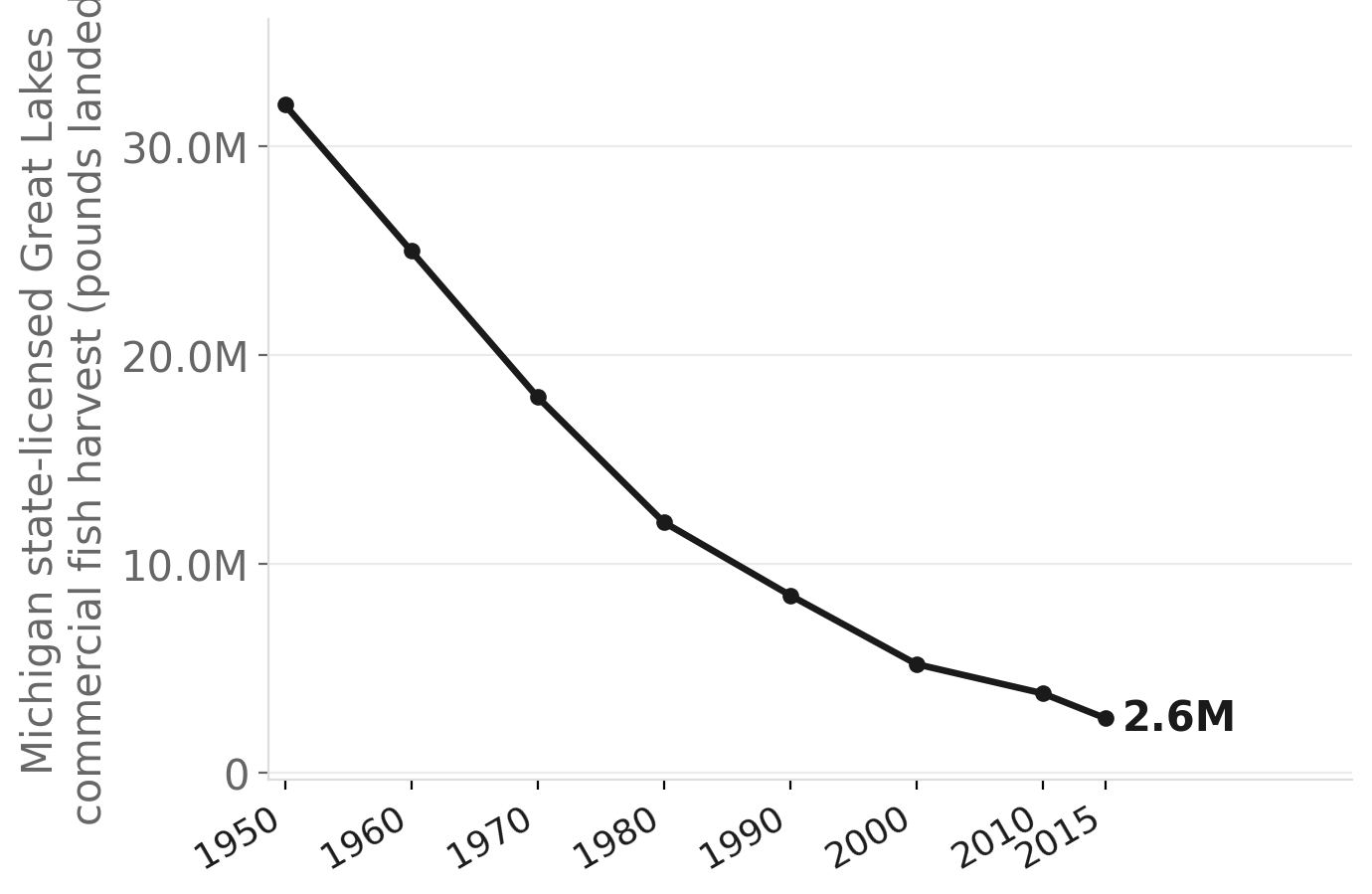
Source: NationGraph.
If the cleanup proceeds as community-led waterfront projects typically do in Michigan, it would likely set the stage for redevelopment, whether as a public boat launch, a natural shoreline restoration, or a recreational access point.
The identity of the sponsoring organization and the project's timeline are not specified in the public record, meaning the full scope of what Beaver's Landing could become remains an open question.