New York has pulled in $11.5 million in federal grants tagged to solar in the past 90 days, more than double the $5.3 million from the same window a year ago and more than any peer state, including California. The number looks like a clean-energy surge. It isn't, exactly. Nearly all of it runs through one bus garage in Vestal.
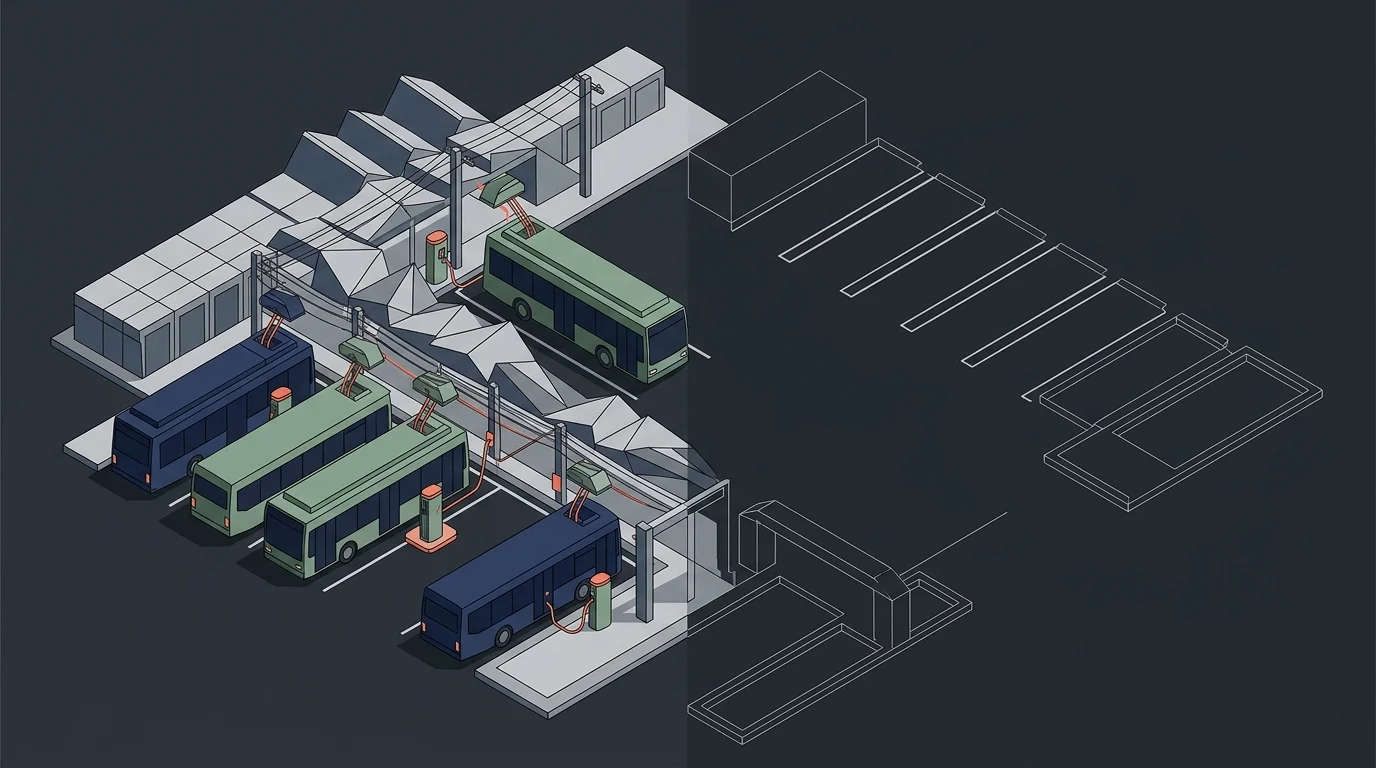
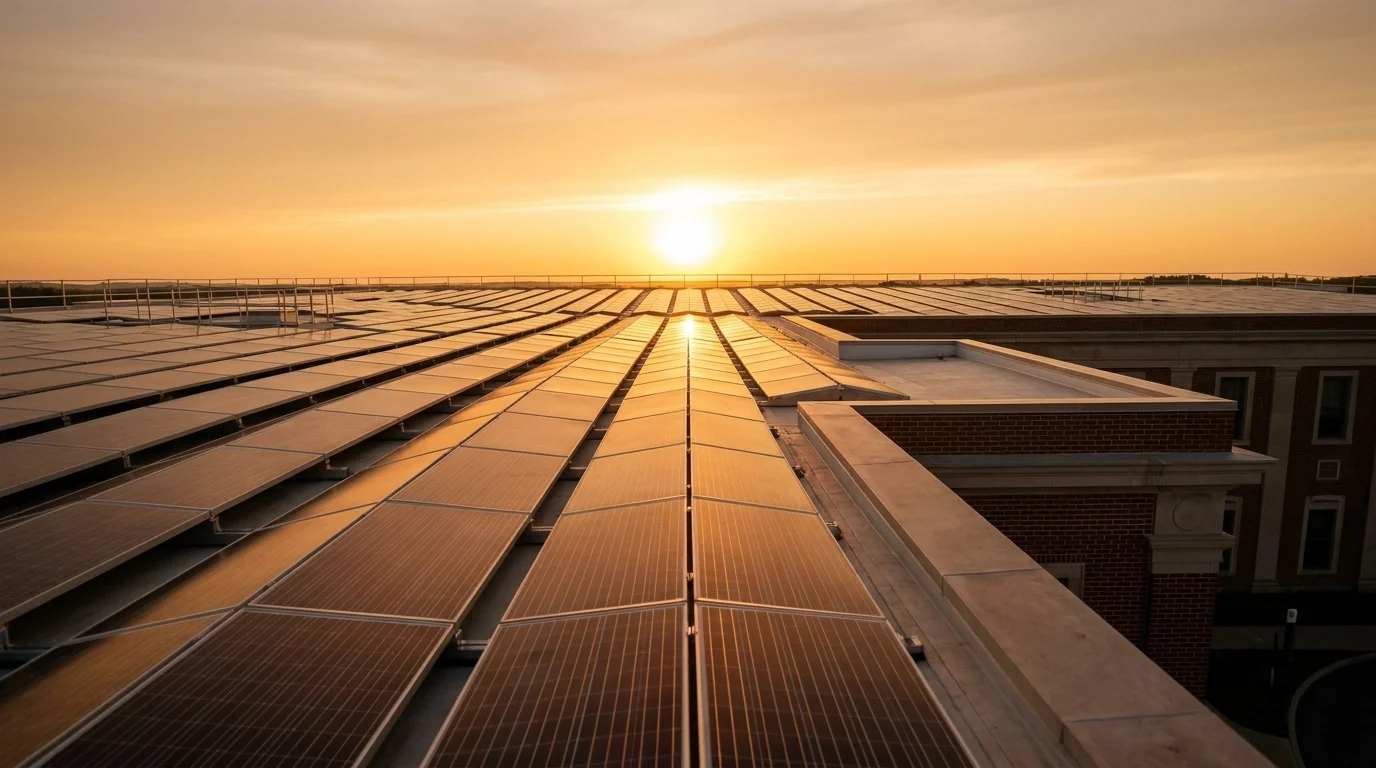
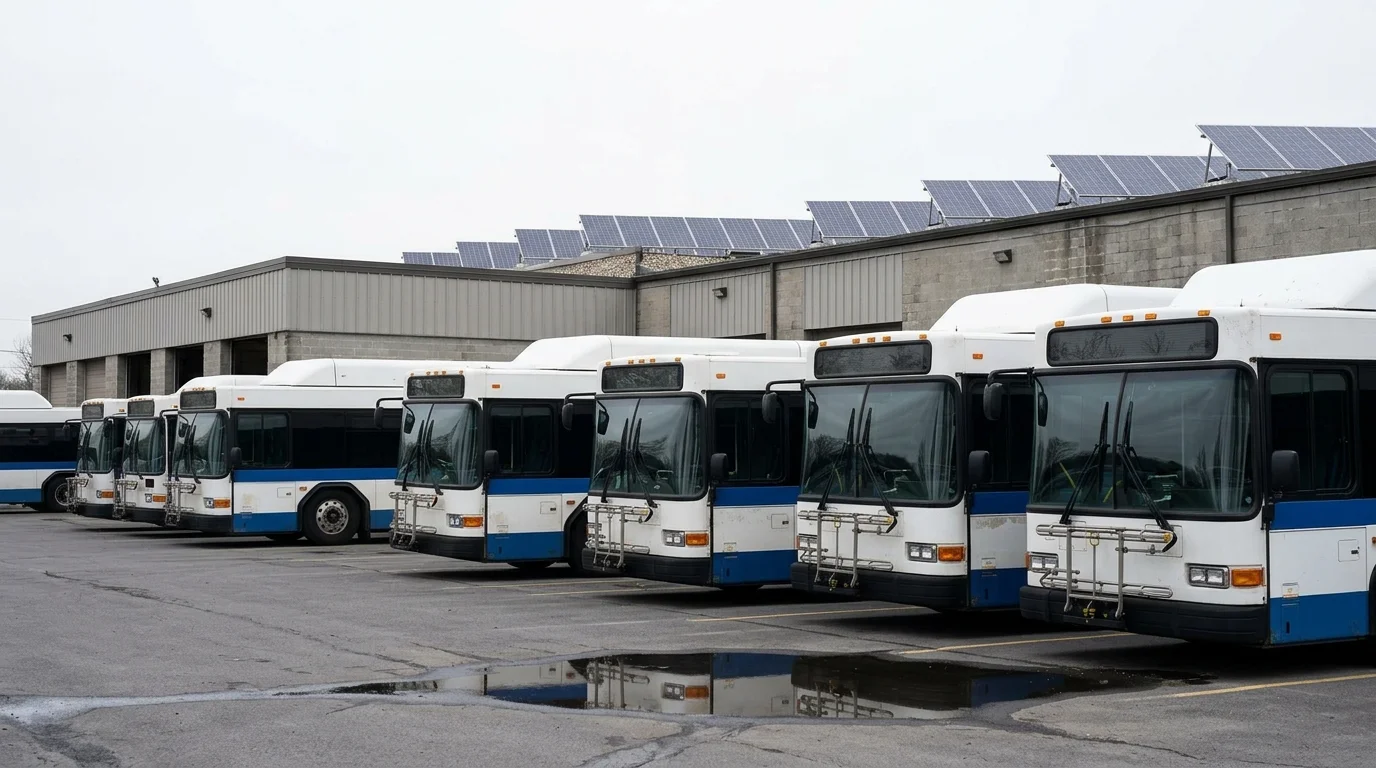
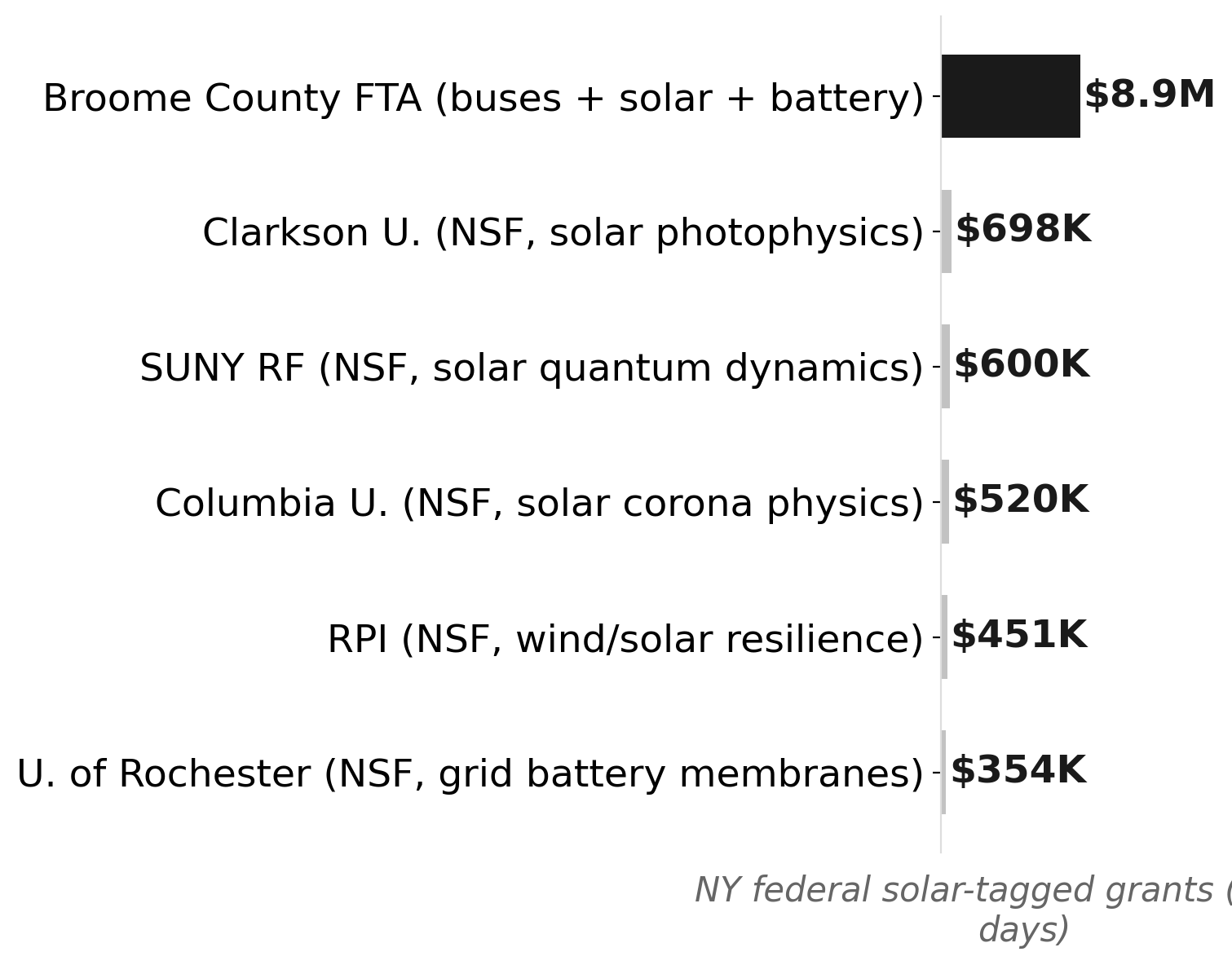
On September 10, Broome County secured an $8.88 million Federal Transit Administration Low or No Emission Vehicle grant to purchase seven electric buses and upgrade the BC Transit facility on the Vestal campus. The award explicitly covers solar panels and a battery electric storage system at the garage, not as an add-on, but as core infrastructure supporting the bus fleet. That single award accounts for 77 percent of New York's trailing-90-day solar grant total. As Senators Schumer and Gillibrand noted in announcing the funding, it "will also be used to install solar panels linked to a battery electric storage system at BC Transit's bus garage facility."
The remaining $2.6 million is dispersed across five university research grants: NSF awards to Clarkson University ($698K for solar photophysics), the SUNY Research Foundation ($600K for quantum dynamics software for solar energy modeling), Columbia University ($520K for solar corona physics), RPI ($451K for building wind resilience), and the University of Rochester ($354K for grid-scale battery membranes relevant to solar storage). These are federal R&D grants from NSF and DOE, entirely separate programs from the FTA transit authorization that funded Broome County. The mechanism and purpose are distinct; the solar keyword is the only thing linking them in the aggregate.
Source: NationGraph.
The reason transit agencies are emerging as a solar deployment channel is worth understanding. The FTA's Low or No Emission program operates under Section 5339(c) of the Bipartisan Infrastructure Law, which authorizes capital funding for zero-emission bus procurements and permits agencies to bundle supporting infrastructure, including recharging equipment, solar panels, and battery storage, into a single competitive grant application. Transit agencies already own large flat-roofed facilities and high electricity loads, making the economics of on-site solar more straightforward than on residential rooftops. The Broome County award is a clean example of that logic.
The other force shaping where solar money flows now is the One Big Beautiful Bill Act, signed July 4, 2025. The law eliminated the 30 percent residential solar investment tax credit under Section 25D for systems installed after December 31, 2025, and set a July 4, 2026 construction-start deadline for commercial credits under Section 48E. That deadline has now passed. As analysts at Sidley have noted, the new law substantially narrows the viable private-sector financing path for solar projects. Developers who did not break ground by July 4 cannot access the commercial credit unless a project is placed in service by December 31, 2027, a window that forecloses most new starts. For residential customers, the federal incentive is simply gone.
New York is better insulated from that contraction than most states. NYSERDA's NY-Sun program continues distributing state-funded per-watt cash incentives through a block structure independent of the federal credit. The state also offers a 25 percent income tax credit capped at $5,000, plus sales and property tax exemptions on solar equipment. New York leads the country in community solar capacity, with more than 800 projects deployed and 14,000 workers in the solar sector statewide. These state-level tools do not replace the federal ITC dollar for dollar, but they keep a private-sector market functioning.
What the Broome County case suggests is that the next layer of solar deployment in New York may not come through rooftop installations or utility-scale farms at all. It may come through public agencies, transit authorities, school districts, and municipalities, using federal capital grants that allow solar to ride along inside larger infrastructure procurements. The FTA has posted a FY2026 competitive notice for roughly $610 million in Bus Program and Low-No Emission grants, with applications due September 21, 2026. If other New York transit agencies follow Broome County's model and bundle solar and storage into their bus procurements, the state's federal solar grant totals could climb further, while still carrying the FTA's transit-capital label rather than any clean-energy program designation.
For New Yorkers watching solar policy, the signal to track is not whether the state's solar grant headline number keeps rising. It is whether the agencies winning those grants are energy offices or bus garages.