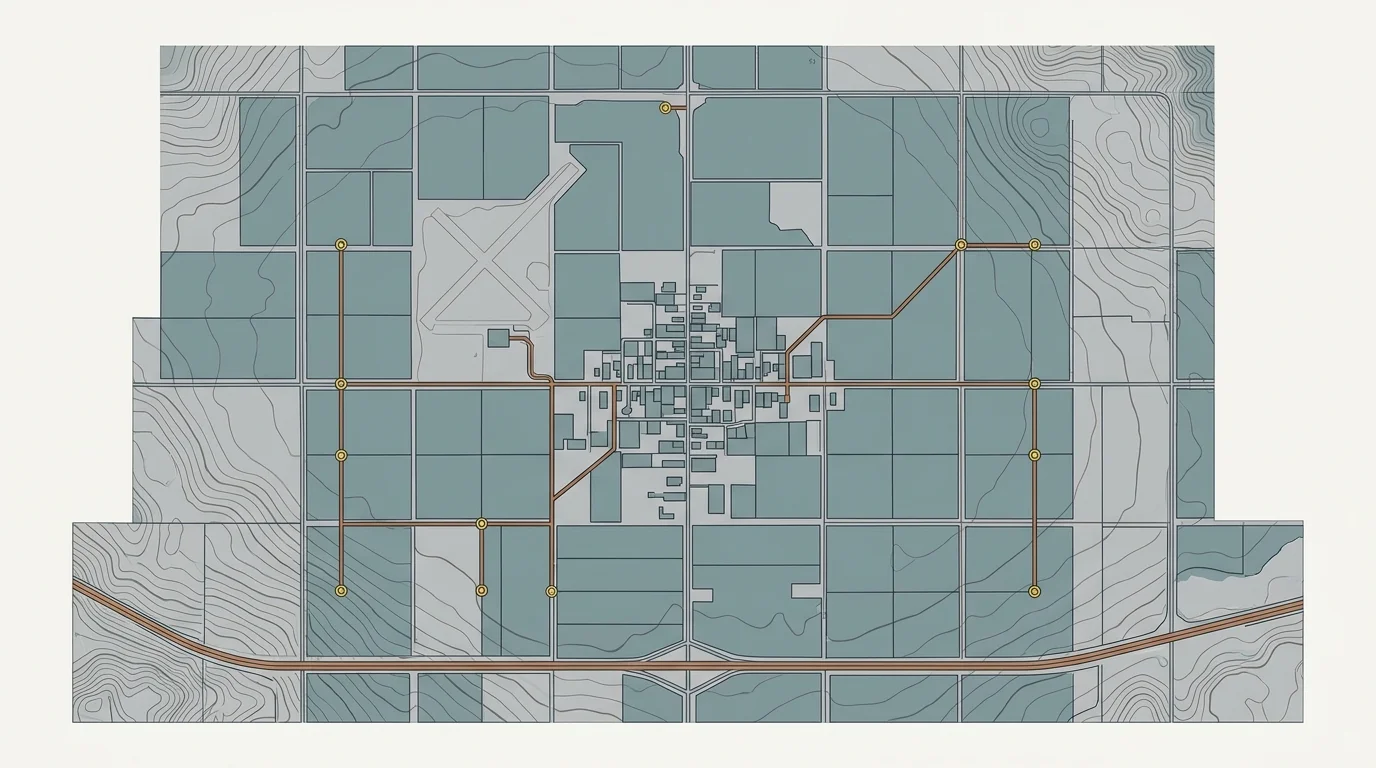
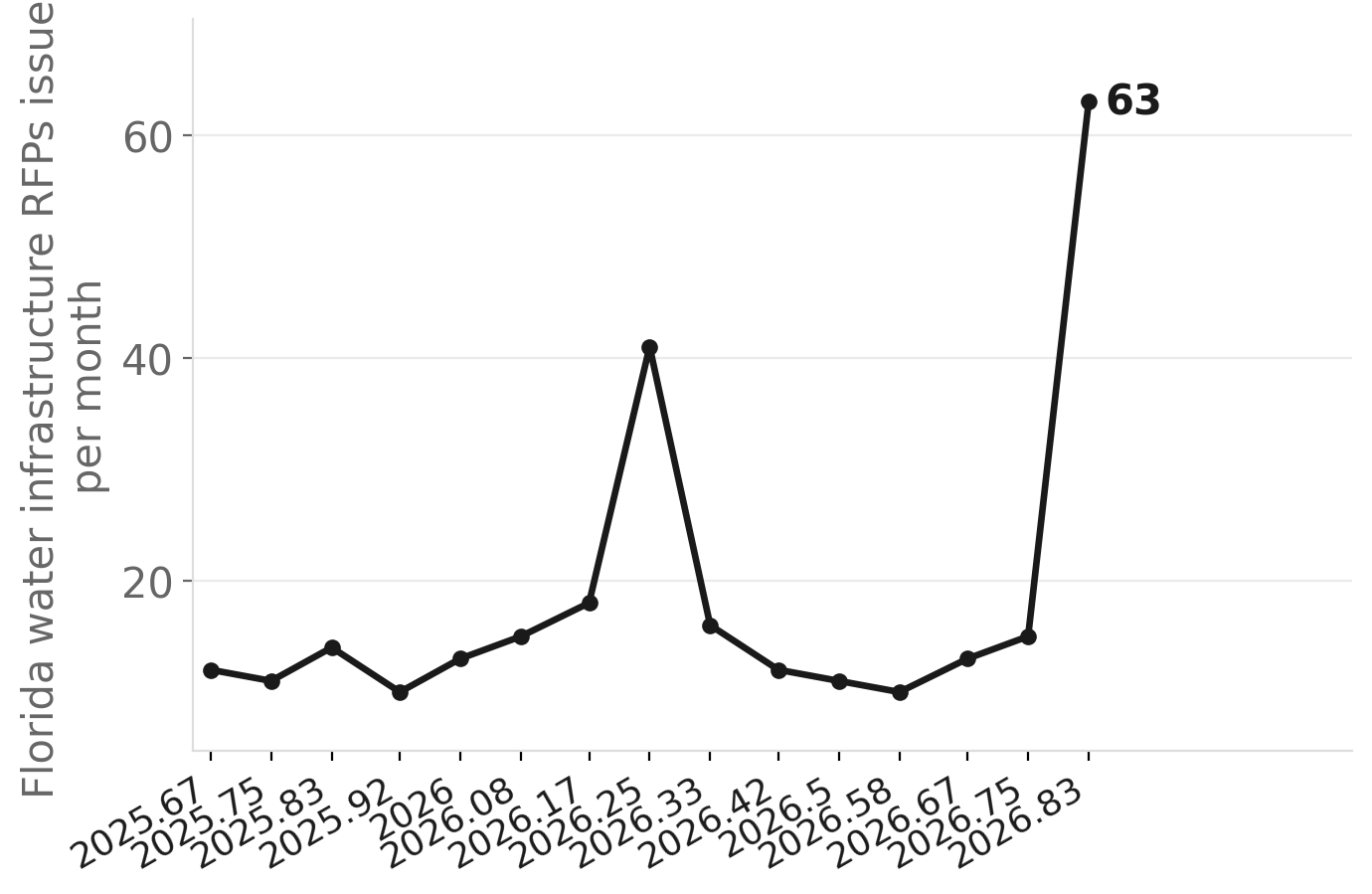
Florida utilities issued 63 water infrastructure RFPs in the trailing 30 days, 4.2 times the 12-month monthly average of roughly 14.8, the highest single-month count in at least 15 months and nearly double the previous peak of 41 set in April 2026. The surge is not random: it is the procurement signature of a $1.687 billion federal hurricane-recovery award colliding with a hard expiration clock.
On March 25, 2026, the EPA awarded Florida $1,687,013,000 in supplemental hurricane-recovery funds, $844.7 million for the Drinking Water State Revolving Fund and $842.3 million (including $36 million targeted at septic-to-sewer resilience) for the Clean Water State Revolving Fund, citing damage from Hurricanes Helene and Milton. EPA Assistant Administrator Jess Kramer signed the allotment memo on April 14. Florida DEP is disbursing that money as low-interest loans with principal forgiveness, but municipalities only draw down the capital once they can demonstrate construction readiness. That means procurement must come first.
The urgency is compounded by a second, distinct federal mechanism. The Infrastructure Investment and Jobs Act, which ran from FY2022 through FY2026, had quadrupled annual SRF capitalization nationally from roughly $2.7 billion to $11.4 billion per year. That authorization expired September 30, 2026, and Congress has not introduced reauthorization legislation. The March 2026 hurricane-recovery supplemental is a separate appropriation routed through the same SRF vehicle, not a continuation of the IIJA base program, but both streams flow through Florida DEP's priority list process. A municipality that secured an SRF loan commitment, under either mechanism, must now move to active procurement or risk losing its slot to the next project on DEP's Intended Use Plan.
Source: NationGraph.
The RFP spike landed in October, the first full month after the IIJA lapse, consistent with a cohort of borrowers who had been awarded loans and were waiting on engineering and legal groundwork before going to market. The geographic footprint of that cohort spans the state. Palm Beach, Orange, St. Lucie, Pinellas, and Escambia counties are among the top issuing jurisdictions, crossing the Gulf Coast hurricane-impact corridor and Central and Atlantic Florida alike. More than 20 distinct agencies are active in this window: Fort Pierce Utilities Authority has issued four RFPs, Orlando Utilities Commission and St. Johns County three each, Pinellas and Escambia counties two each. Smaller jurisdictions, including the Alligator Point Water Resources Board and the Town of Branford, are in the same queue.
The breadth matters. This is not a story about a handful of large utilities accelerating projects they would have built anyway. Florida currently administers $1.654 billion in active EPA water infrastructure grants across 80 programs running through 2032, and the pipeline being pressurized right now represents a significant share of that total. When that many agencies move simultaneously, contractor and engineering capacity can become the binding constraint, which may explain why one outlying RFP, from North Miami Beach, is seeking state lobbying services for water and wastewater policy. Some jurisdictions are trying to lock in current-cycle funds while simultaneously positioning for whatever Congress does next on reauthorization.
Nationally, the water funding cliff has drawn sustained attention from municipal advocacy groups, with the National League of Cities and others pressing Congress to maintain SRF capitalization levels. Florida's procurement surge offers the clearest real-time evidence of what the expiration looks like from the local end: not a policy debate, but a calendar problem for utilities that have loan commitments and contractors to hire.
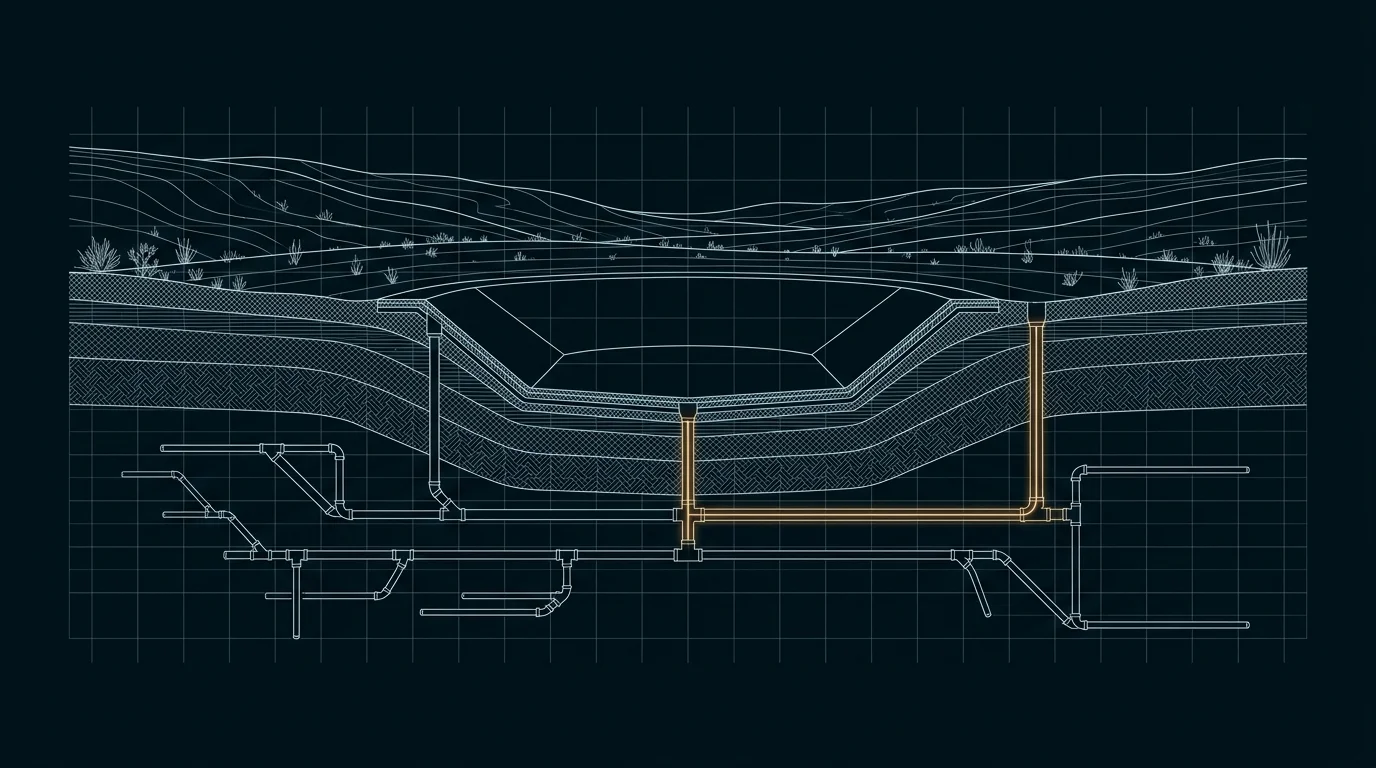
For residents, the projects in procurement right now, water treatment plant upgrades, main replacements, wastewater improvements, and septic-to-sewer conversions, represent capital work that affects service reliability and water quality for years. The SRF loan terms include principal forgiveness, which reduces what local ratepayers ultimately bear, but only for projects that reach construction. Projects that miss DEP's readiness threshold lose that forgiveness and may lose the loan slot entirely.
The next signal to watch is Florida DEP's priority list update. DEP convenes periodic meetings to rank projects for SRF loans; municipalities that have not yet issued RFPs will need to show procurement progress before those meetings to protect their position. Given the volume of simultaneous activity, the practical question over the next 60 to 90 days is whether Florida's engineering and construction market can absorb 63-plus procurements moving at once, or whether the bottleneck shifts from funding to labor.