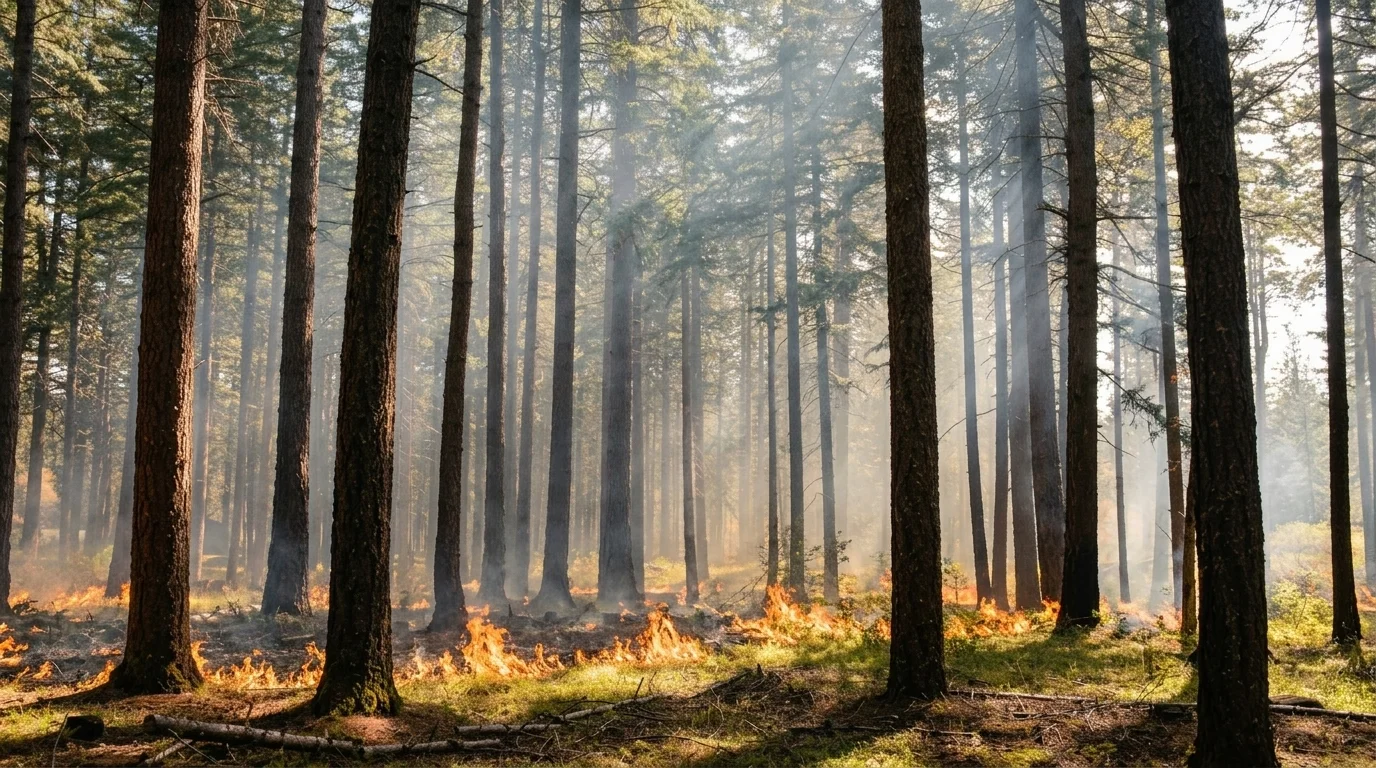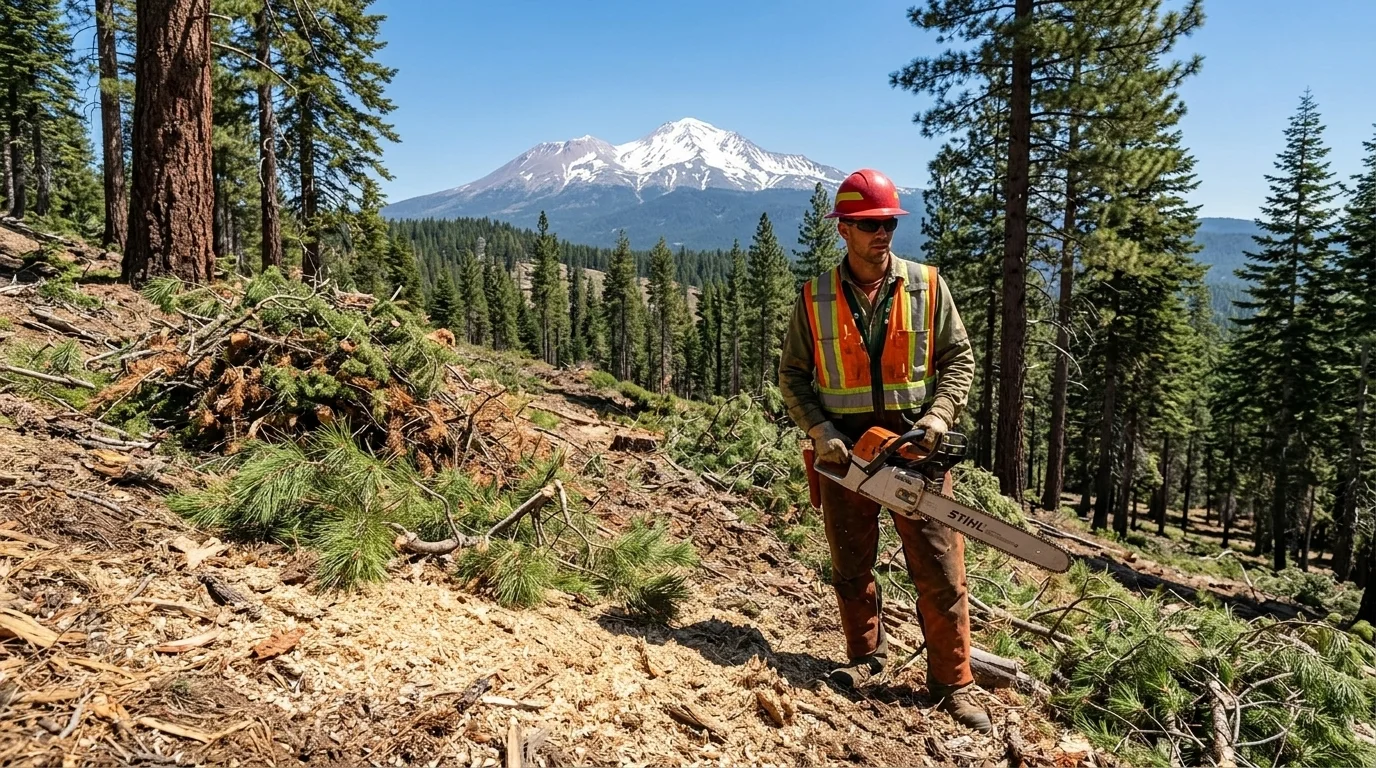
Crews with chainsaws and mechanical grinders are headed back to the western slopes of Mt. Shasta in Siskiyou County, California, as the region pushes deeper into an ambitious effort to make its overgrown forests survivable when the next wildfire ignites.
The Siskiyou Resource Conservation District is now hiring contractors for Phase II of the West Mt. Shasta Forest Resiliency project, with work expected in late summer 2026. The approach combines two techniques: handcutting, where workers remove small trees and brush by hand in areas too sensitive for heavy machinery, and mastication, where specialized equipment grinds dense understory vegetation into mulch on the forest floor. Together, they break up the ladder fuels that allow a ground fire to climb into the treetops and become the kind of fast-moving crown fire that crews cannot stop.
For communities like Weed and Mt. Shasta City, the stakes are personal. The 2014 Boles Fire destroyed more than 150 structures in Weed, just west of the mountain. Eight years later, the 2022 Mill Fire killed two people and wiped out more than 100 homes in the same town. Both fires moved through precisely the kind of wood-framed neighborhoods surrounded by dense conifer forest that this project aims to protect.
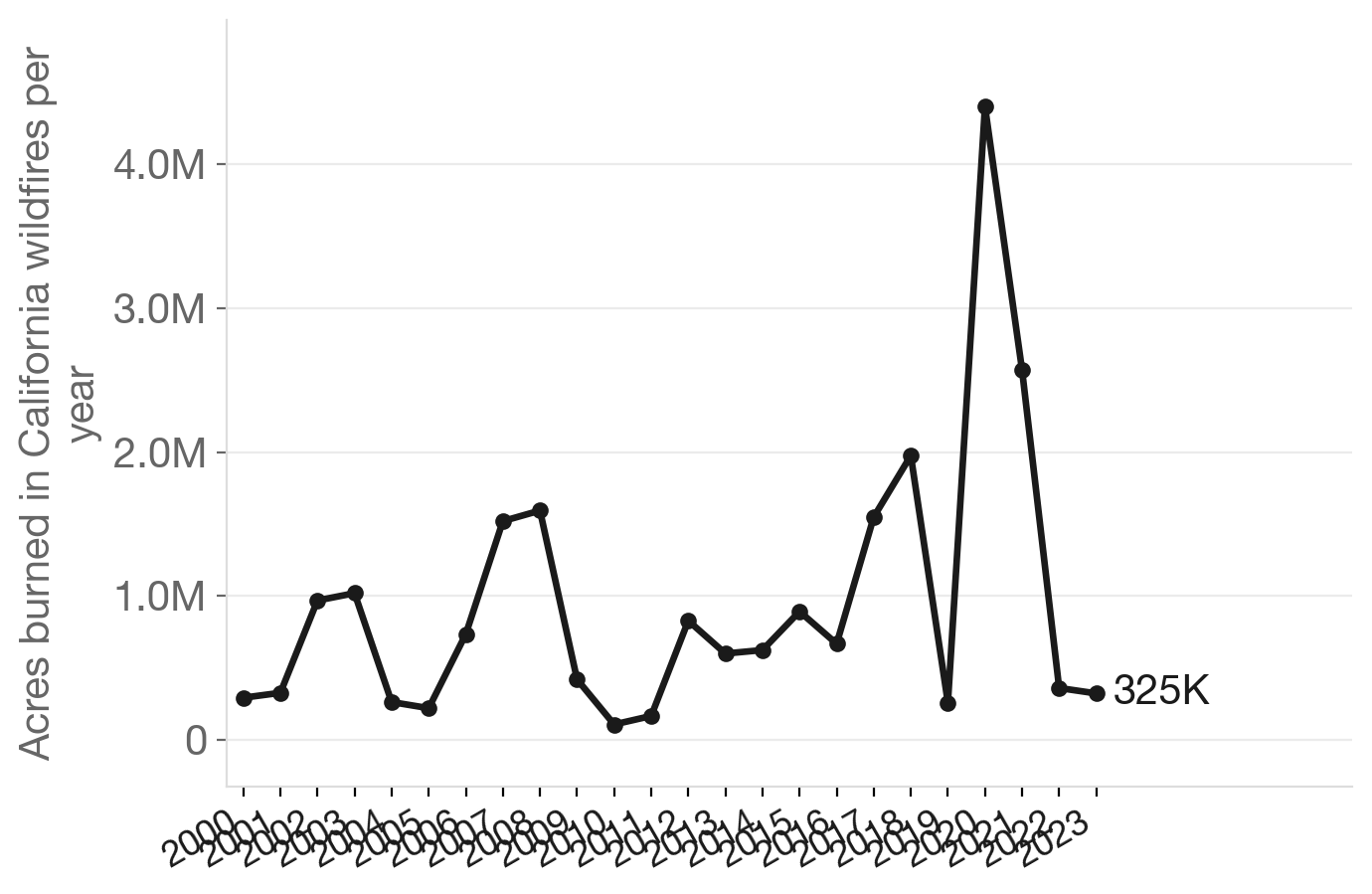
Source: NationGraph.
The fuel problem is a century in the making. Aggressive fire suppression dating to the 1930s allowed California's dry forests to accumulate unnatural densities of trees and brush, sometimes five to 10 times what existed before European settlement. Prolonged drought, bark beetle die-offs and a warming climate turned that buildup into kindling. The result, across the state, has been an era of catastrophic fires at a scale California has never recorded.
Projects like this one are part of California's answer. The state committed to treating one million acres of forest per year under its 2021 Wildfire and Forest Resilience Action Plan, backed by nearly $2.7 billion in state funding and additional federal dollars from the Bipartisan Infrastructure Law and the Inflation Reduction Act. Resource conservation districts like SVRCD serve as a critical link in that system, translating state and federal money into on-the-ground work in rural counties where distrust of distant government agencies runs high.
The specific acreage and total contract value for Phase II have not been publicly disclosed. The full solicitation is posted on the SVRCD contracting page. Work is targeted for late summer 2026.