San Francisco's Mission Bay neighborhood has spent years watching its population boom while its transit options struggled to keep up. That's starting to change: the city is now building a permanent ferry landing at the Mission Bay waterfront, including charging infrastructure purpose-built for the electric vessels that California's transit agencies are required to adopt under state climate mandates.
The project is the major construction phase of a landing years in the making. Mission Bay transformed from abandoned railyards into one of the most densely developed districts in the western United States over the past two decades, anchored by UCSF's medical campus and the Chase Center arena. Yet the T-Third Muni light rail line, the neighborhood's primary transit link, has long been criticized for slow speeds and crowding. Ferry service has been on the planning books since the early 2010s, repeatedly delayed by permitting requirements across multiple state and federal agencies and funding challenges.
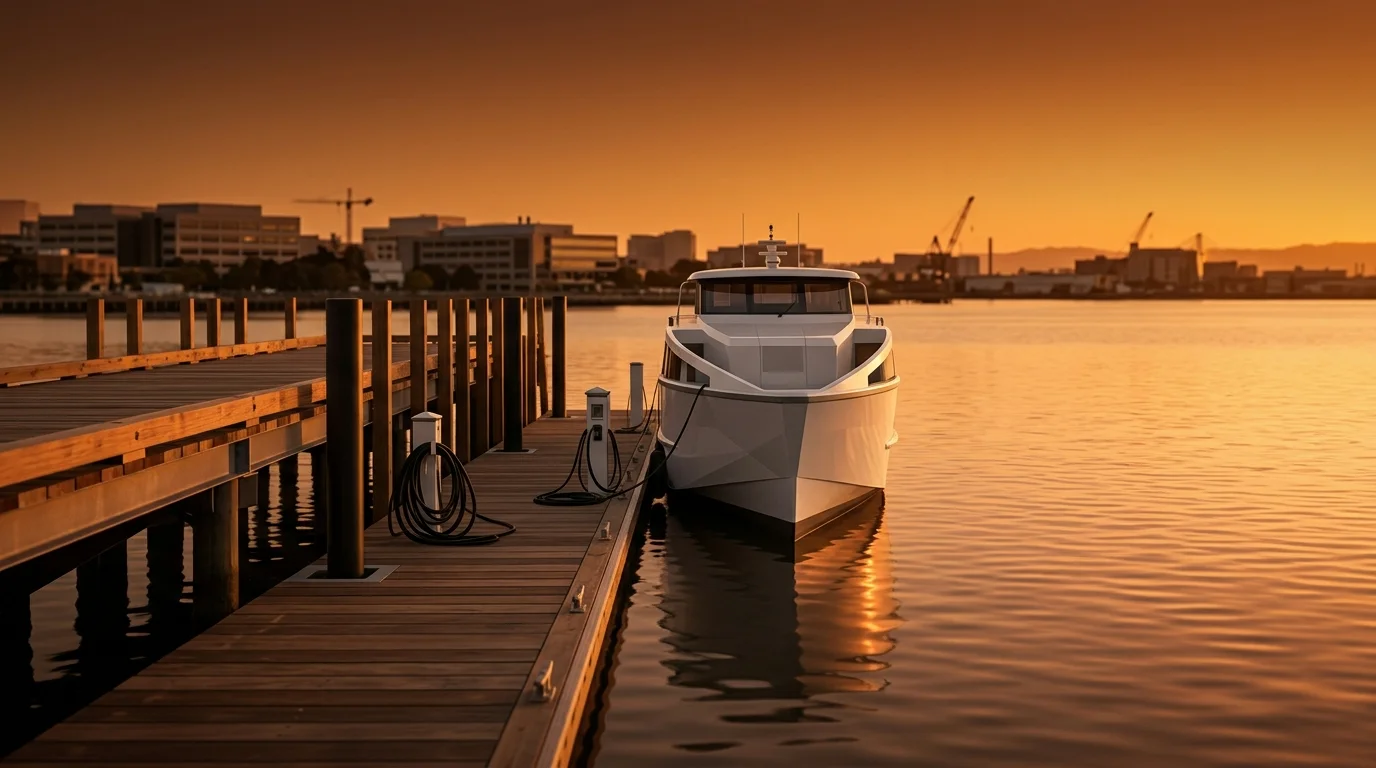
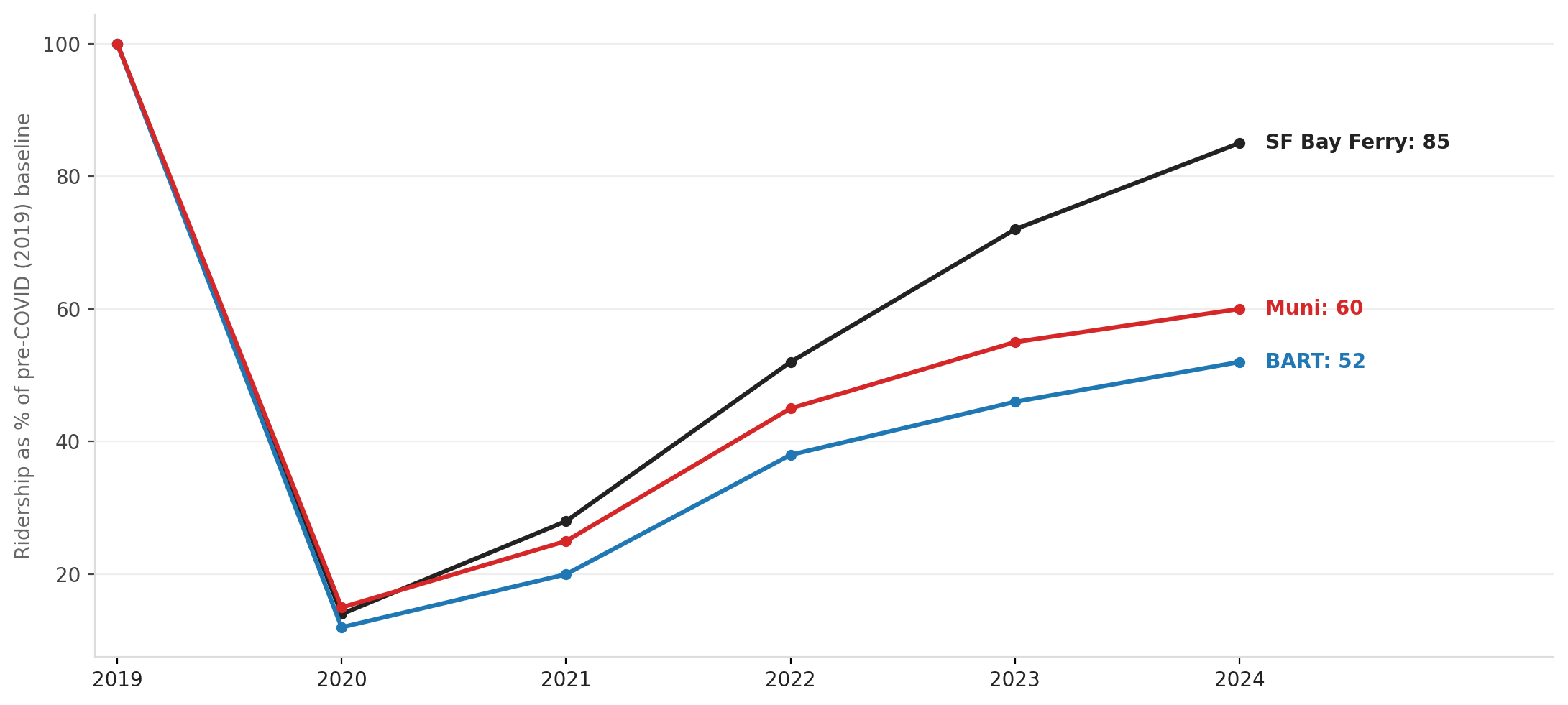
The new landing will include a covered fixed pier, gangway, float guide piles, and all the utilities needed to charge electric ferries at the dock, making it one of the first terminals in the Bay Area designed from scratch for zero-emission vessels. San Francisco Bay Ferry, which has been expanding routes and testing electric boats as part of California's broader decarbonization push, is expected to serve the landing once it opens.
Source: NationGraph.
The project also extends San Francisco's earthquake-resilient firefighting infrastructure to the waterfront. A new Emergency Firefighting Water System suction connection and fireboat manifold will allow firefighters to draw water directly from the bay, a critical backup for a neighborhood that has densified rapidly since the system's last major expansion. The addition reflects lessons from the 1906 earthquake and fire that prompted San Francisco to build its dedicated high-pressure water supply in the first place.
Alongside the marine work, Agua Vista Park will receive permanent improvements including new lighting, irrigation, hardscape, and plantings. The park has existed in interim form under Mission Bay's redevelopment plan, which required public open space along the waterfront, but this phase delivers its finished condition.
Because parts of Mission Bay sit on former industrial and railyard land, construction may require environmental management of excavated materials. The project is funded through local sources, likely a combination of Port of San Francisco capital funds, San Francisco Bay Ferry capital dollars, and Mission Bay Community Facilities District assessments.
The city posted the construction solicitation on CaliforniaBids in late May 2026, with at least one update already issued, a common occurrence for complex waterfront projects. Once a contractor is selected and construction gets underway, the timeline to the landing's opening will become clearer, something Mission Bay residents and the tens of thousands who work in the neighborhood will be watching closely.