Manatee County, Florida is moving to restore oyster reefs in its coastal estuaries, enlisting one of nature's most efficient water filters to help undo years of damage from pollution, harmful algal blooms, and the 2021 Piney Point disaster.
The county is seeking contractors for the Manatee County Oyster Restoration Project, posted June 17. The specific budget and reef locations within the county's estuarine waters have not been publicly detailed yet, but the project fits into a broader wave of state and federal habitat restoration funding, including NOAA grants backed by the 2021 Bipartisan Infrastructure Law.
The timing carries weight. In April 2021, roughly 215 million gallons of nutrient-laden wastewater from the old Piney Point phosphate plant were discharged into Lower Tampa Bay, triggering fish kills and a punishing red tide bloom that blanketed Manatee County beaches. That event accelerated what was already a long decline: Florida has lost an estimated 80 to 90 percent of its oyster population since the 1980s, a collapse driven by nutrient runoff, reduced freshwater flows, sedimentation, and overharvesting.
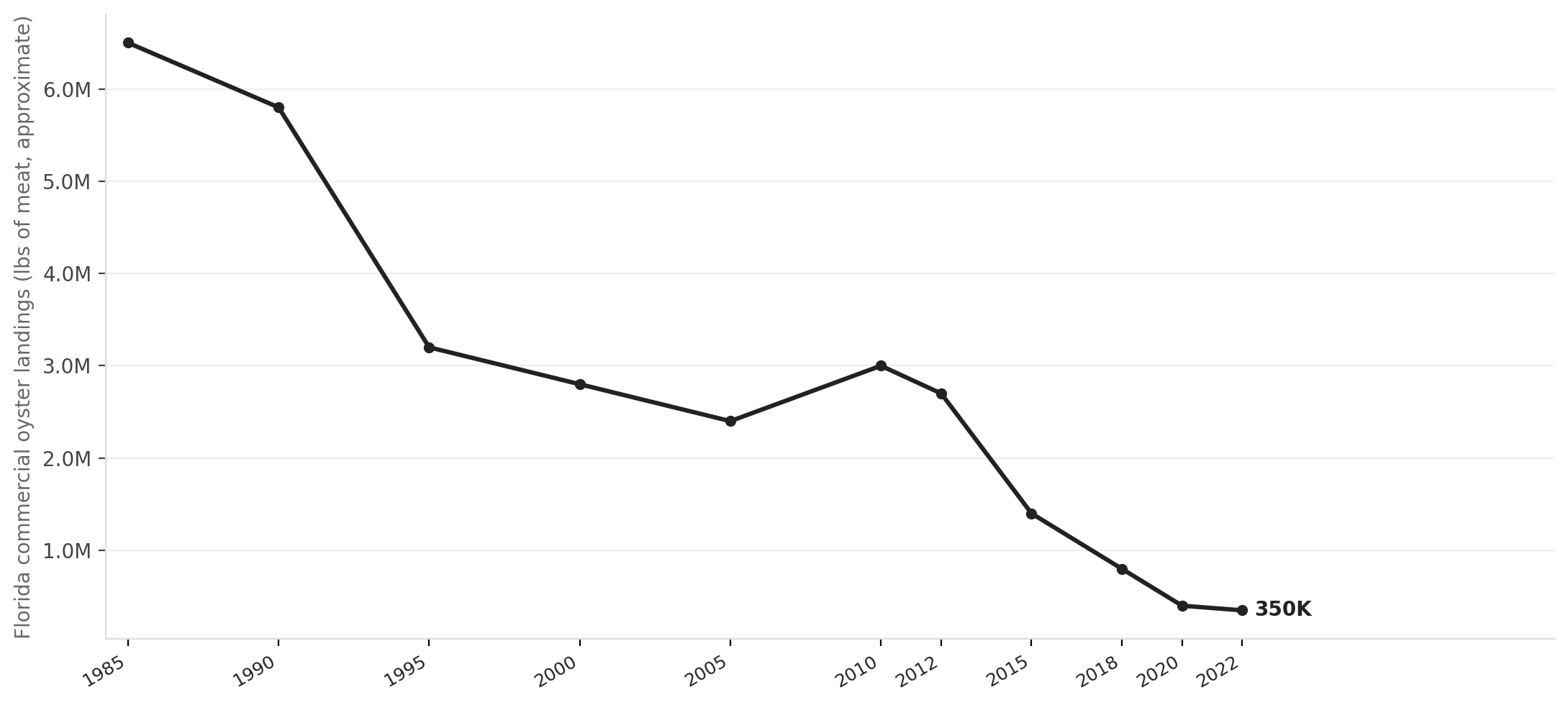
Source: NationGraph.
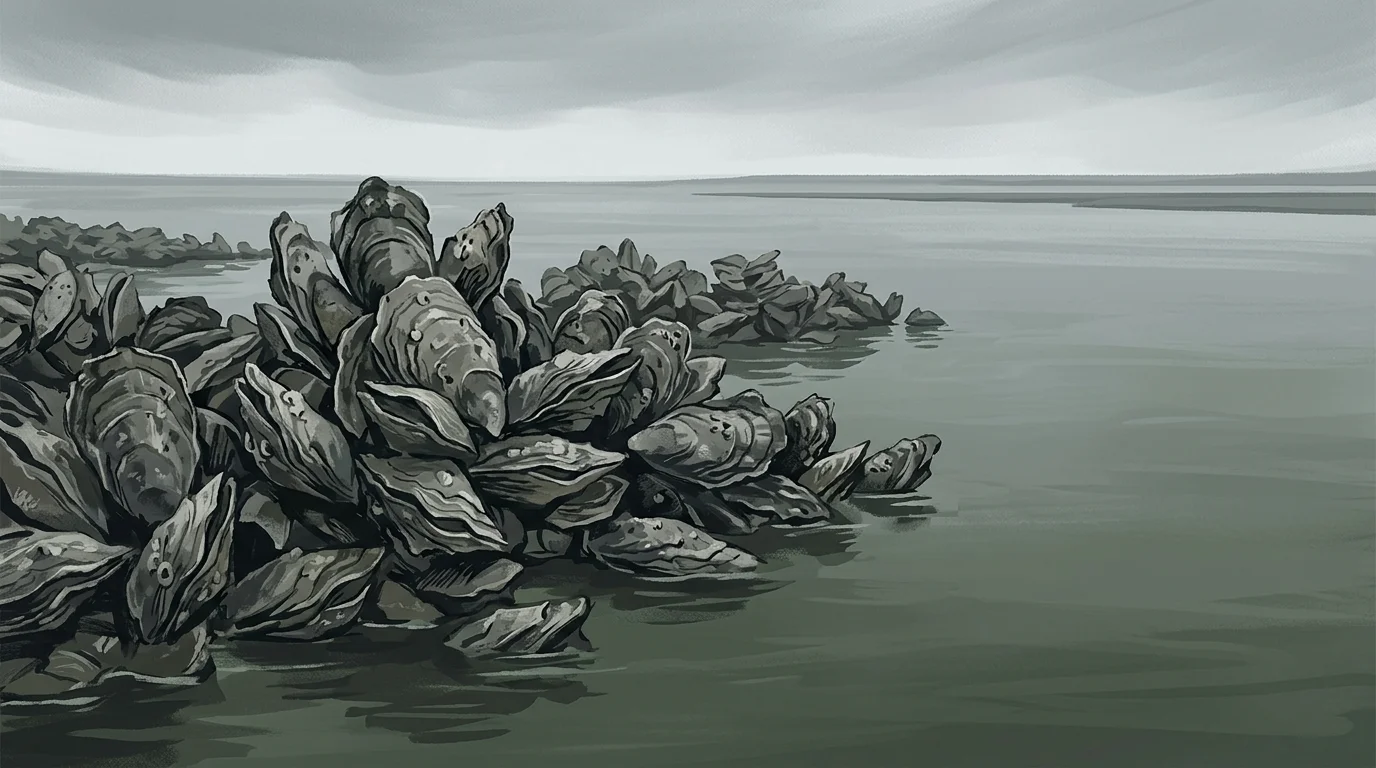
Oysters have emerged as a leading tool for reversing that damage. A single adult oyster filters up to 50 gallons of water per day, pulling out the excess nitrogen and phosphorus that fuel algal blooms. Reefs also stabilize shorelines and buffer against storm surge, making them attractive to a county commission that has emphasized practical resilience investments while facing intense development pressure, agricultural runoff from inland farms, and aging stormwater infrastructure.
Manatee County sits between Tampa Bay to the north and Sarasota Bay to the south, with the Manatee River and Terra Ceia Aquatic Preserve at its core. Both bays have suffered repeated red tide events in recent years, and Tampa Bay's seagrass coverage is still recovering. Smaller oyster reef pilots by groups like Tampa Bay Watch have shown promise, and this project represents a county-level commitment to scaling that work up. For more on the county's broader environmental recovery efforts, see our earlier coverage of how Manatee County is turning to oysters to heal a battered bay.
Full project details, including the scope of reef construction and targeted restoration sites, are expected to become available as the county's procurement process advances.