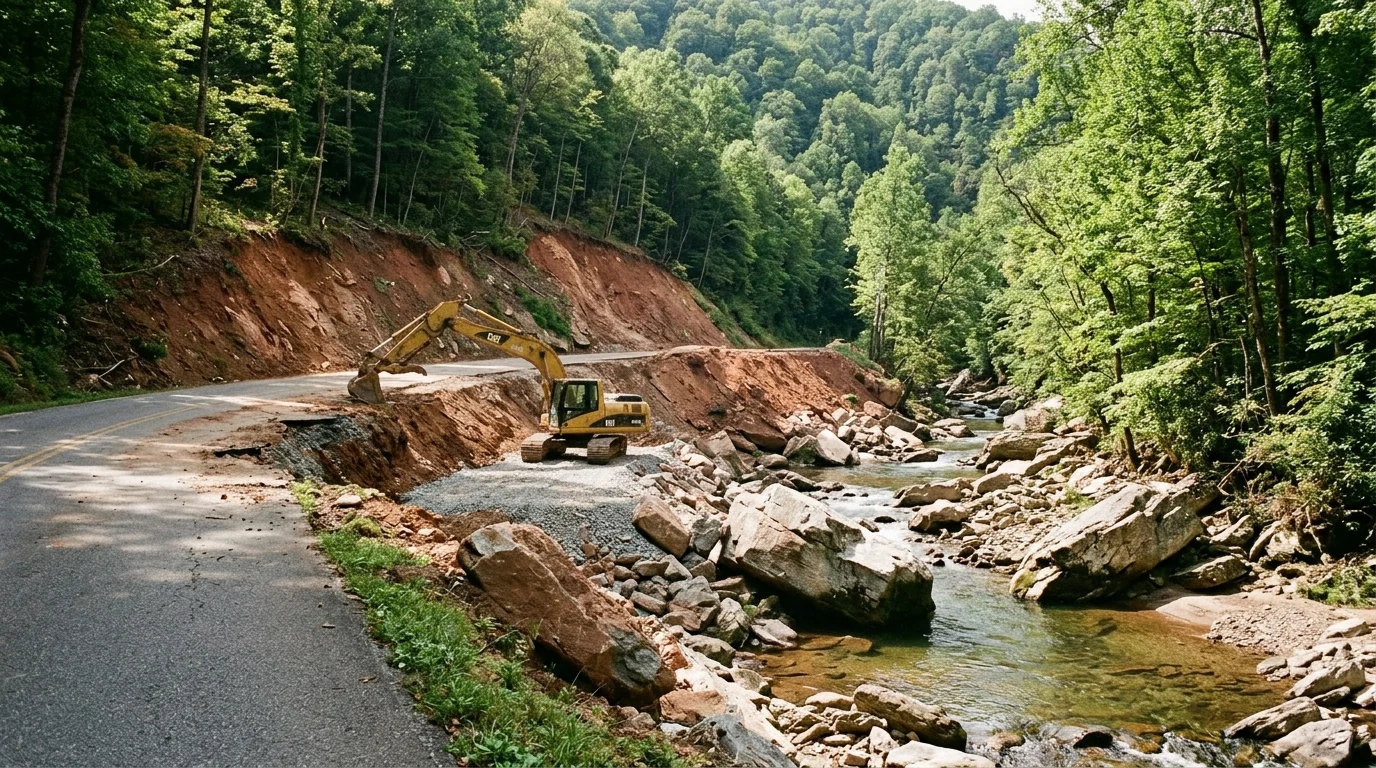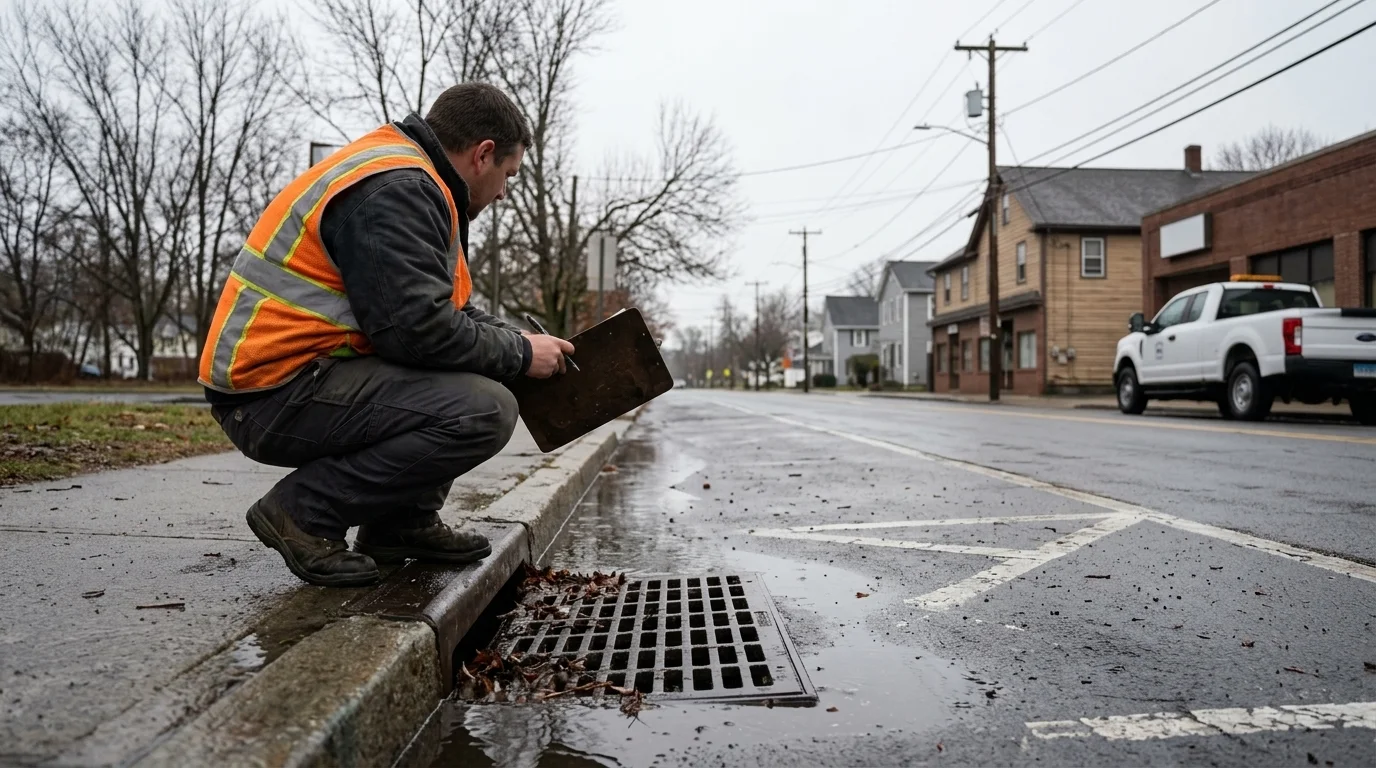
Connecticut municipalities and industrial facilities have issued 8 stormwater engineering contracts in the last 30 days, more than double the trailing 12-month average of roughly 3.6 per month. The spike is not a one-month anomaly: February 2026 produced 9 RFPs, March and May each produced 7, and the current August window is tracking at the same elevated rate. What looks like a procurement surge is, underneath, a compliance crunch driven by two distinct CT DEEP permit overhauls hitting the state simultaneously.
The first deadline has already passed. CT DEEP reissued its Industrial Stormwater General Permit on October 1, 2025, effective November 1, with a hard reregistration deadline of April 1, 2026. Every industrial facility already covered by the permit was required to file an updated Stormwater Pollution Prevention Plan certified by a licensed professional engineer or a Certified Hazardous Materials Manager, submit it electronically using a new DEEP template, and reregister by that date. Facilities that missed the window or are still working through corrective notices are now in catch-up mode, and that pressure is showing up directly in procurement. Windsor's public works department issued two SWPPP-specific RFPs three days apart, August 9 and August 12, each explicitly naming MS4 compliance obligations. That back-to-back sequence is the clearest single picture of what is happening across the state: a town racing to get a licensed engineer under contract before a compliance clock runs out any further.
The second driver is less resolved, which is part of why it keeps producing procurement activity. The Small Municipal MS4 General Permit, the permit that governs stormwater discharges from municipal storm sewer systems for more than 100 Connecticut towns, public universities, and state facilities, expired September 30, 2025. DEEP placed it in administrative extension while it completes review of public comments on a reissued draft first noticed in March 2025. For permittees, administrative extension means existing obligations remain in force but the final requirements of the new permit are still unknown. That uncertainty does not suspend compliance planning; it sustains it. Towns cannot wait for a final permit to begin engineering work because the planning and contracting process alone takes months. The result is an open-ended demand signal that has been running since at least February.
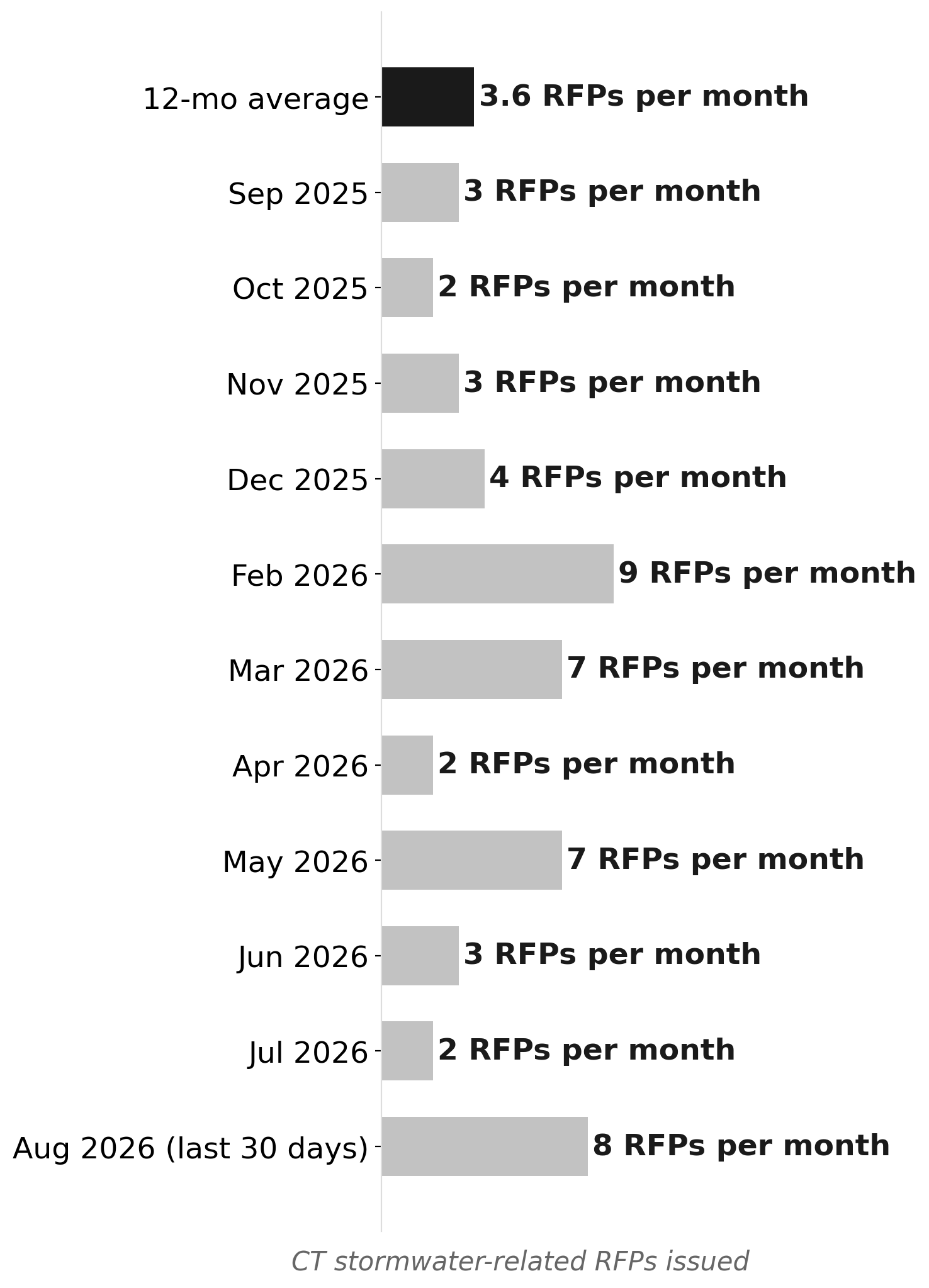
Source: NationGraph.
The geographic spread of the current RFPs reflects this. No single agency dominates the list. The Capitol Region Council of Governments issued an on-call stormwater services RFQ on August 30 covering the Hartford metro region. New Haven has active civil engineering scopes with stormwater components. The Norwalk Housing Authority issued a civil engineering RFP covering stormwater work on the Western Connecticut side of the state. Procurement is distributed across independent public works departments, regional planning agencies, and quasi-governmental bodies in a pattern consistent with a permit mandate touching all of them at once rather than a discretionary infrastructure program controlled by a few large offices.
Connecticut's municipal structure amplifies this effect. The state has 169 towns, most with independent public works departments, and the MS4 program's coverage is unusually broad compared to most states. The pending reissuance is expected to expand that coverage further based on 2020 Census urbanized area maps, adding new towns to the program for the first time since 2017. Each addition is a new permittee that will need engineering services, a signal that procurement demand is more likely to grow than to recede once the final permit is issued.
Federal funding provides the financial runway for towns to act on compliance plans once engineering is contracted. The Connecticut Clean Water State Revolving Fund carries a $30.2 million active EPA capitalization grant running through 2031, providing low-interest financing for municipalities building out stormwater infrastructure. A separate $450 million IRA Climate Pollution Reduction Grant runs to CT DEEP through 2029, supporting green infrastructure and stormwater-related measures. New Haven holds a $20 million EPA Environmental and Climate Justice Community Change grant covering 14 neighborhoods. These are distinct from the permit mandates themselves: the DEEP permits are driving the RFP wave; the federal grants are the mechanism that helps towns pay for the infrastructure those plans ultimately specify. New Britain's July 2026 meeting minutes, documenting its stormwater utility established in 2022 explicitly for MS4 compliance funding, show how some towns have already built financial structures around exactly this kind of sustained obligation.
The next signal to watch is DEEP's issuance of the final Small Municipal MS4 General Permit. When that permit clears, it will set new compliance deadlines and potentially expand the list of covered municipalities. Towns that have already contracted engineering services will be positioned to file updated plans quickly; those that have not will face a compressed timeline. Based on the procurement pattern of the last six months, that issuance is likely to produce another spike rather than a slowdown.