Virginia localities issued somewhere between 34 and 96 genuine housing RFPs per month from February through October 2026, up from roughly 2 per month in November and December 2025. That is not a rounding error. It is a procurement calendar reshaped by a single state legislative session.
The driver is Governor Abigail Spanberger's Affordable Virginia Agenda, a package of five housing bills signed in April 2026 and a bipartisan FY2027-28 budget signed June 29, 2026, that together represent what the Virginia Housing Alliance has called one of the most significant state housing investments in recent memory. The budget alone added more than $92 million in new state appropriations for housing and homeless services, channeled through the Virginia Housing Trust Fund and the Virginia Eviction Reduction Program, administered by the Department of Housing and Community Development in partnership with Virginia Housing. None of that is federal money. Section 8 voucher rollovers flowing to agencies like VHDA and Norfolk's Redevelopment and Housing Authority continued on their routine schedule, but the procurement acceleration is a state story.
The shape of the timeline makes the connection hard to dispute. RFP volume was flat through the end of 2025. It spiked to 79 in February 2026, the month Spanberger formally unveiled the housing agenda, then held at 46 in March and jumped to 96 in May, shortly after the April signings. The summer dip in August and September is consistent with budget adoption cycles; activity resumed in October as FY2027 spending authority became real. Agencies now active in the procurement system include Norfolk, Charlottesville, James City County, the Virginia Housing Development Authority, Hampton, Chesterfield, and Chesapeake, a geographic spread that reflects the legislation's design.
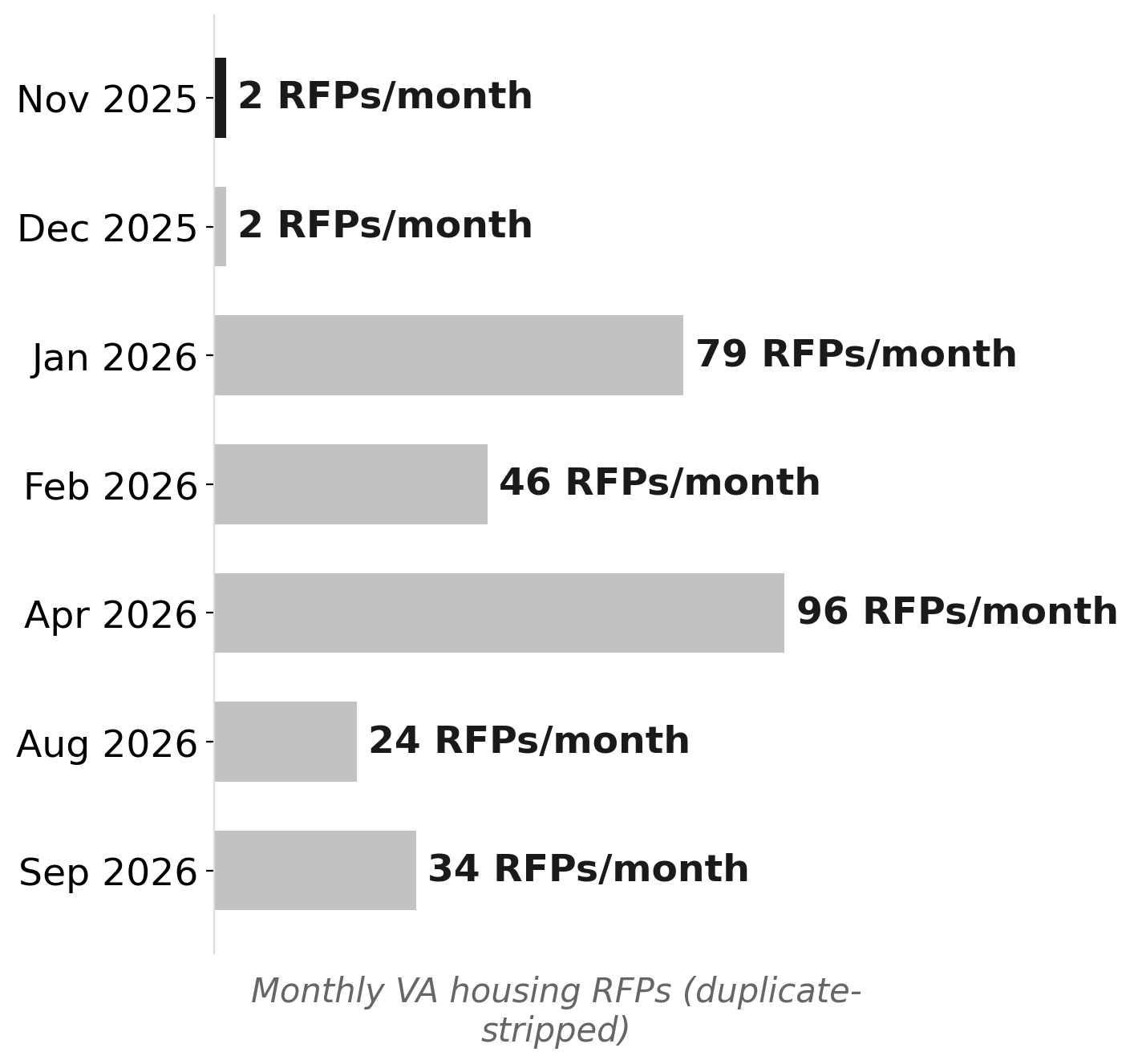
Source: NationGraph.
That design is deliberately distributed. The five laws do not concentrate resources in Northern Virginia or Richmond. HB867 and SB74 give every locality in the commonwealth the option to establish its own local affordable housing program. HB352 enables performance-based grant programs so localities can incentivize affordable construction on their own terms. HB594 streamlines approvals for qualifying affordable developments. HB4, sponsored by Sen. Bennett-Parker, grants localities a right of first refusal when publicly supported multifamily units come up for sale, a direct response to the roughly 2,000 affordable units in the Greater Richmond region alone projected to lose affordability status by 2040 as tax-credit agreements expire.
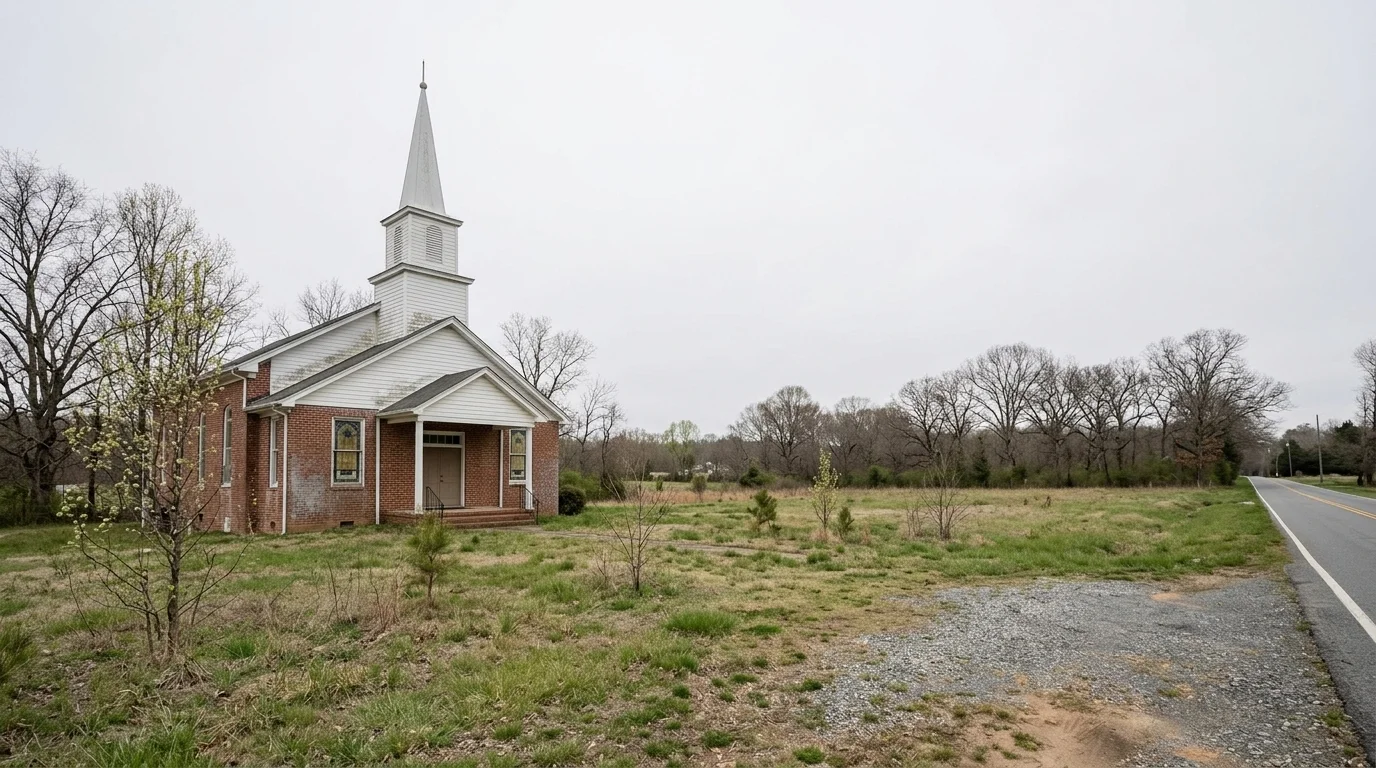
The most structurally novel piece is SB388, the Faith in Housing Act, signed April 30, 2026, which eliminates rezoning requirements for affordable housing built on land owned by religious organizations or nonprofits. It takes effect January 1, 2027, with a sunset of January 1, 2031. Virginia's large inventory of underutilized religious property, particularly in exurban and rural counties outside the major metros, makes this provision potentially significant well beyond the localities that have dominated housing headlines. Legal analysis from McGuireWoods notes that qualifying projects must meet affordability and density standards, but the removal of the rezoning hurdle is a material change for congregations sitting on acres that previously had no viable development path.
The procurement spike is best understood as an implementation lag closing. Laws signed in April require localities to stand up programs, hire consultants, draft RFPs, and open competitive solicitations. That process takes months. The volume jump from February onward is not localities responding to the April bills before they passed; February's spike reflects anticipation and budget planning ahead of expected enactment, while the May and October peaks reflect actual program launch activity. The pattern is procurement as a real-time readout of legislative seriousness.
Spanberger has pointed to Virginia's standing as a state with historically high eviction rates as the animating urgency behind the package. The Virginia Eviction Reduction Program expansion in the budget is the most direct response to that problem: state money flowing to keep families housed during financial emergencies rather than cycling through the courts. How aggressively localities deploy that new authority and the HB352 grant-program mechanism will determine whether the procurement surge produces units or just paperwork.
The next concrete signal to watch is January 1, 2027, when the Faith in Housing Act takes effect. Localities and religious landholders that have been in pre-development planning since the April signing will have their first opportunity to move projects without a rezoning fight. Whether that produces a second procurement wave, or whether the four-year sunset expires without significant uptake in rural jurisdictions, will be a meaningful test of how broadly Virginia's legislative ambition actually travels.