The day after Suicide Basin overtopped again in August 2026 and Governor Dunleavy issued Alaska's fourth consecutive glacial flood disaster declaration, Army Corps Brigadier General Clete Goetz announced that the Corps was soliciting bids to permanently drain the basin. A solution is to be selected by the end of 2026. That announcement marked something genuinely new in American flood management: a federal engineering agency moving from containment to elimination.
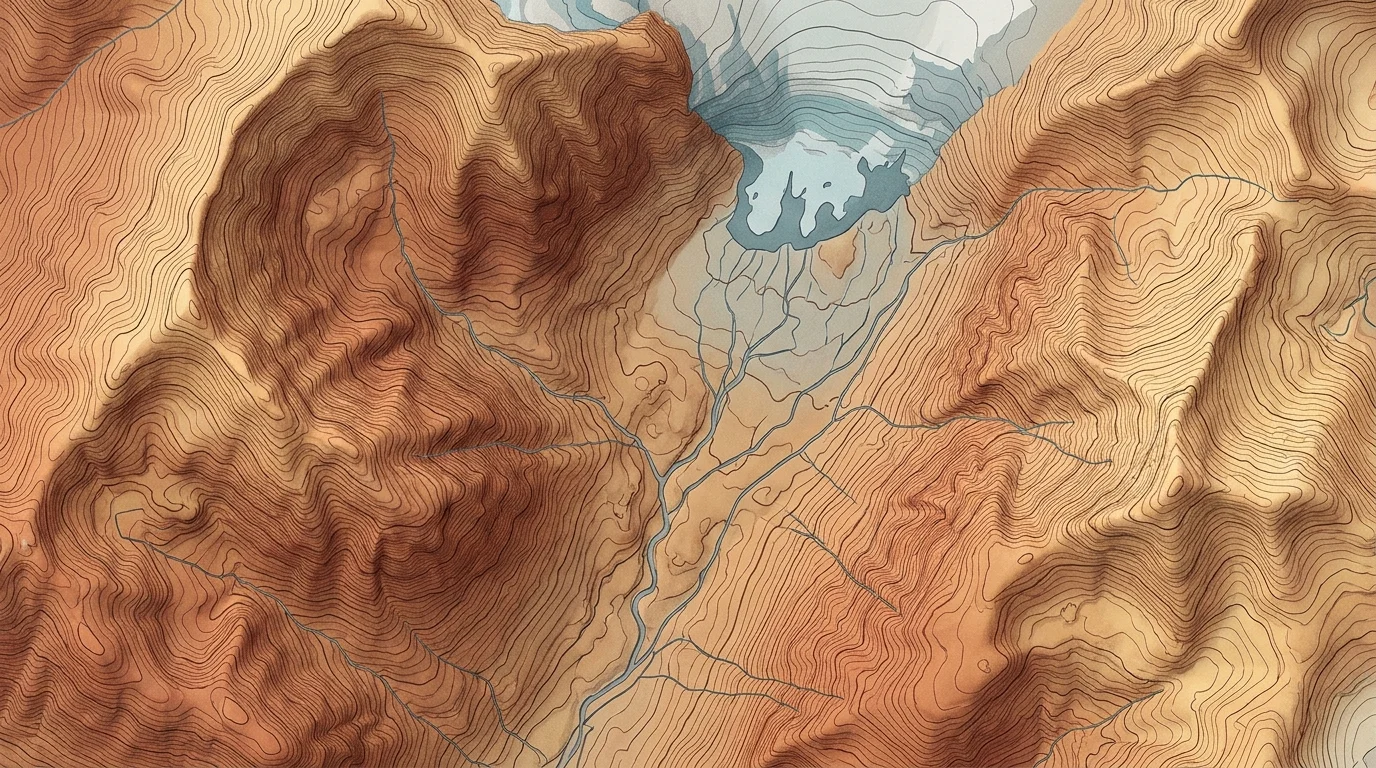
The shift matters because the threat is structural, not episodic. Suicide Basin sits in the mountains above Mendenhall Valley outside Juneau, and its outburst volumes are tied directly to glacial melt rates accelerating with Arctic warming. The 2024 flood crested the Mendenhall River at a record 15.99 feet and inundated roughly 300 homes, triggering FEMA Major Disaster Declaration DR-4836-AK. In 2025, a temporary HESCO barrier co-built by the City and Borough of Juneau and the Army Corps held the record-high water back. In 2026, the basin overtopped again anyway, and the evacuation zone covered approximately 2,000 homes. After four iterations of the same disaster, the Army Corps is no longer designing barriers, it is designing a drain.
What makes the 2026 moment different from prior years is not just the Corps announcement. It is the convergence of five distinct federal funding mechanisms that have been accumulating since the first major outburst, each targeting a different phase of the problem.
The most visible is the Army Corps basin-drainage solicitation itself, a direct engineering authority rather than a grant program, with no dollar figure yet attached and a hard end-of-year deadline for solution selection. Beneath it sits a layered grant and loan structure. FEMA's Pre-Disaster Mitigation program, funded through the FY2026 Homeland Security Appropriations Act, named $3.2 million specifically for Juneau's Mendenhall GLOF resilience project and $2 million for revetment upgrades in the Mat-Su Borough in a June 2026 announcement covering $13.3 million for Alaska, Washington, and the Chilkat region. HUD's Community Development Block Grant Disaster Recovery program allocated $18.676 million to Alaska to address unmet needs from both the 2023 Lower Yukon floods and the 2024 Juneau flooding. The Alaska Clean Water State Revolving Fund, capitalized by EPA grants and enhanced through the Infrastructure Investment and Jobs Act, was amended in May 2026 to bring total SRF assistance for Juneau's HESCO barrier project to $18.015 million, including $9 million in loan forgiveness. A fourth channel, FEMA's Flood Mitigation Assistance program, opened a $235 million-plus national round in April 2026 targeting NFIP-insured properties with repetitive flood losses; Alaska-specific awards have not yet been confirmed.
These are not variations on the same program. Pre-Disaster Mitigation funds named pre-disaster projects for state and local governments. CDBG-DR covers post-disaster unmet needs for communities with active disaster declarations. The SRF provides below-market infrastructure loans with forgiveness provisions. FMA specifically targets insured properties with repetitive losses. The USACE solicitation is a direct Corps construction authority. Each mechanism funds a different actor, a different phase, and a different definition of the problem, and all five are active simultaneously in Alaska right now.
The geography of active procurements in 2026 reflects the same multi-front picture. Juneau has active contracts for GLOF maintenance and operations services and for Mendenhall River emergency repairs. Valdez-Cordova County has issued multiple rounds of solicitations for Lowe River gravel extraction for flood control. The Mat-Su Borough is moving on the Talkeetna Dike and Revetment. St. Paul Island has a design contract out for Salt Lagoon and Community Pond flood mitigation. These projects are separated by hundreds of miles and involve entirely different engineering challenges, but they share a timeline: the window before the next flood season.
Alaska's flood problem is also not a single problem. The Mendenhall Valley faces glacially driven GLOFs that will intensify as Suicide Basin grows with each melt season. Western Alaska, the Lower Kuskokwim, Lower Yukon, and Northwest Arctic regions, faces a separate threat: storm surge and river breakup flooding tied to diminishing sea ice and increasingly severe storm tracks. FEMA issued Major Disaster Declaration DR-4893-AK in October 2025 for Typhoon Halong-linked flooding across those regions. The communities affected, the engineering responses, and the funding mechanisms involved are almost entirely distinct from the Juneau situation, making Alaska effectively a dual-vector flood state managing two parallel infrastructure mobilizations at once.
For Juneau residents, the immediate signal to watch is the Army Corps solution-selection process, which is supposed to conclude before the end of 2026. That decision will determine whether the basin is drained mechanically, tunneled, or managed through some other means, and it will set the template for how the United States handles glacially driven flooding in a warming Arctic. No American community has faced this engineering question at this scale before. The answer Juneau gets this year will be the first one on record.