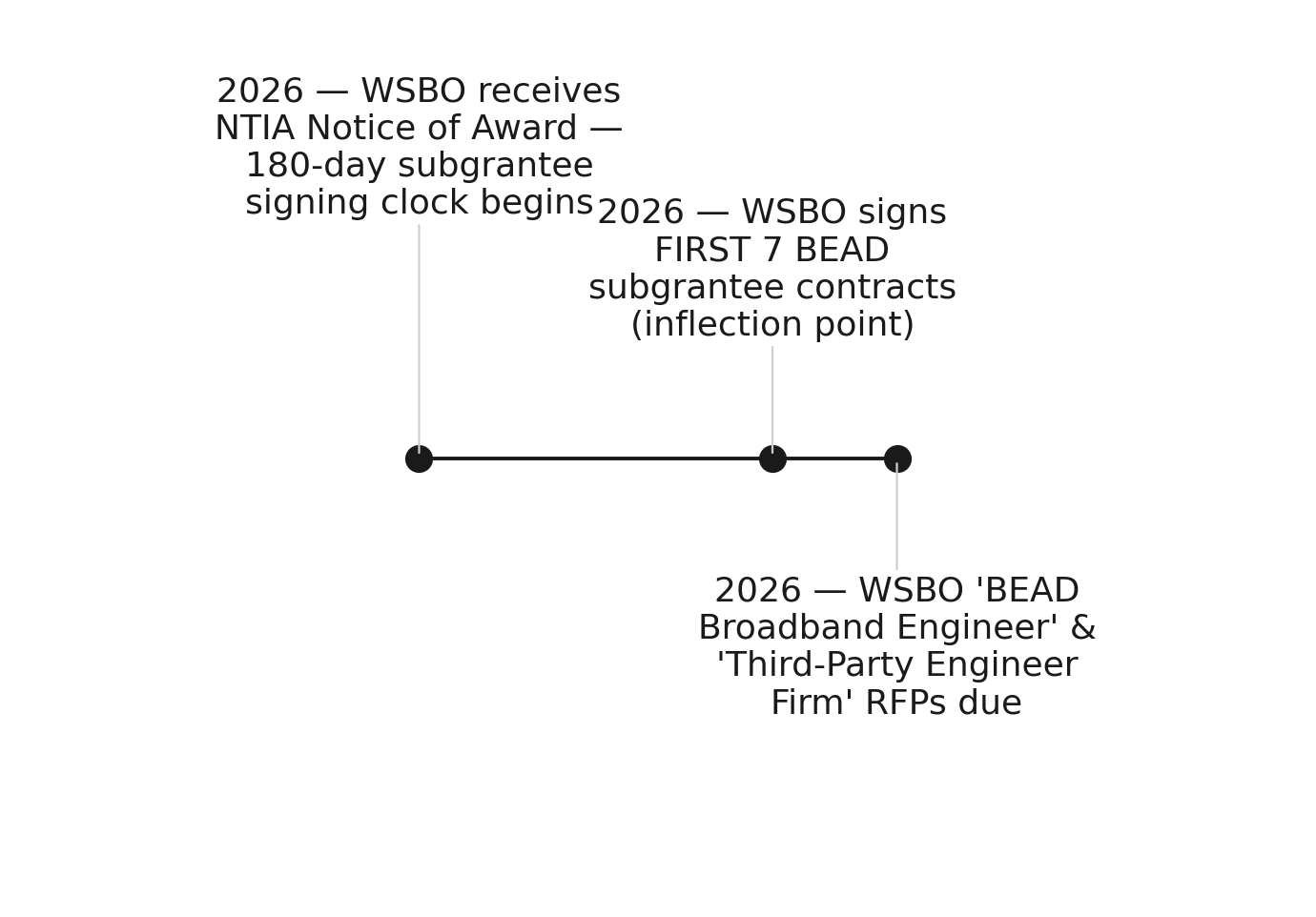
Five substantive broadband procurement solicitations hit Washington's public contracting pipeline in the last 30 days, including the Washington State Broadband Office's own 'BEAD Broadband Engineer' RFP due November 20 and a fiber optic supply solicitation covering the Opportunity/Columbia region. The volume is roughly double the 12-month monthly average, but the more significant number is a date: September 24, 2026, when WSBO formally signed contracts with seven initial BEAD subgrantees. That signing triggered the procurement wave. A second cohort of awardees faced an October 8 deadline to complete their contracts.
This is what the end of a planning cycle looks like. Washington's Final BEAD Proposal was approved by NTIA on February 26, 2026, unlocking $736 million in federal deployment funds. Add $112 million in state match and $163 million in private match and the total investment reaches $1.02 billion. That money targets 238 project areas covering 166,503 homes and small businesses, roughly 5.3 percent of Washington households, with a technology mix of fiber (35 percent), fixed wireless (38 percent), and low-earth orbit satellite (27 percent). Five years of proposal writing, federal review, and competitive subgrant selection produced a signed contract. Now the subgrantees need engineers and cable.
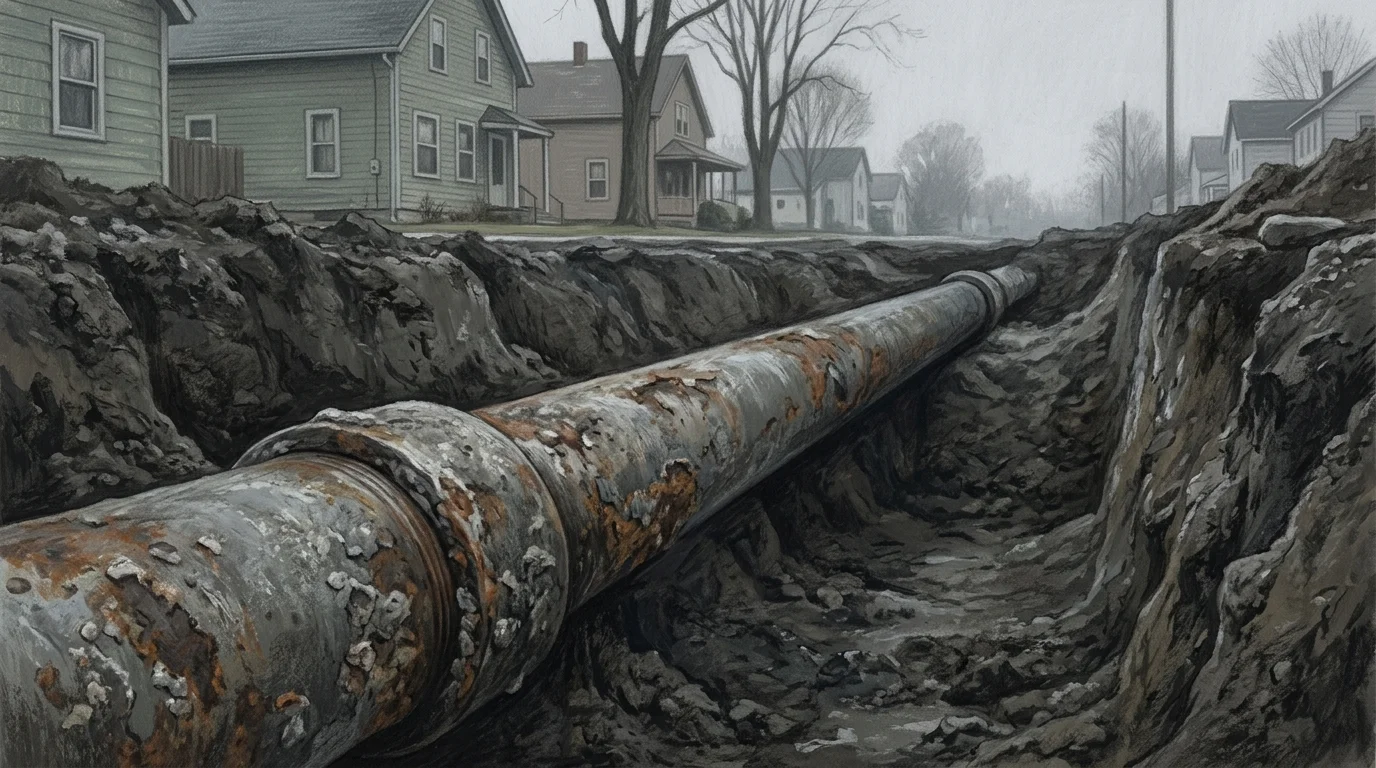
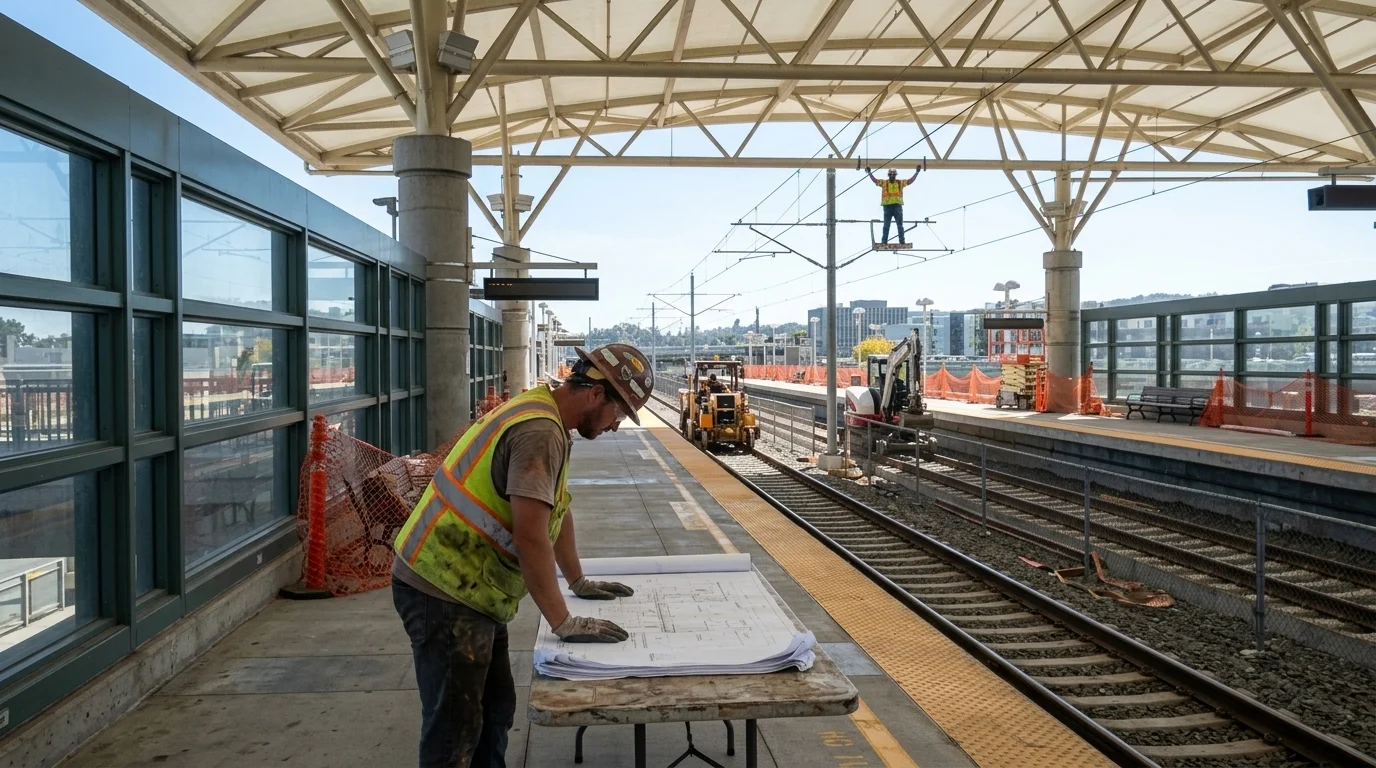
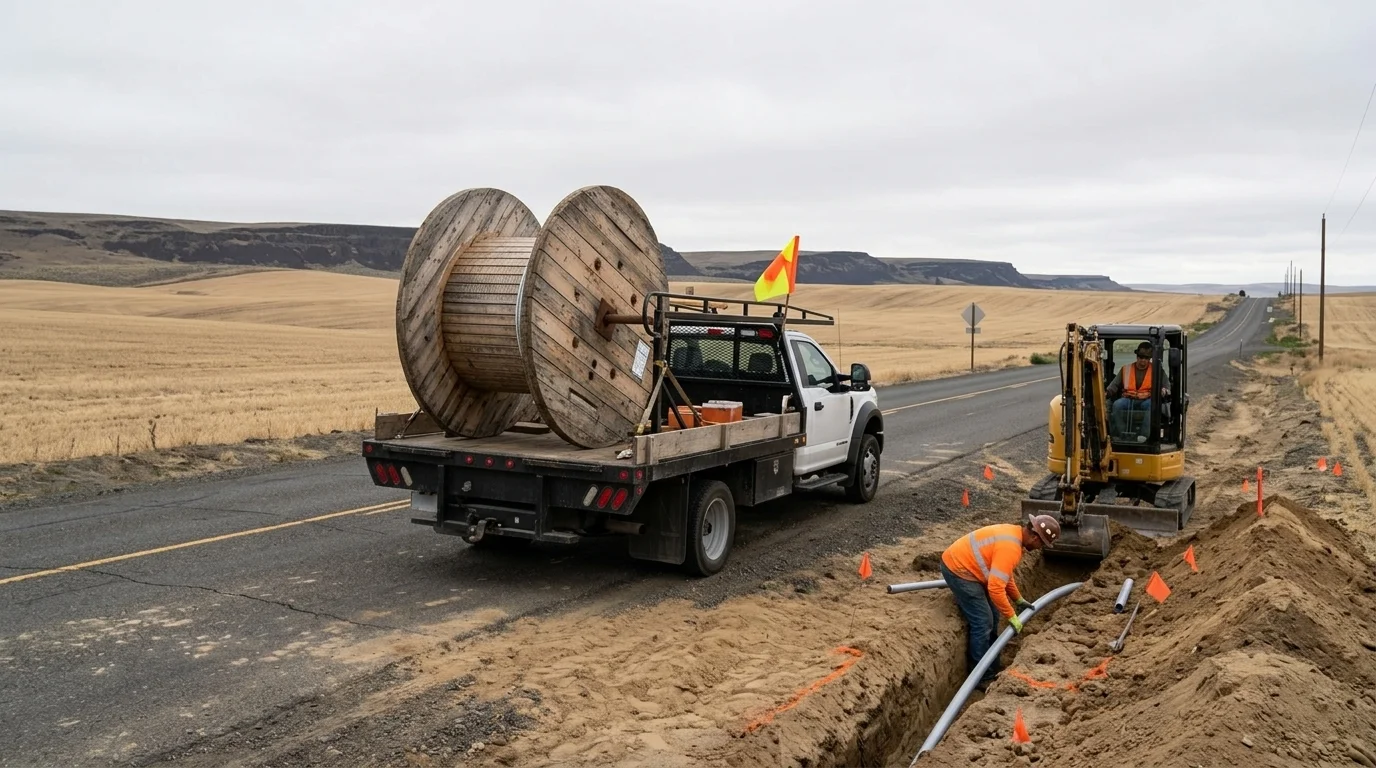
WSBO Director Jordan Arnold has described permitting and contracting as 'the next major hurdles,' and the solicitations bear that out. The 'BEAD Broadband Engineer' and 'Third-Party Broadband Engineer Firm' RFPs, both due November 20, are looking for firms that can navigate NEPA and SEPA environmental reviews alongside physical network design. The Department of Consolidated Technology Services issued an updated 'Broadband ISP Services' solicitation due October 7. The fiber supply RFQQ10003 out of the Opportunity/Columbia region signals that at least one eastern Washington project area is already moving toward materials acquisition. These are not planning documents; they are the instruments of a build.
Source: NationGraph.
Washington's procurement ecosystem is better positioned than most states to absorb this load. The state has an unusually dense network of Public Utility Districts already operating open-access fiber infrastructure, including Grays Harbor, Jefferson County, Whitman County Port, and Columbia Port PUDs. These entities understand fiber procurement, hold existing contractor relationships, and in several cases are among the seven initial BEAD subgrantees. That institutional depth means Washington's construction ramp may be faster than states where ISPs or cooperatives are standing up fiber operations for the first time.
The BEAD procurement wave is also not the only federal broadband activity in Washington. Running separately from BEAD, the Tribal Broadband Connectivity Program has directed approximately $63 million in federal grants to Washington tribal nations, including the Spokane, Lummi, Tulalip, Swinomish, Makah, Lower Elwha, and Yakama tribes, with project timelines running through 2027-2030. TBCP is an independent NTIA program with its own award structure, purpose, and timeline; it predates BEAD and is not part of the $1.02 billion BEAD investment. The two programs sometimes serve overlapping geographies, but they are distinct funding streams and should not be read as a single unified federal push.
A third strand of Washington broadband activity is entirely local. The city of Anacortes has operated a locally-funded municipal fiber network since a 2015 pilot and is reaching full citywide deployment in 2026, making it the first city-owned ISP in the state. That buildout is funded by a local levy and has no connection to BEAD or TBCP.
Washington is moving faster than most states on BEAD. NTIA approved all 56 states' Final BEAD Proposals on August 25, 2026, meaning the procurement ramp visible in Washington is beginning simultaneously across the country. But Washington's early approval in February and its September contract signings put it among the first states where subgrantees are actually obligated to spend money. The four-year construction-completion deadline is real; money not spent on eligible infrastructure within that window is at risk.
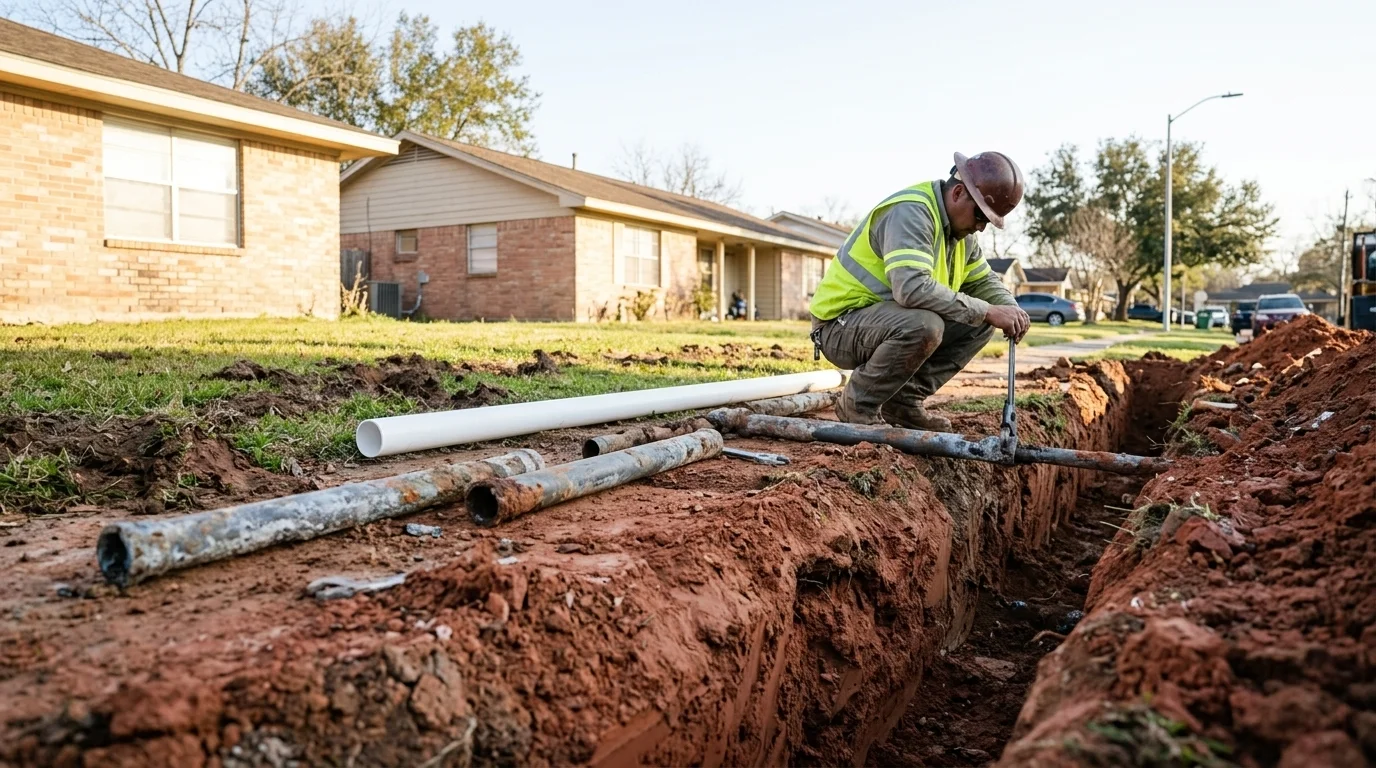
What residents in unserved and underserved areas should watch for is ground-breaking activity, which Arnold has said the state is targeting before end of 2026. The next signal in the contracting record will be construction contracts, not engineering solicitations. When PUDs and tribal entities start issuing RFPs for civil construction crews and conduit installation, the build has moved from planning into the ground. That wave, if the current engineering procurement closes on schedule, could arrive in early 2027.