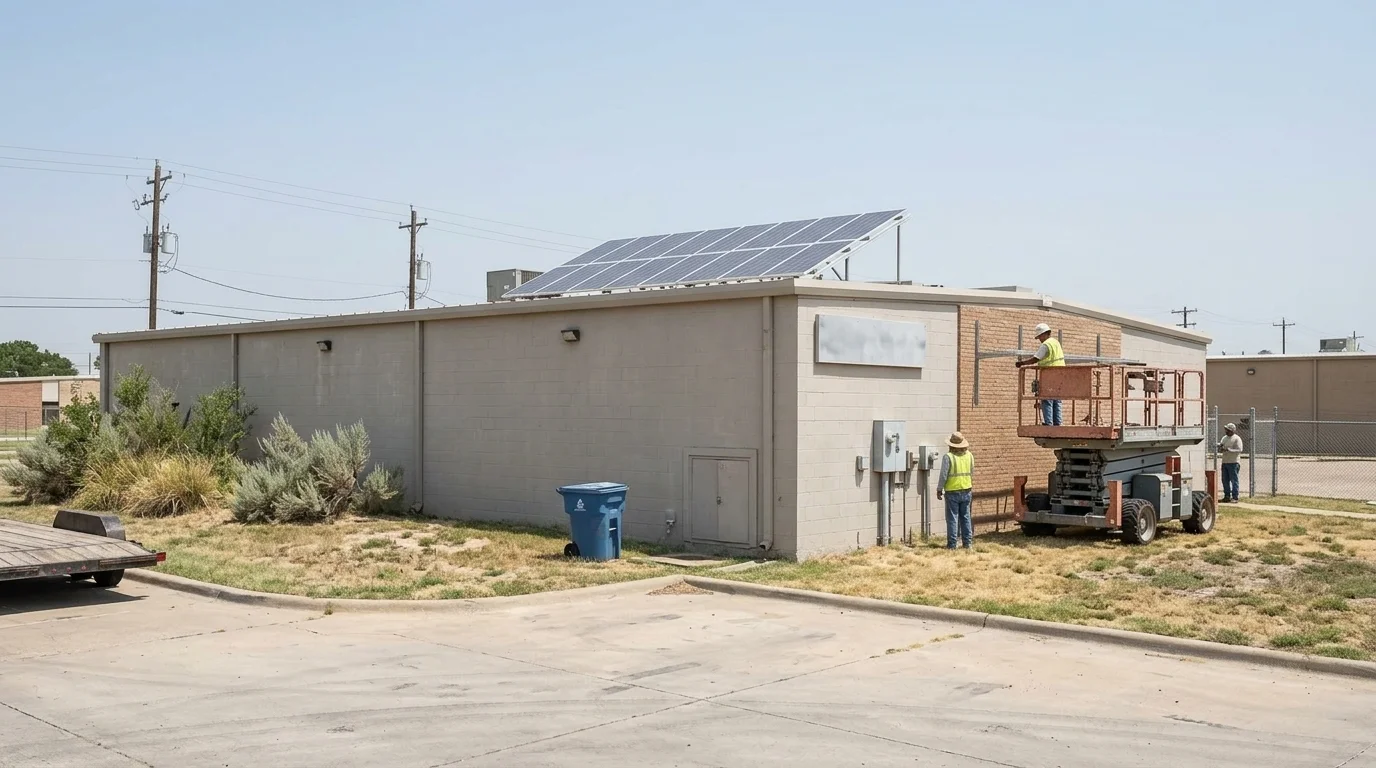
Washington state issued 30 solar procurement solicitations in October 2026, 4.4 times the trailing 12-month average of roughly 6.8 per month, and the agencies behind those bids read like a cross-section of the entire public sector: housing authorities in Yakima and Kitsap, school districts in Bellingham, transit agencies, tribal nations including the Quinault Indian Nation and Lummi, and municipal governments spread across at least seven counties. This is what complying with a four-year deadline looks like in real time.
The surge is not a Pacific Northwest phenomenon. Oregon issued 18 solar RFPs in the same 30-day window; Montana issued 7. Washington's count is 67 percent above Oregon's and more than four times Montana's, which means the pressure driving these bids is specific to Washington's policy environment, not a regional energy market shift.
Three distinct mechanisms are compressing the procurement timeline at once, and understanding each one separately matters because they target different actors. Washington's Clean Energy Transformation Act (CETA), passed in 2019, requires all utilities to be carbon-neutral by 2030 and 100 percent clean by 2045. Starting in 2026, utilities must file formal compliance progress reports, turning what had been a distant statutory goal into an annual institutional accountability exercise. Puget Sound Energy responded to that pressure in February 2026 by launching an RFP seeking 2.9 million MWh of CETA-compliant energy and 1,556 MW of winter peak capacity, a signal that the utility-level demand for new clean generation is real, large, and timed.
The second mechanism operates at the state agency level. Governor Bob Ferguson's Executive Order 25-11, signed December 16, 2025, directed the Washington Department of Commerce to accelerate grant awards and prioritize projects facing expiring federal tax credits, with a specific focus on clearing siting and permitting bottlenecks. That order gave Commerce a mandate to move money faster, and move it did.
In spring 2026, Commerce disbursed $77.2 million across roughly 118 projects statewide, funded through Washington's Climate Commitment Act cap-and-trade revenue: $34.8 million through the Clean Energy Grants program to 57 projects in 33 counties, $3.5 million through the Clean Energy Siting and Permitting (CESP) program to six jurisdictions, and $17.1 million conditionally awarded through the Grid Resilience program using a combination of state and federal DOE funds. Commerce Interim Director Sarah Clifthorne has been the named voice on these disbursements. The geographic reach is notable: 33 of Washington's 39 counties saw grant activity in a single spring cycle, meaning this is not a Seattle metro build-out. It is statewide.
The third mechanism is the one that explains October's bid volume most directly. CESP contracts begin as early as December 2026. Jurisdictions that received siting and permitting grants this spring are now legally required to begin spending those funds, which means moving from feasibility into active procurement. The October RFP wave is, in large part, the downstream consequence of spring grant disbursements hitting their contractual start dates.
Washington's solar buildout is arriving later than in many states precisely because it arrived. The state's abundant, low-cost hydropower historically made solar investments look marginal by comparison. CETA upended that calculus: utilities now face a capital build-out requirement on a fixed timeline, and the low-cost hydro baseline makes solar a complement rather than a primary source, but not an optional one. The result is a state that is compressing into a few years of procurement what other states spread across a decade.
For residents and businesses across the state, the near-term visible effect is a thickening project pipeline: school rooftops, housing authority carports, tribal microgrids, and transit facility arrays are all entering competitive bidding simultaneously. Rate pressure is a parallel consequence. Utilities funding large capital programs typically pass those costs through; Washington ratepayers are already experiencing that dynamic as CETA-driven build-outs accelerate.
The next signal to watch is December 2026, when CESP contracts formally activate and funded jurisdictions must demonstrate project progress. If the October peak is followed by continued elevated RFP volumes through year-end, it will confirm that the state has structurally shifted its procurement baseline rather than producing a one-month anomaly. The 2030 compliance clock has four years left; the bidding has already started running.