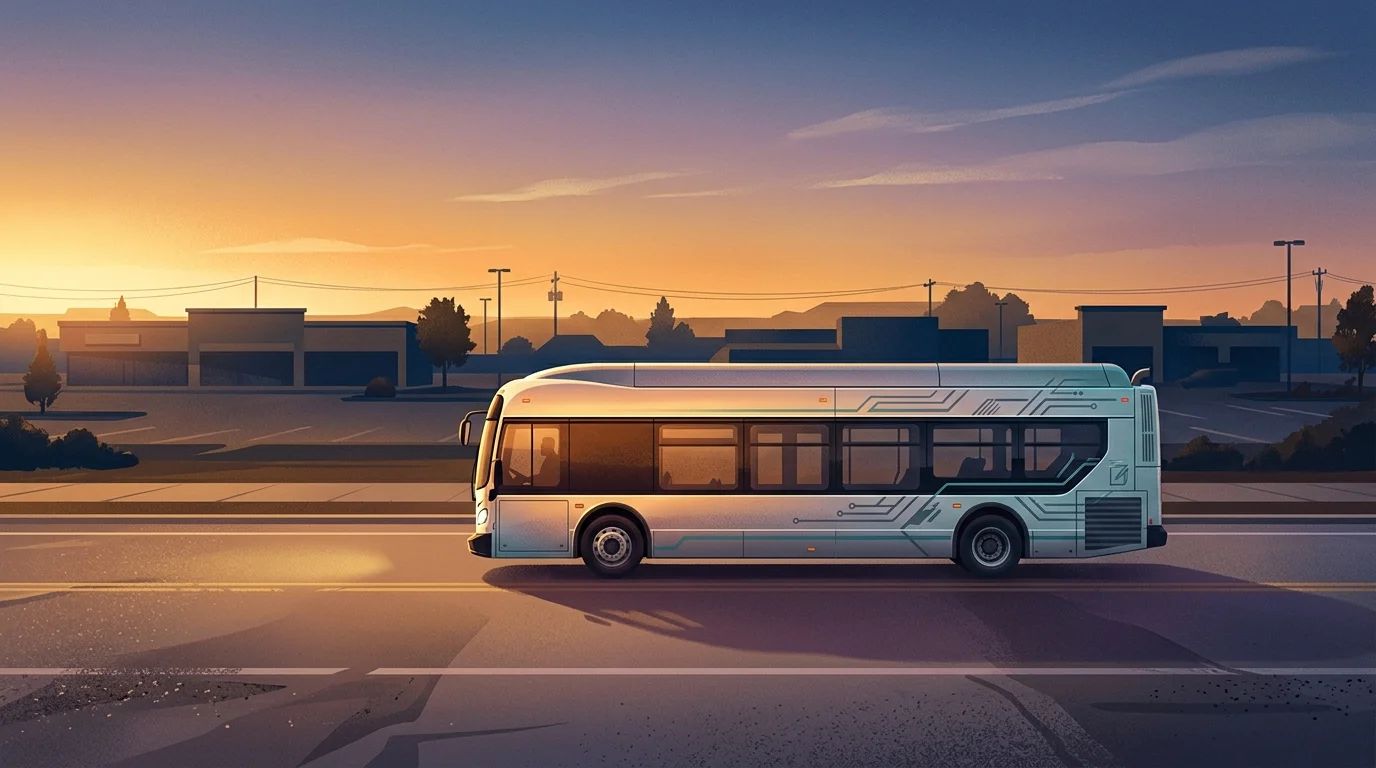
Pace Suburban Bus, which carries riders across the sprawling suburbs of Chicago, is moving to electrify a significant share of its fleet, seeking manufacturers for an initial order of 30 battery-electric buses with options to purchase up to 220 more, for a potential total of 250 zero-emission vehicles.
The solicitation, posted July 1, would rank among the largest single electric bus procurements in the Midwest and marks the most concrete step yet in Pace's pledge to run a fully zero-emission fleet by 2040. The agency operates roughly 700 fixed-route diesel buses across Cook, DuPage, Kane, Lake, McHenry, and Will counties, a 3,446-square-mile service area stretching from dense inner-ring suburbs like Cicero to exurban McHenry County.
The move has been years in the making. Pace first piloted an electric bus in Naperville in 2014, among the earliest such tests by any U.S. transit agency. But a price gap that made battery-electric buses roughly $700,000 more expensive per vehicle than diesel kept full-scale electrification out of reach. That calculus shifted amid the 2021 federal Bipartisan Infrastructure Law, which expanded the FTA's Low- or No-Emission Vehicle grant program to roughly $1.1 billion annually, followed by additional clean-vehicle incentives in the 2022 Inflation Reduction Act. Illinois's own Climate and Equitable Jobs Act, signed that same year, set a statewide 100% clean-energy target and added political momentum.

Source: NationGraph.
Beyond environmental goals, Pace is framing electrification partly as a financial survival strategy. Electric buses are estimated to cut fuel and maintenance costs by 40 to 60 percent over their lifecycle compared to diesel, a meaningful long-term saving for an agency staring down a fiscal crisis. Pace, along with the CTA and Metra, faces a combined roughly $730 million annual budget shortfall beginning in 2026 as federal COVID relief expires. Without action from Springfield, the agency has warned of service cuts as deep as 40 percent.
The procurement does carry real operational challenges. Illinois winters can strip 30 to 40 percent of a battery-electric bus's range, a problem documented in cold-climate deployments from Minneapolis to Edmonton. Running those buses across Pace's long, lower-density suburban routes, rather than compact urban loops, will test the vehicles' range in ways that city systems don't face. Early adopters nationwide, including SEPTA in Philadelphia, have encountered reliability issues with first-generation electric fleets.
The procurement also arrives in a thinned-out supplier landscape. Proterra, once the dominant U.S. electric bus maker, filed for bankruptcy in 2023, leaving New Flyer, Gillig, GreenPower, and BYD as the main remaining competitors for contracts of this scale.
As reported in earlier coverage of this procurement, the full scope of options could meaningfully reshape the agency's fleet over the next several years. Whether Pace exercises all six option tranches will depend on federal funding continuing to flow and on how the Illinois legislature resolves the broader transit funding standoff in Springfield.