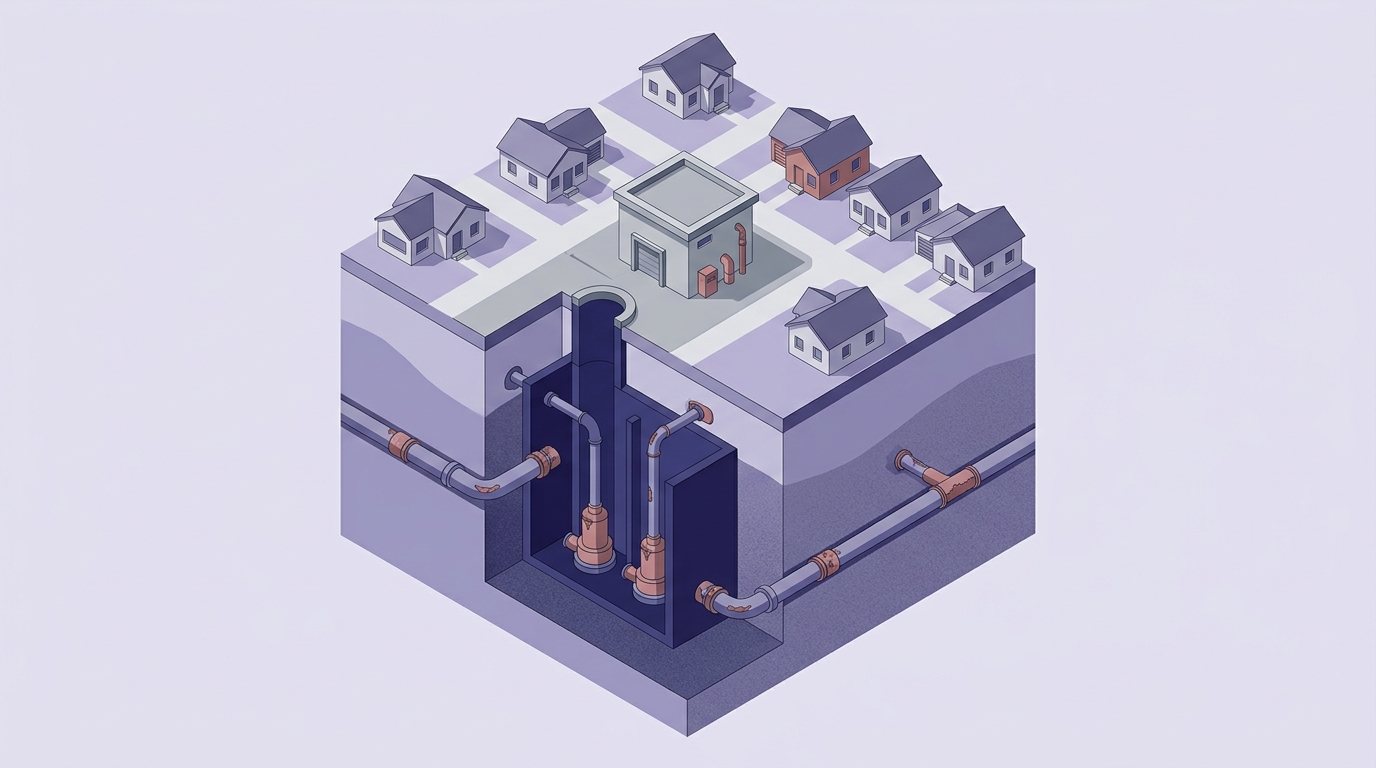
A wastewater pump station serving Eagle Bend, a residential community in the southeast Denver metro near Aurora, Colorado, is getting a major overhaul before it reaches the breaking point.
The pump station was built during Eagle Bend's late-1990s and early-2000s suburban expansion, putting it at roughly 25 years old. That's the age at which engineers typically expect pumps to wear out, control systems to become obsolete, wet wells to degrade, and underground force mains to lose integrity. When a pump station fails, the consequences aren't abstract: raw sewage can back up into streets, basements, and waterways, triggering public health emergencies and potential enforcement actions under the Clean Water Act.
The local special district managing the system posted a solicitation on the Rocky Mountain Bid System in late April 2026, seeking contractors for the rehabilitation work. The full cost of the project has not been publicly disclosed.
Eagle Bend's situation mirrors a reckoning playing out across Colorado's Front Range, where hundreds of small metropolitan and special districts independently manage aging sewer and water infrastructure on tight budgets. The Denver metro area grew by roughly 20% between 2010 and 2020, and the pump stations and pipes laid to serve that growth are now due for expensive maintenance all at once. The EPA estimates that wastewater systems nationwide need more than $271 billion in investment over the next 20 years.
Colorado has been tightening its nutrient discharge standards in recent years, adding regulatory pressure on districts that might otherwise defer maintenance. The Colorado Water Resources and Power Development Authority has been distributing increased federal and state loan and grant funds for projects like this one, partly through the Bipartisan Infrastructure Law's clean water allocations.
It remains unclear whether a specific failure event, regulatory notice, or capacity study prompted this particular rehabilitation, or whether the district is acting proactively. That distinction matters for residents: the cost of this work will likely be reflected in future mill levy rates or service fees for Eagle Bend homeowners. Contractor selection is underway now.