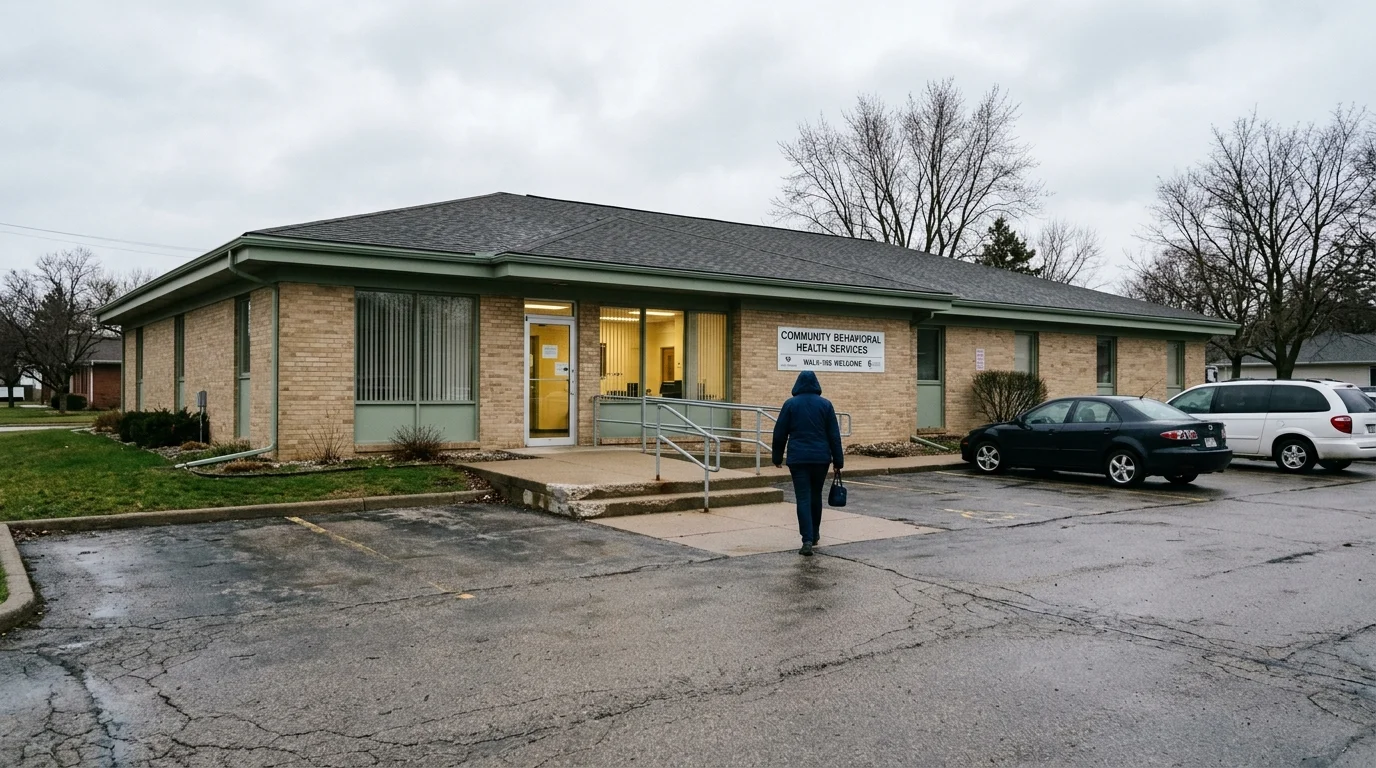
Twenty-two Ohio institutions issued a housing-related RFP for the first time in more than a year during the 30-day window ending July 15, 2026, compared to essentially zero first-time issuers in the same window a year earlier. The burst is not random. Two funding waves crashed into Ohio's procurement calendar at almost exactly the same moment, and dozens of small counties and housing authorities that had been sitting on the sidelines are now scrambling to hire the contractors they need to spend money the state and federal government just handed them.
The first wave is state-level. Ohio House Bill 96, signed by Gov. Mike DeWine on June 30, 2025, allocated $91.25 million for the Welcome Home Ohio grant program plus $20 million in nonrefundable tax credits for the 2026-2027 biennium. The program had already proven its reach: a prior cycle awarded nearly $60 million to facilitate 481 homes across 26 counties. HB96 expanded eligibility to allow broader participation, which meant communities that had never qualified before were suddenly in the running. The second wave is federal. Ohio's PY2026 Annual Action Plan, blending roughly $8.7 million in CDBG funds with $10 million in HOME Investment Partnerships funds and $250,000 in Ohio Housing Trust Funds, officially activated on July 1, 2026. That date is a hard deadline, not a soft one. Communities that win a CHIP award get one competitive round per year and must immediately stand up procurement to be eligible to draw down the money.
The geography of the new RFPs tells the story clearly. The surge is concentrated not in Columbus, Cleveland, or Cincinnati, which receive CDBG funds directly from HUD and maintain year-round procurement operations, but in the non-entitlement tier: Wood County, Licking County, Logan County, Columbiana County, Stark County, Clark County, and similar mid-size and rural jurisdictions that depend entirely on the state-administered CHIP program. Ohio has roughly 700 such non-entitlement communities. They only go to market for rehabilitation specialists, lead risk assessors, and fair housing service providers when they have a grant in hand. When they all win awards in the same program cycle, they all hit the market at once.
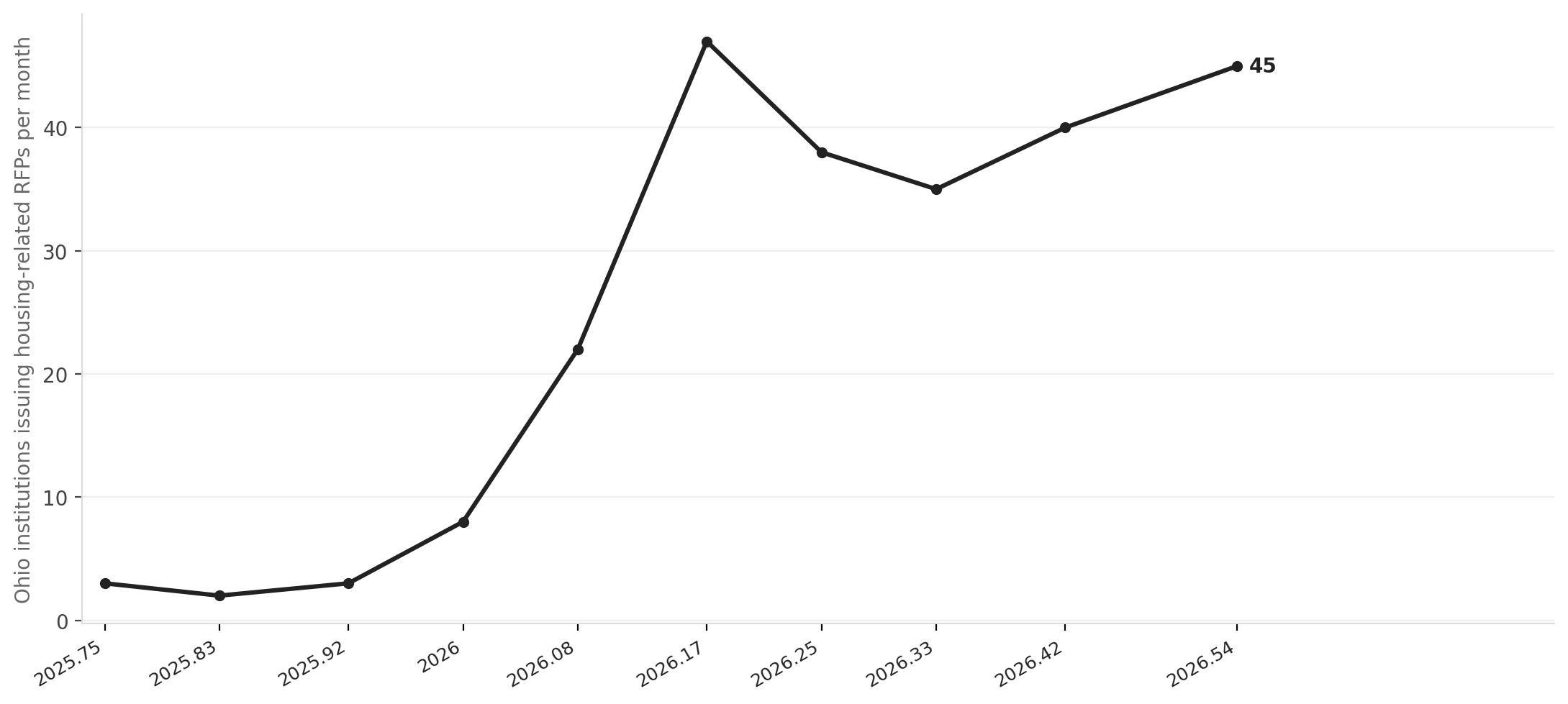
Source: NationGraph.
The dominant RFP types confirm the mechanism. Rehabilitation specialists and lead assessors, both required to administer CHIP grants under federal lead-safe housing rules, make up the largest share of new solicitations. Fair housing services, which are a CDBG compliance requirement, follow closely. Housing needs assessments and affordable housing development partners round out the mix. These are not discretionary hires. They are the table stakes for spending grant dollars, and the CHIP program ties every award to them.
The monthly data makes the timing unmistakable. Institution-level housing RFP activity cratered to just two or three active issuers per month in October and November 2025, the trough between program cycles. Then it ramped sharply from January 2026 onward as Welcome Home Ohio application windows opened and PY2026 planning calendars advanced, reaching 47 active issuers in February 2026 and sustaining above prior-year levels through July. The 22 first-time issuers in the most recent 30-day window represent the sharpest single-month mobilization of the cycle: communities that had waited for award letters before committing to procurement are now all moving at once.
Ohio's showing stands out even against its neighbors. Pennsylvania leads the region with 25 housing-RFP-issuing institutions in the same window, but Michigan recorded 11, Indiana 8, and West Virginia just 3. The cross-state comparison suggests a federal fiscal-year trigger is lifting procurement activity everywhere, but Ohio's own budget-driven programming, particularly the Welcome Home Ohio expansion under HB96, is amplifying the baseline signal. The state's active HUD housing grant portfolio already exceeds $1.4 billion across more than 1,490 running awards, providing the institutional infrastructure through which new dollars now flow.
For residents in the counties where these RFPs are landing, the practical consequence is a pipeline of housing rehabilitation work: weatherization, lead abatement, structural repairs for income-qualifying homeowners who have been on waiting lists. The procurement activity now visible in public RFP systems is the leading edge of that work, not the work itself. Contractors who win these bids will be executing projects through 2027.
The next signal to watch is award concentration. If the same thin pool of rehabilitation specialists and lead assessors wins contracts across multiple counties simultaneously, capacity constraints could slow drawdowns and trigger compliance clock issues for grantee communities. The Ohio Department of Development's fall monitoring reports will show whether the procurement surge translated into executed contracts, or whether the bottleneck simply moved one step downstream.