Sixteen Texas local governments and housing authorities issued a housing-related RFP in the last 30 days after going silent for more than 12 months, a cluster of procurement activity with no equivalent in the prior year and a direct consequence of $555.7 million in federal disaster-recovery dollars that have finally cleared Washington's pipeline and landed in the hands of local agencies that now must spend them or forfeit them.
The money traces to a single HUD allocation: Federal Register 90 FR 4759, published January 16, 2025, which directed $555.7 million in Community Development Block Grant Disaster Recovery funds to Texas for Hurricane Beryl (DR-4798) and the 2024 severe storms (DR-4781). The Texas General Land Office, under Commissioner Dawn Buckingham, did not open its Homeowner Assistance Program applications until July 9, 2025. That delay was not unusual, federal disaster-recovery contracting routinely takes 12 to 18 months from allocation to subrecipient procurement. The math puts the RFP cycle squarely in summer 2026, which is exactly where the calendar now sits.
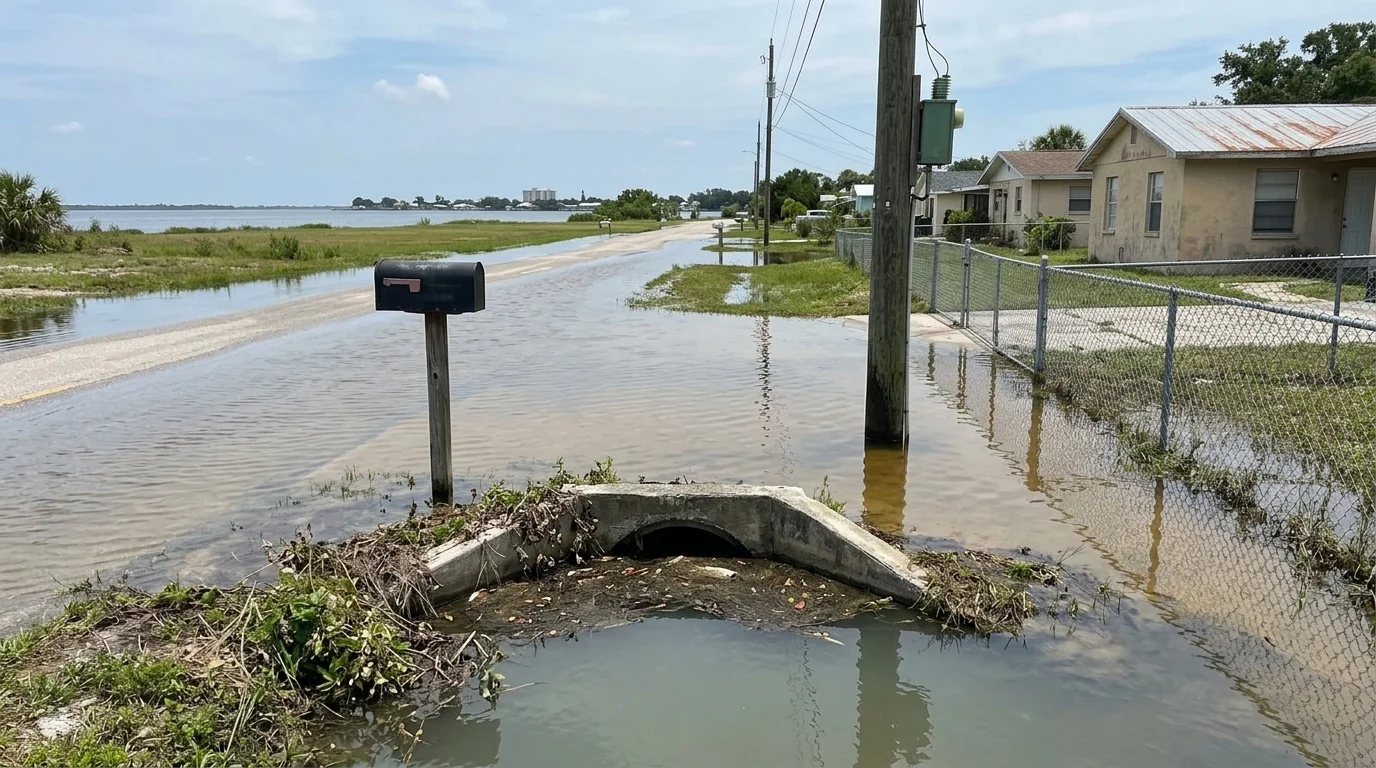
The re-entering institutions span the state's geography and its full range of housing-authority size. In San Patricio County on the Gulf Coast, directly in Beryl's path, the Odem Housing Authority and the Sinton Housing Authority have both posted solicitations for demolition-and-reconstruction contractors, signaling that existing public housing stock sustained damage severe enough to require replacement rather than repair. Red River County, in the far northeast corner of the state, issued a TDHCA HOME Program Housing Reconstruction RFP. The City of Texarkana posted a new housing construction solicitation. Houston's Housing and Community Development Department, running a parallel but separate process funded by the $381.9 million in CDBG-DR funds HUD allocated directly to Houston and Harris County, posted a Disaster Recovery 24-unit Single Family Home Repair Program RFP.
Source: NationGraph.
The breadth of that list, from a small coastal housing authority to a major city running its own HUD relationship, reflects how the federal allocation was structured. The GLO administers the bulk of the state's share across 92 eligible counties, with 27 designated as HUD's "most impacted and distressed." Houston and Harris County operate independently. Both tracks are now in the contracting phase simultaneously, which is why the RFP surge looks so sharp on a 30-day window.
What is notable about all of this is what is not driving it. The Texas Legislature's 89th session appropriated just $10 million for the Texas Housing Trust Fund for the entire 2026-2027 biennium. Texas Housers noted in March 2026 that the state "has failed again and again to put significant resources toward low-income housing programs." The procurement wave underway right now is not a state initiative. It is a federal mandate landing on local governments that have limited administrative capacity and a hard deadline: all CDBG-DR funds must be expended within six years of allocation, which places the spend-or-lose date around January 2031. For a small housing authority in Odem or Sinton, that deadline is not abstract. It is the reason a solicitation went out this month rather than next year.
HUD's active housing grant portfolio to Texas now exceeds $1.7 billion in total obligated amounts across more than 1,900 active grants, the largest federal housing commitment to the state in the modern record. That number provides the budgetary backdrop for why local governments are moving. The GLO's Homeowner Assistance Program alone accounts for $244.1 million directed at those 27 most-impacted counties, with a companion Homeowner Reimbursement Program carrying another $43.1 million. Local housing authorities that serve those counties are now the delivery mechanism, and they are scrambling to stand up the contractor relationships that will let them actually move the money.
For residents in disaster-affected counties, the immediate signal to watch is whether their local housing authority or county government has posted a solicitation in the last 60 days. The RFP is the leading indicator of when repair and reconstruction activity will actually begin on the ground. Contracts typically follow solicitations by three to six months, meaning the first federally funded rebuilds from Beryl could be underway in some communities by late 2026.
The larger question is what happens after the federal money runs out. The GLO's 2024 disaster recovery programs are one-time allocations tied to specific storm declarations. Without a meaningful state housing trust fund to sustain the institutional capacity being built right now, the local agencies now hiring contractors and standing up procurement processes may find themselves with nothing to procure once the CDBG-DR funds are exhausted. The 89th Legislature's $10 million appropriation suggests that question will fall to the 90th.