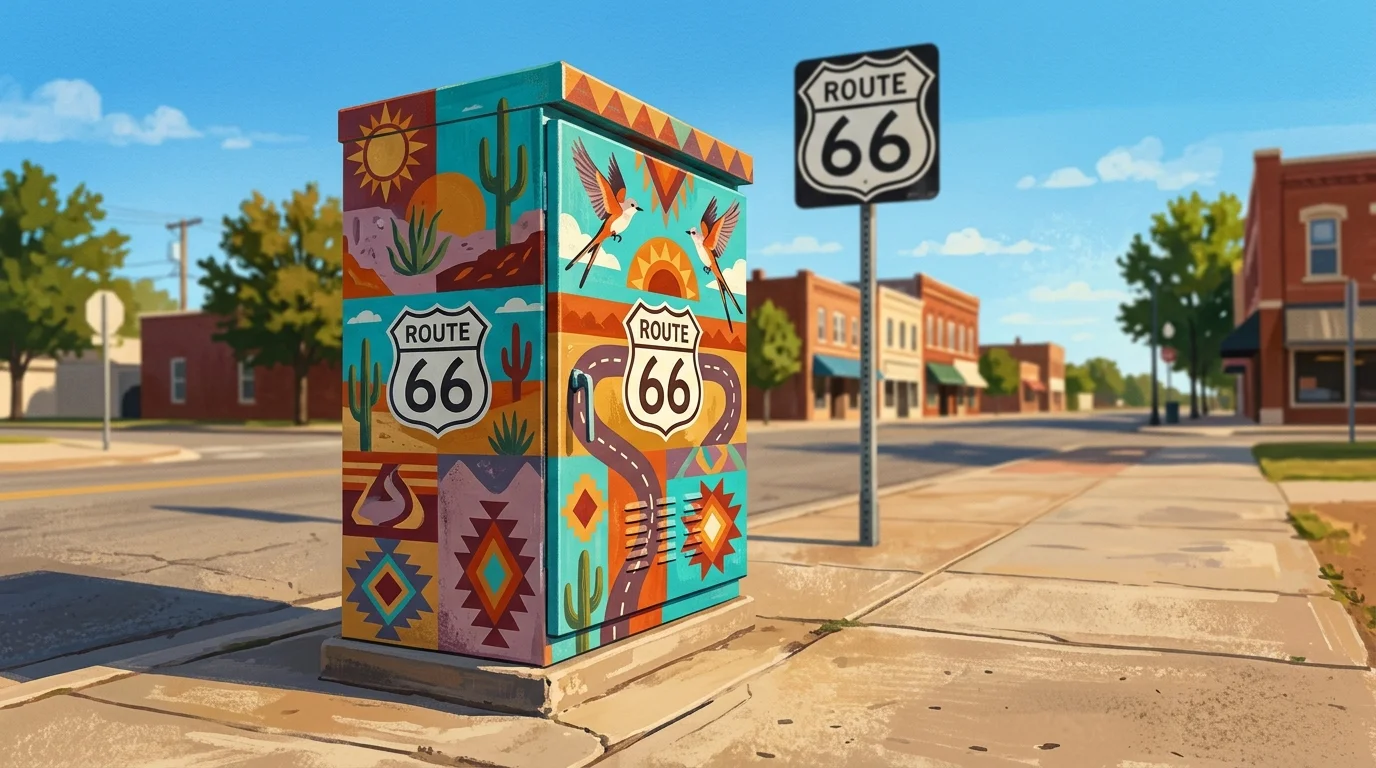
Tulsa, Oklahoma is recruiting artists to paint the traffic control boxes lining its Route 66 corridor, turning a stretch of otherwise unremarkable street infrastructure into public art just as the Mother Road prepares to turn 100.
The highway was commissioned on Nov. 11, 1926, and Tulsa has a stronger claim to it than any other city on the route. Local oilman Cyrus Avery lobbied the federal government to create the road and helped design its path, earning him the nickname "Father of Route 66." Today, more historic Route 66 mileage runs through Tulsa than through any other city, roughly 28 miles.
The traffic box project is one visible piece of a centennial makeover that has been years in the making. Tulsa voters approved the Improve Our Tulsa and Vision Tulsa funding packages, which together earmarked tens of millions of dollars for Route 66 corridor work including new streetscapes, gateway markers and the Avery Centennial Plaza. National and international tourists are expected to pour into the corridor this fall for centennial celebrations, and city leaders have been racing to make sure the street experience matches the moment.
Source: NationGraph.
Utility box art has become a common placemaking tool in cities across the country since the late 2000s, valued both as a deterrent to graffiti and as low-cost, pedestrian-scale public art. Oklahoma City and Norman have both run similar programs. Tulsa's version has a particularly deep artist pool to draw from: the Tulsa Artist Fellowship, backed by the George Kaiser Family Foundation, has brought hundreds of working artists to the city since 2015.
The city posted the call to artists on its bid portal on July 1. Budget figures, the number of boxes included and per-artist stipends were not specified in the summary available, so interested artists should consult the full RFP for those details. The centennial itself arrives in November, leaving a tight window for selection, production and installation.