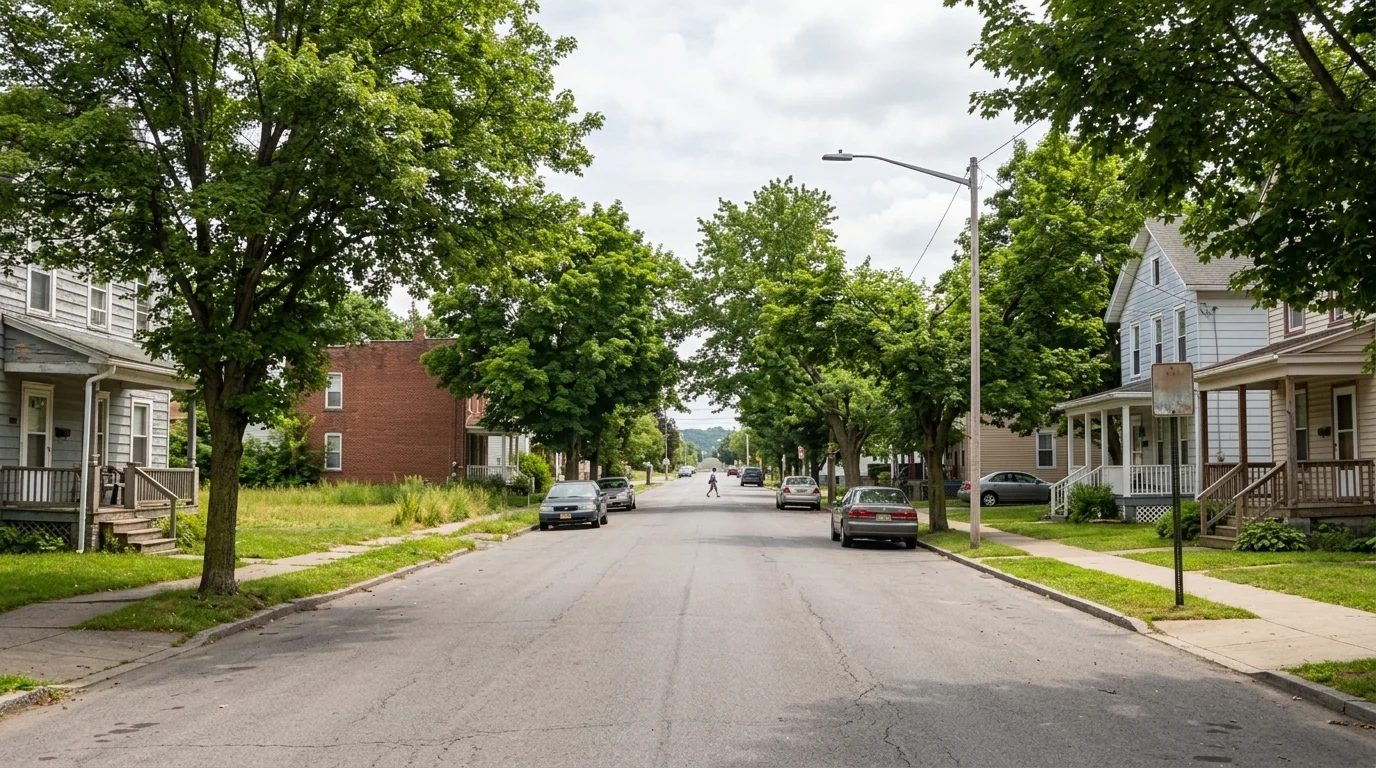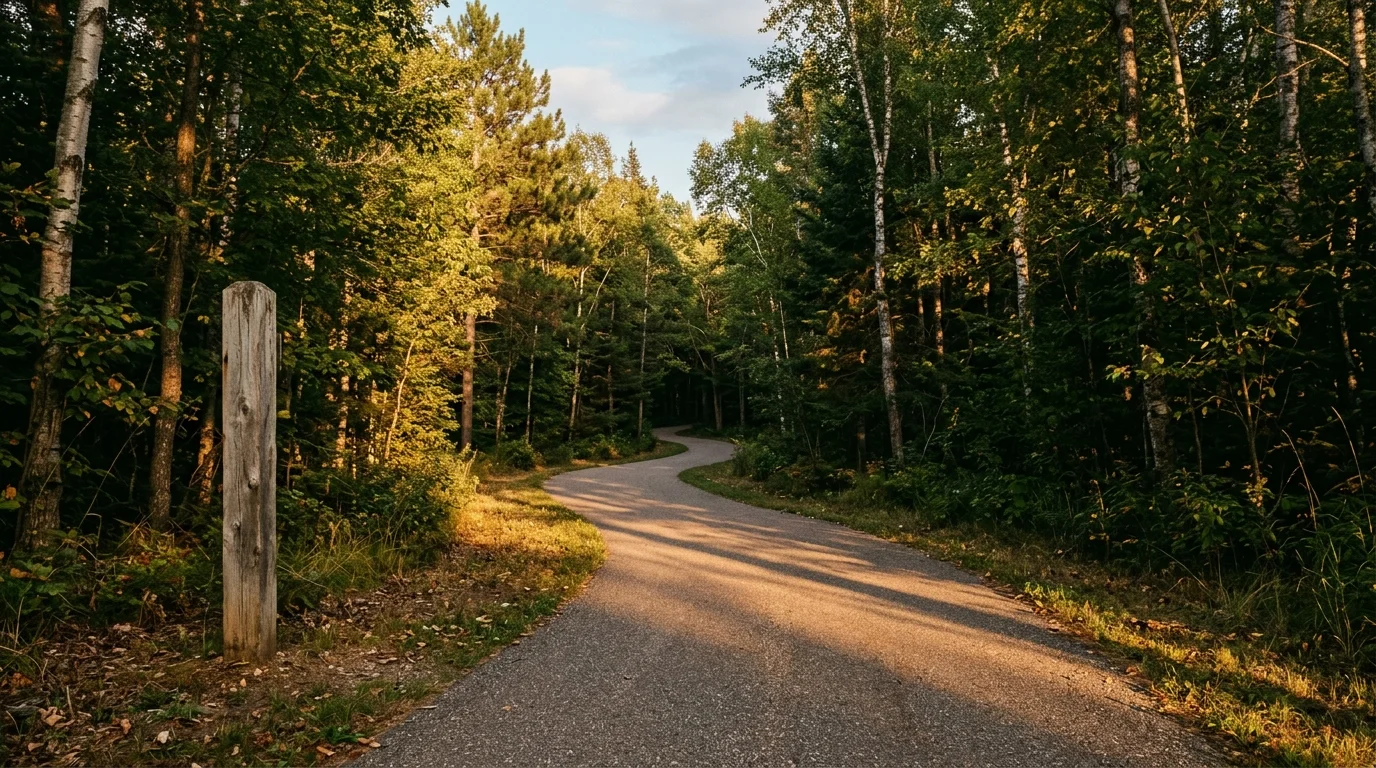
Bessemer, Mich., a small city of roughly 1,800 people in the far western Upper Peninsula, is building a new trailhead at the western terminus of the Iron Belle Trail, the 2,000-mile route stretching from Detroit's Belle Isle to the UP's edge near Ironwood.
The project sits on a city-owned parcel at the corner of Colby Street and South Moore Street, right alongside the existing trail. Funded by a Michigan Department of Natural Resources Trust Fund development grant, it will add a restroom pavilion, a paved parking lot, ADA-compliant sidewalks, and a connecting path to the main trail. The centerpiece is a large concrete pad designed to serve double duty: a learn-to-bike area in summer and an ice rink in winter, a practical choice in a city that averages more than 200 inches of snow annually.
The learn-to-bike element signals something beyond basic trail maintenance. Bessemer isn't just trying to serve long-distance cyclists passing through; it's trying to grow a local cycling culture and attract families who might otherwise have no on-ramp to the trail.
Source: NationGraph.
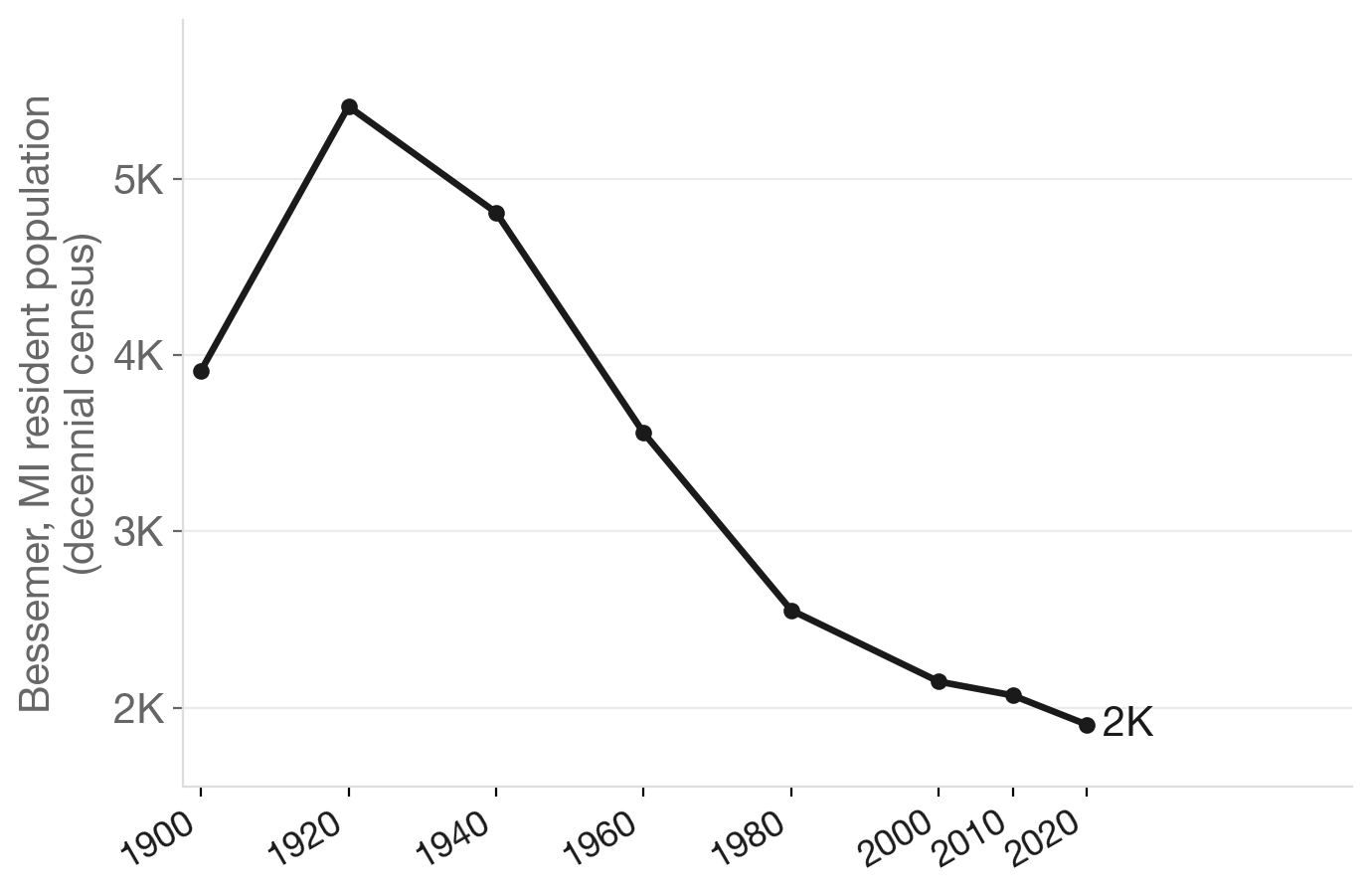
The economic motivation is hard to miss. Bessemer was founded on iron ore mining in the 1880s and has lost more than half its peak population since the mines declined. Like neighboring Ironwood, the city has increasingly looked to outdoor recreation, including skiing at Big Powderhorn Mountain Resort, snowmobiling and trail tourism, as its most viable path forward. A trailhead at the far end of the longest state-designated trail in the country is a tangible piece of that strategy.
The Michigan Natural Resources Trust Fund, which finances the grant, is itself funded by royalties from oil, gas, and mineral leases on state-owned land, meaning extraction revenue is being converted directly into public recreation infrastructure. The fund distributes roughly $25 million to $40 million statewide each year.
The city has posted an RFP seeking an engineering firm to handle design plans, utility design, and final project documents. The City Council is expected to review proposals at its Sept. 14 meeting.