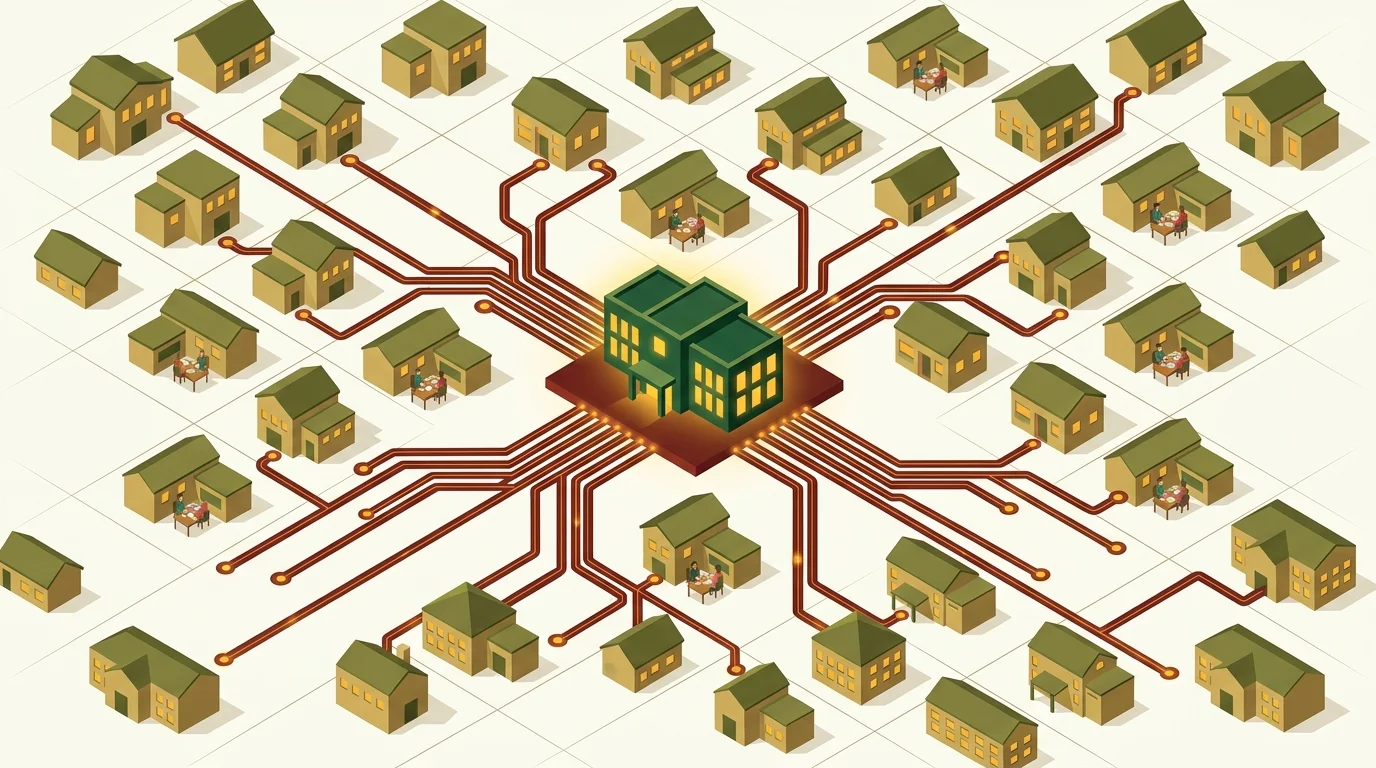
Delaware has issued five electric vehicle procurement actions in the last 30 days, against a baseline of fewer than one per month, a 7.5-fold spike that traces almost entirely to a single document: DelDOT's NEVI Round 2 solicitation, issued June 26, updated twice through August 18, and now open for vendor responses. The urgency behind it is not simply federal paperwork. It reflects a state in a policy bind it did not choose.
In early 2026, Delaware's zero-emission vehicle sales mandate, which would have required 43% of new dealership deliveries to be zero-emission by Model Year 2027, rising to 82% by 2032, was confirmed unenforceable by DNREC following federal action. The demand-side mechanism that was supposed to pull electrification forward is gone. What remains is the supply-side tool: the charging network. That is what the NEVI Round 2 RFP is building.
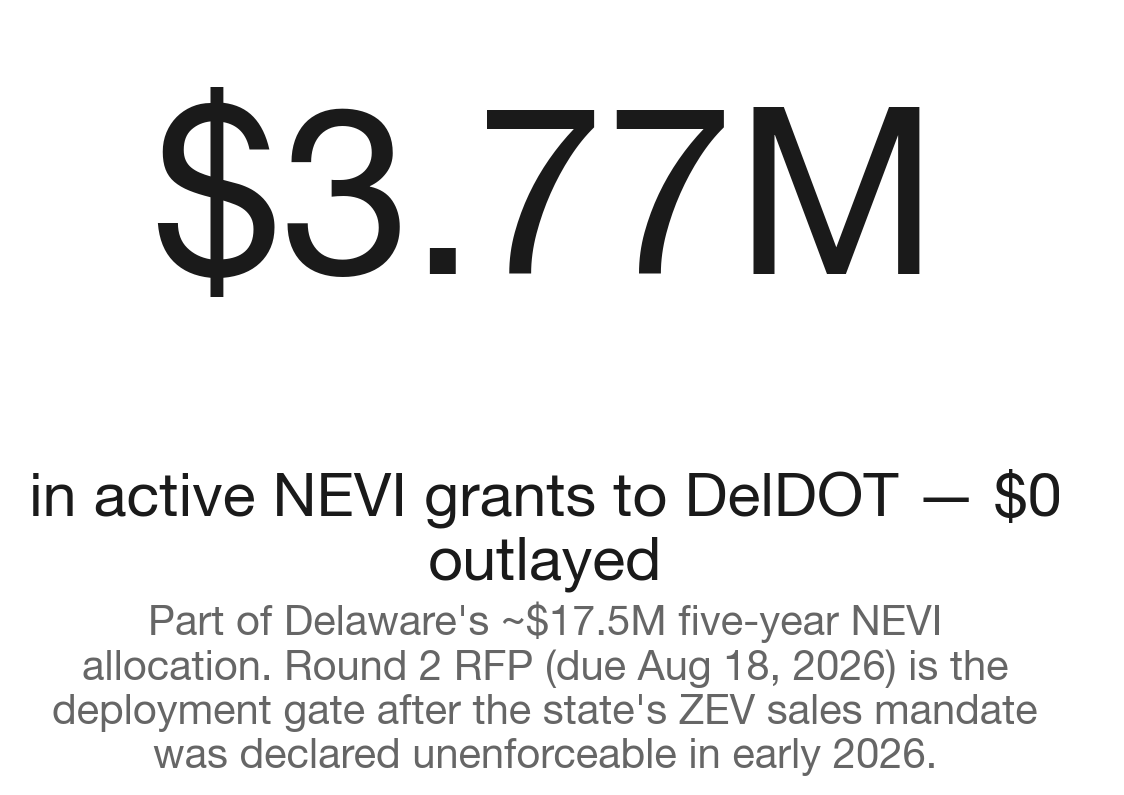
DelDOT holds approximately $3.77 million in active NEVI formula grants, all running through 2036, with zero dollars outlayed against them so far. Against a total five-year NEVI allocation of roughly $17.5 million from the 2021 Bipartisan Infrastructure Law, the unspent balance is large and the deployment window is not. The Round 2 solicitation (DOT262606-NEVI_2) is the critical gate between committed money and concrete chargers.
Source: NationGraph.
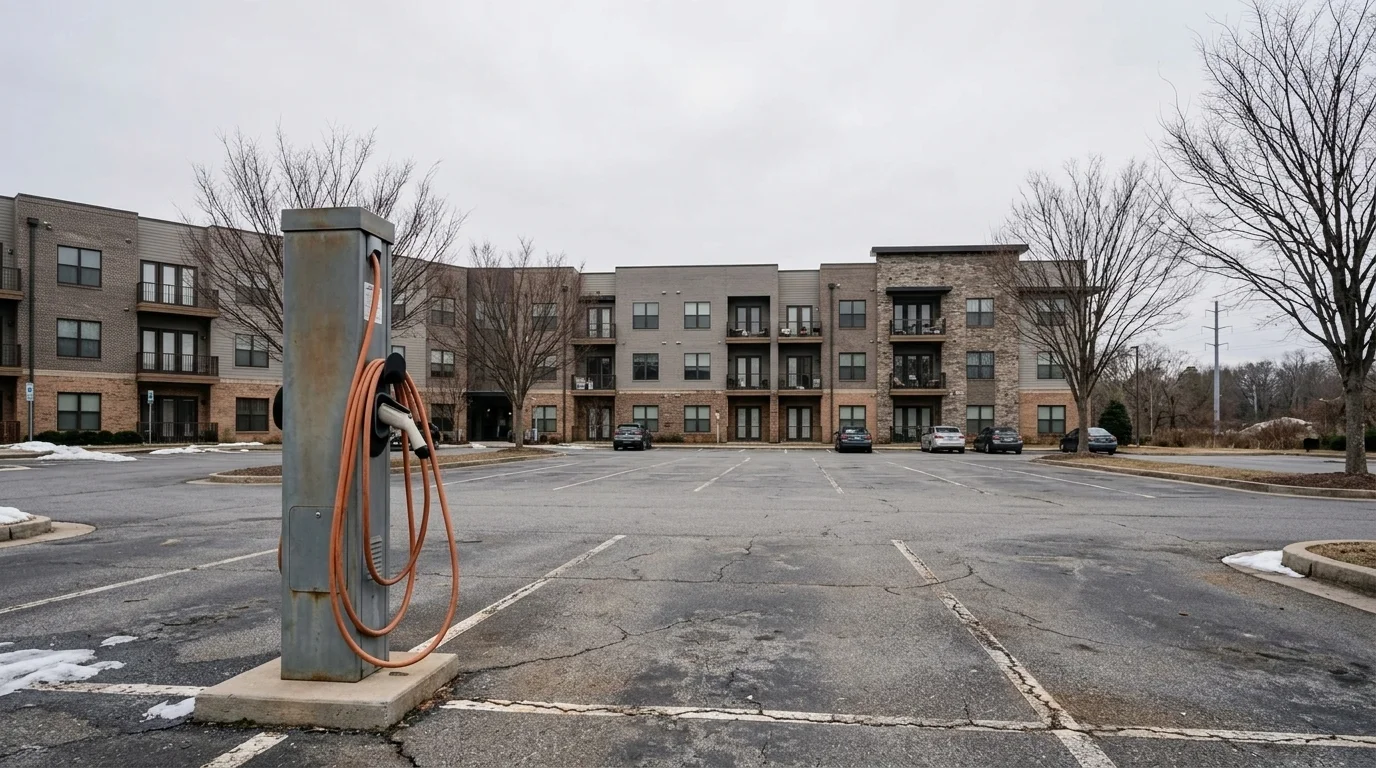
The geography of the problem matters here. Delaware is 96 miles north to south, second-smallest state in the country by area, which is precisely why its original NEVI plan named a specific ambition: to be the first state to complete its full Alternative Fuel Corridor highway network. Round 1 station awards have moved that goal forward. But Round 2 shifts the target. The new solicitation explicitly reaches beyond highway corridors into multifamily housing and communities identified as having charging access gaps. In a small, densely settled state, the remaining charging problem is not distance. It is access: renters, residents without driveways, and lower-income households who cannot install overnight Level 2 chargers at home.
That pivot matters because it defines what the NEVI money is actually being asked to do. If Delaware could rely on a ZEV mandate to put electric vehicles in driveways at scale, charging infrastructure along corridors would be enough. Without the mandate, the 2025 Delaware EV Roadmap's target of 17,000 EV sales per year by 2030 depends on voluntary adoption, and voluntary adoption is sensitive to charging convenience. Underserved communities and multifamily residents are exactly the buyers for whom the absence of a home charger is a veto on EV ownership. Round 2's focus on those populations is not incidental; it is the state trying to solve the access problem that the mandate would have solved from the other end.
DNREC's Clean Transportation Incentive Program, which offered consumer rebates and Level 2 business charging grants, ran through April 30, 2026. Whether that program is renewed and on what terms will be a secondary signal worth watching. For now, the federal NEVI pipeline is the primary mechanism.
In the Mid-Atlantic peer group, Delaware's 30-day procurement activity puts it behind only New Jersey, which posted eight EV-related RFPs in the same window. Pennsylvania recorded two; Maryland one. The regional comparison is instructive less for competitive reasons than for context: smaller states with fewer procurement offices can show outsized spikes when a single significant solicitation drops. Delaware's number reflects one real program in active vendor selection, not a portfolio of concurrent initiatives.
The August 18 response deadline has passed, which means DelDOT is now in vendor evaluation. The next visible signal will be award announcements, which vendors, which sites, which communities. That is when the $3.77 million in committed-but-unspent grants begins to move, and when Delaware's bid to build the infrastructure for an EV transition it can no longer mandate either accelerates or stalls.