Twenty-eight Washington institutions issued a stormwater-related RFP for the first time in over a year during the past 30 days, roughly 50 percent above the state's 12-month rolling average of about 19 first-time issuers per month. The institutions in question include Granger, a Yakima County city of 3,721 people, and Mansfield, a Douglas County town of 328. Neither has had to build this kind of procurement infrastructure before. They are doing it now because they have no choice.
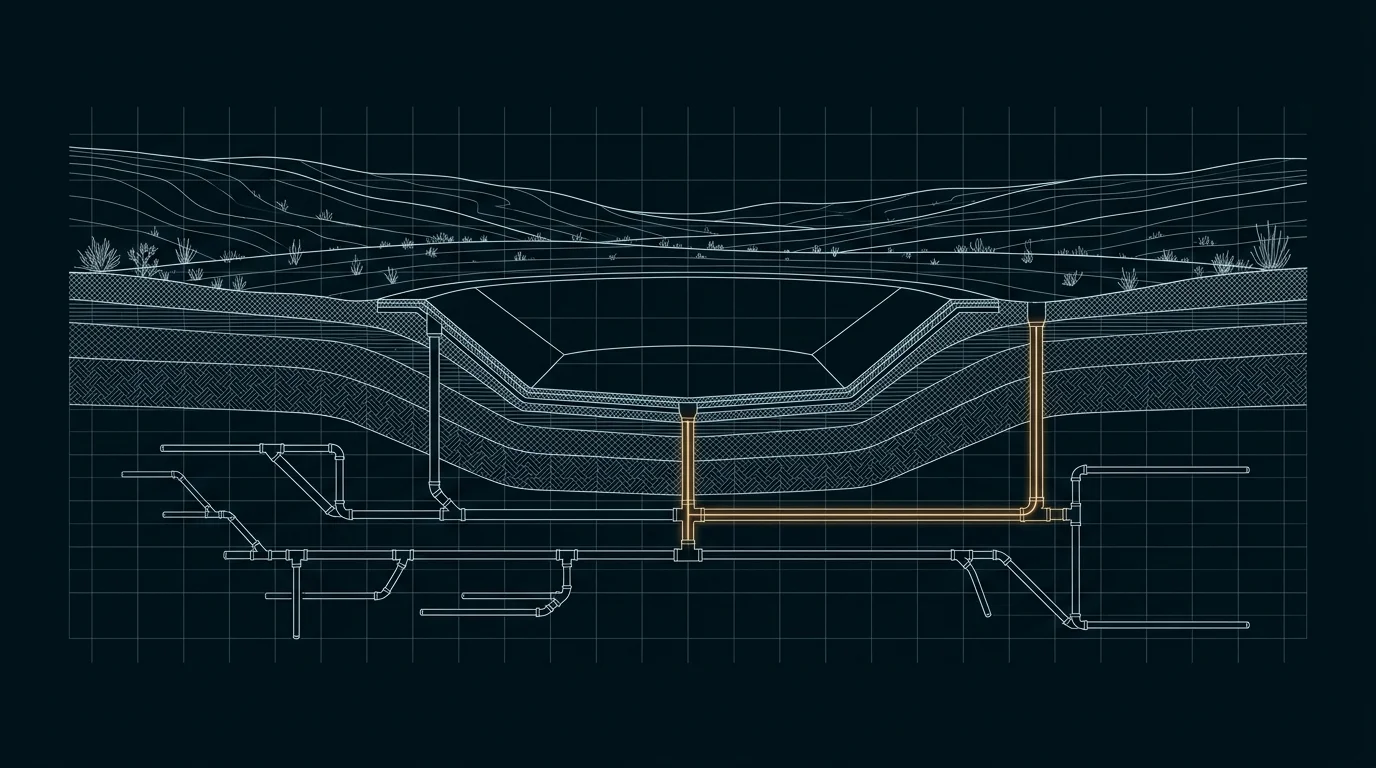
The forcing function is the 2024–2029 Western Washington Phase II Municipal Stormwater Permit, issued by the Washington State Department of Ecology and effective August 1, 2024. The permit covers more than 80 cities and portions of six counties, and it introduced the most materially new requirements in the state's stormwater permitting history in five years. Two deadlines are now bearing down simultaneously: MS4 outfall mapping and tree-canopy documentation must be completed by December 31, 2026, and updated Stormwater Management Action Plans (SMAPs) are due by March 31, 2027. For larger cities with established stormwater offices, these are heavy lifts. For a town of 328 people that has never had a formal stormwater program, they represent something closer to building one from nothing.
The procurement wave did not materialize overnight. Washington stormwater RFPs climbed to 70 issuing institutions in February 2026 and 75 in May 2026, well above any comparable monthly figure from prior years. That sustained acceleration reflects the permit's logic: the December 31 deadline is legally binding and non-negotiable, engineering firms need lead time to deliver mapping products, and jurisdictions that waited too long into 2025 are now competing for capacity in an already crowded consulting market. The 28 first-time issuers in the current 30-day window are the tail of that wave, the jurisdictions that lacked both the staff and the institutional experience to move earlier.
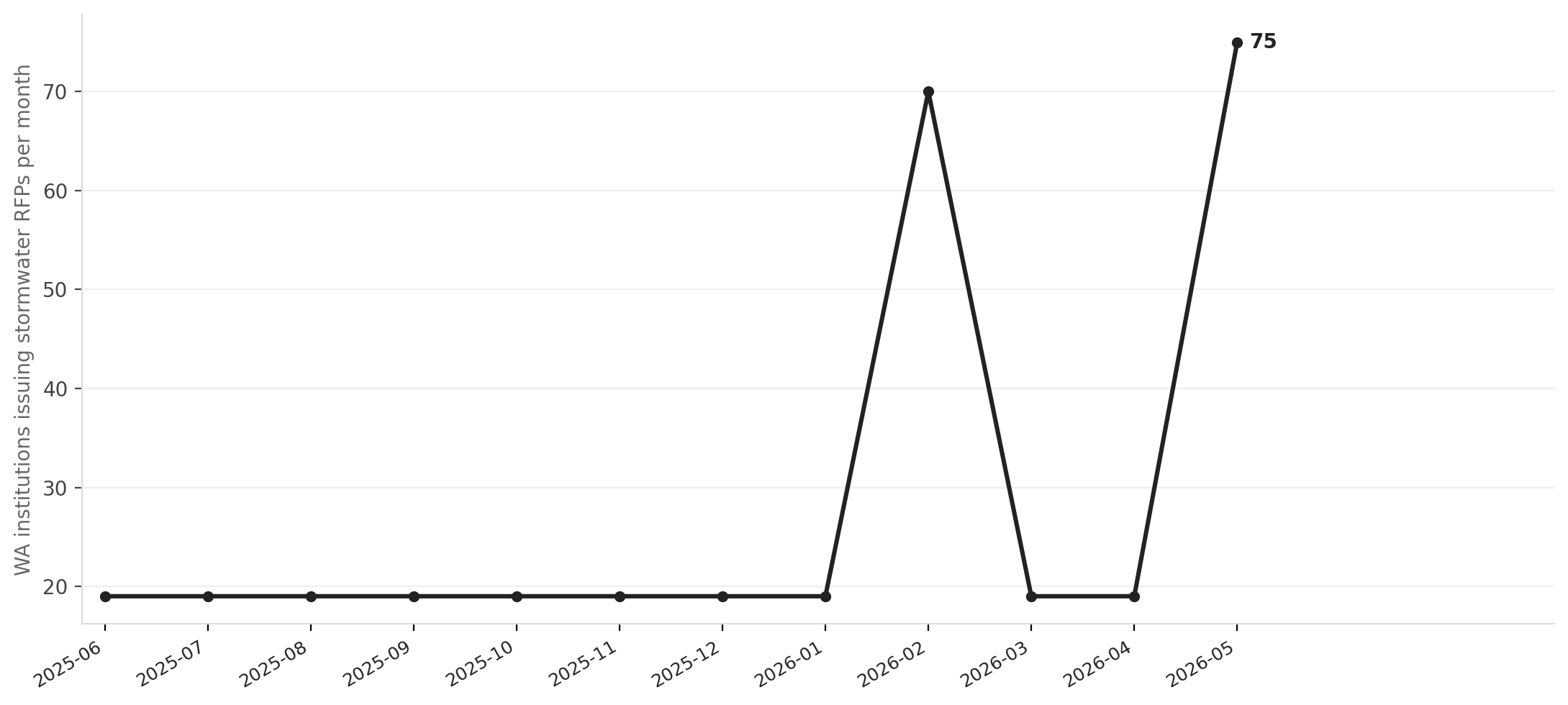
Source: NationGraph.
Larger counties moved first and set the scale. King County issued an RFP for stormwater retrofit planning in urban unincorporated areas. Clark County is procuring a water quality retrofit on Highway 99. Spokane County has out stormwater package projects and an engineering on-call RFQ in market simultaneously. Whatcom County is moving on drainage improvements at Austin Court. Bremerton is procuring design work for Oyster Bay Regional Treatment Facilities. These are institutions with dedicated public works staff and prior permit cycles behind them. The fact that smaller municipalities are now following indicates the compliance pressure has reached the bottom of the regulated universe.
A second permit, the 2026 Construction Stormwater General Permit, took effect January 1, 2026, adding a parallel layer of obligation. It expanded inspection requirements and turbidity monitoring for construction sites statewide, creating new compliance costs for any jurisdiction managing active development. For a small city already scrambling to meet the December 31 mapping deadline, the construction permit represents an additional demand on staff and budget that did not exist a year ago.
The Washington Stormwater Center has stood up a statewide MS4 Mentorship Network specifically to help under-resourced jurisdictions navigate the new requirements, an acknowledgment by the state's own technical assistance infrastructure that the compliance gap is real and unevenly distributed. Federal grant dollars are also in the mix: Washington holds active NOAA coastal management grants totaling $73.6 million through 2029, alongside $24.8 million through WSDOT and $16.3 million through Snohomish County, funding that can support the broader resilience work the permit demands. But grants and mentorship programs do not substitute for hired engineers, and the December 31 deadline does not move.
For residents of the jurisdictions now entering this market for the first time, the near-term consequence is straightforward: their cities and counties will be spending money on stormwater consulting services they have not previously budgeted for, and that spending is being driven by state regulatory compliance rather than local capital planning priorities. Whether the resulting infrastructure improvements, better outfall mapping, documented tree canopy, updated drainage action plans, translate into measurable water quality gains in the Puget Sound basin and Eastern Washington waterways is a question the 2024–2029 permit cycle is designed to answer.
The next signal to watch is whether the December 31 deadline holds under the three pending appeals of the Phase I and Western Washington Phase II permits to the Pollution Control Hearings Board. The permits remain in effect during appeal proceedings, meaning jurisdictions currently procuring services have no regulatory reason to slow down. If an appeal succeeds in modifying permit requirements after December 31, some of that procurement will have been done against a standard that changes. For now, the deadline is real, the consulting market is tight, and Washington's smallest cities are in it.