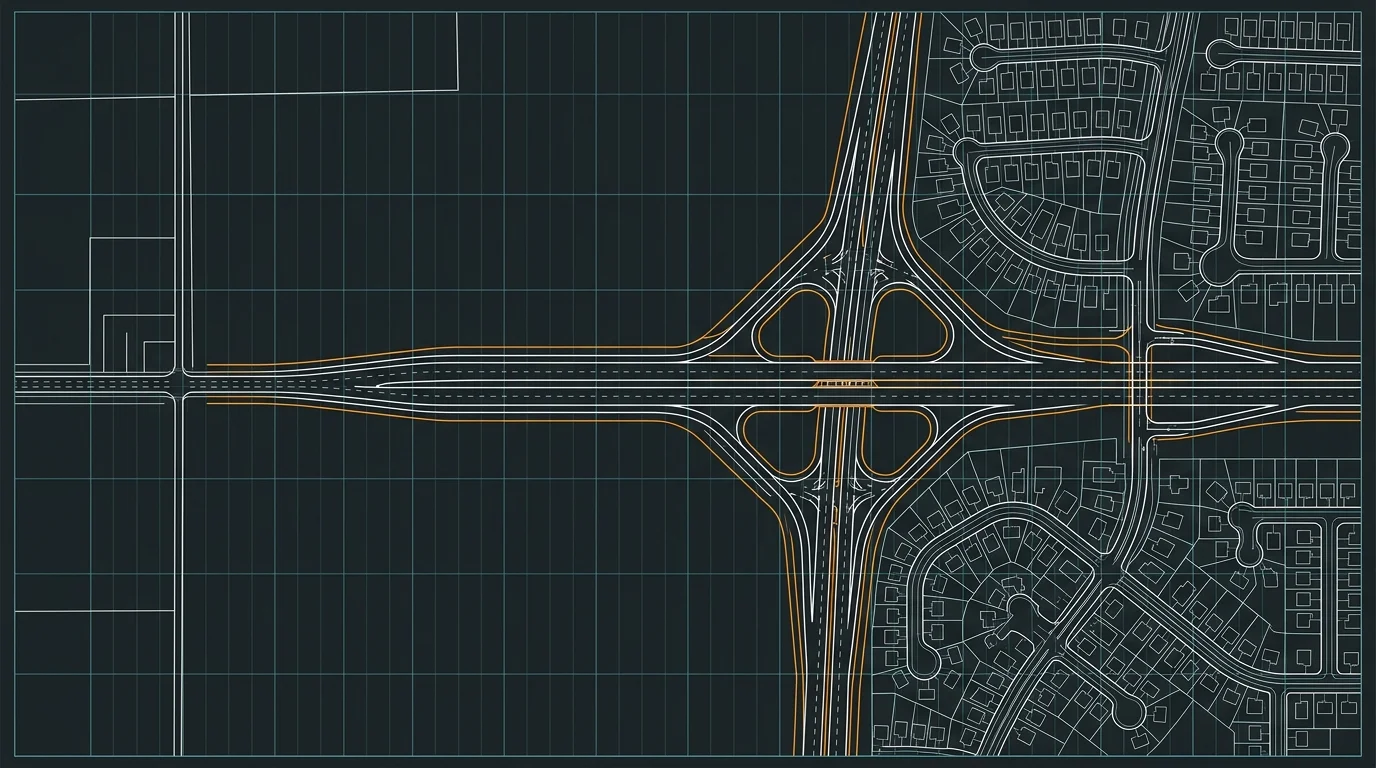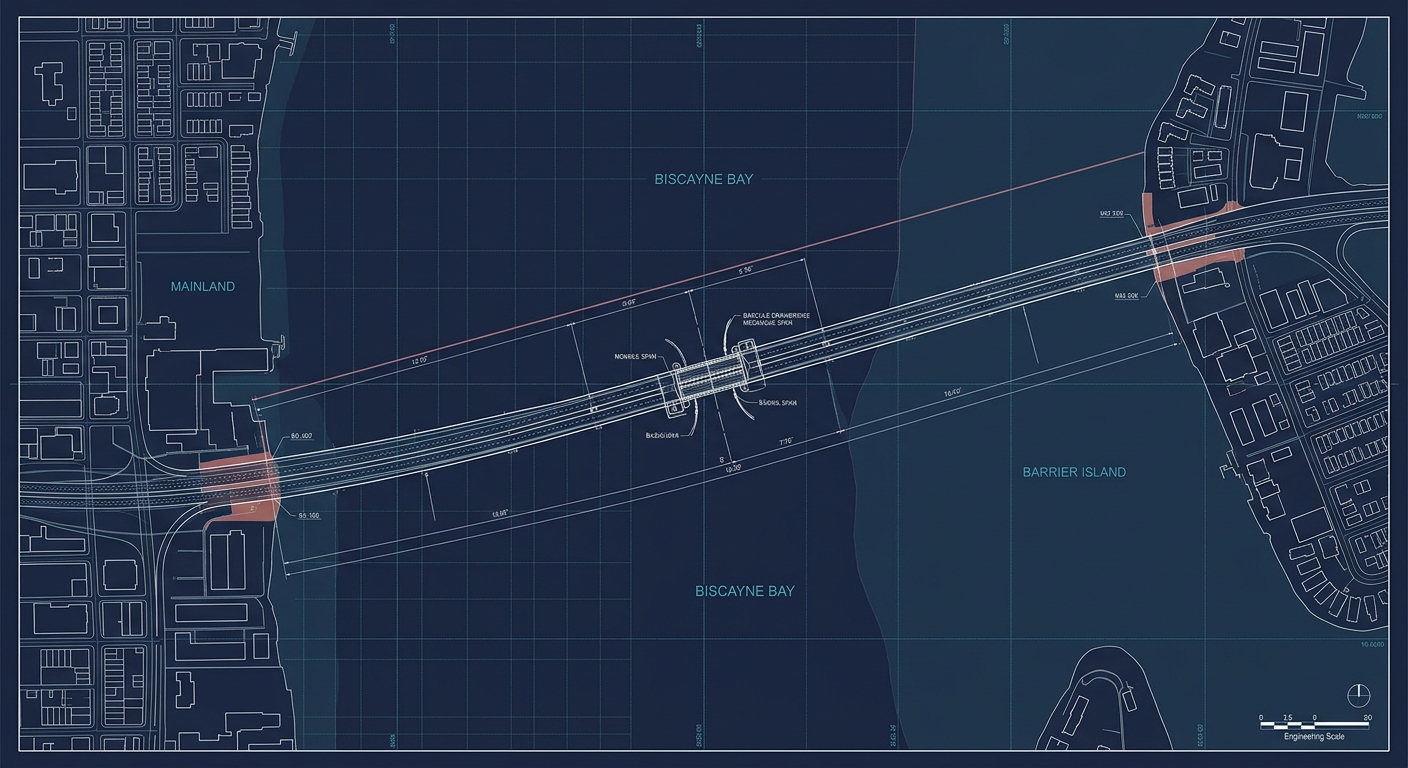
Bay Harbour Islands, a barrier island community of about 6,000 people in Miami-Dade County, is taking the first steps toward replacing the aging Broad Causeway Bridge, its only connection to the mainland. The Florida Department of Transportation is channeling $500,000 in federal highway funds to the town to begin preliminary engineering on a full bridge replacement — the opening move in what will almost certainly be a multi-year, multi-hundred-million-dollar project.
The Broad Causeway has spanned Biscayne Bay since 1931, linking North Miami to Bay Harbour Islands, Bal Harbour, and Surfside. For residents on those barrier islands, it isn't a convenience — it's the lifeline. The current bridges, including a bascule drawbridge over the Intracoastal Waterway, have been rebuilt and patched over the decades, but the infrastructure is aging at the same time that South Florida faces intensifying pressure from saltwater corrosion, hurricanes, and sea level rise. NOAA projects 10 to 12 inches of additional sea level rise in Southeast Florida by 2040, threatening the low-lying causeway approaches even before the bridges themselves are considered.
The collapse of Champlain Towers South in nearby Surfside in June 2021, which killed 98 people just blocks from Bay Harbour Islands, made aging coastal infrastructure a defining political issue in this corner of Miami-Dade. While that disaster involved a building rather than a bridge, it triggered a region-wide reckoning about deferred maintenance and what happens when the slow accumulation of wear is ignored too long.
For a municipality with a modest budget despite its affluent tax base, a bridge replacement is simply out of reach without outside help. The $500,000 flows through FDOT's Local Agency Program, a standard mechanism that lets small towns access federal transportation dollars they couldn't otherwise qualify for. The town will manage the preliminary engineering under state oversight.
That engineering work — environmental review, design alternatives, public input, and cost estimation — typically takes two to four years on its own. Construction is likely the better part of a decade away, and the full price tag remains unknown until that early work is complete. The $500,000 is seed money for a project whose final cost could easily reach the tens of millions.
The open question hanging over the project is where that money will come from. Toll revenue from the causeway has historically covered maintenance, but a full replacement almost certainly exceeds what tolls alone can support. With the Bipartisan Infrastructure Law directing $40 billion toward bridge repair and replacement nationwide, Bay Harbour Islands will be competing with hundreds of other communities for a share of that funding as the project moves through design and into construction.