Seven Ohio institutions issued water infrastructure procurement contracts for the first time in more than a year during the 30 days ending August 21, 2026, a burst of activity that ties April 2026 as the highest monthly count in the trailing 18-month window, and that is almost entirely explained by a single date: September 30, 2026.
That is the day the Infrastructure Investment and Jobs Act's five-year water infrastructure authorization expires, closing the $50 billion federal funding cycle that rewrote what Ohio communities thought was financially possible. Ohio EPA's own program documents confirm that program year 2026 is the final year for IIJA-funded Clean Water State Revolving Fund capitalization grants. After that, the principal forgiveness loans and zero-interest financing that made large-scale water projects accessible to communities without credit market access do not automatically continue.
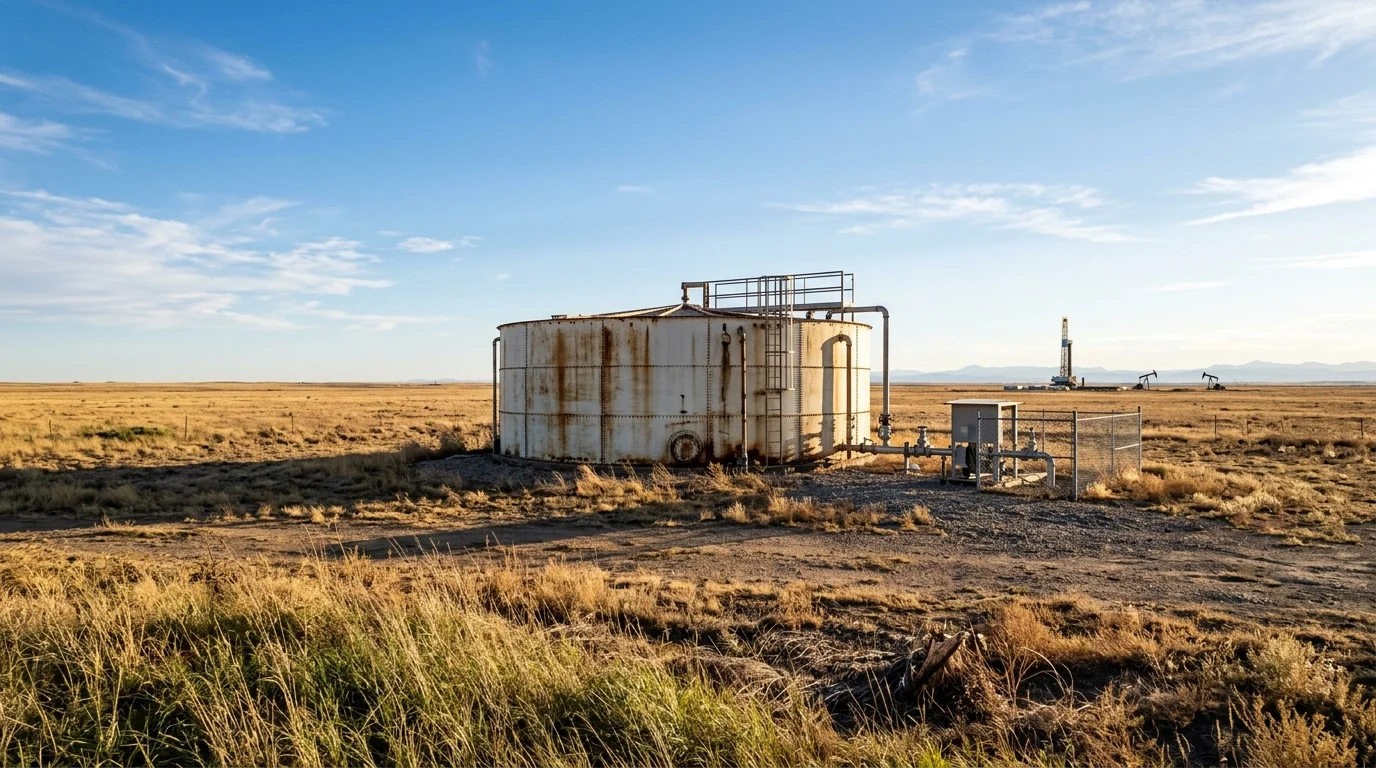
The result is a procurement scramble that cuts across institution types and city sizes. Dublin, a Columbus suburb of nearly 49,000 residents, issued an RFP for water tank improvements. Montgomery County Environmental Services put out a solicitation for a water reclamation facility renovation. Columbus State Community College and Sinclair Community College in Dayton both moved on HVAC and chiller water piping systems. The Columbus-Franklin County Finance Authority opened bidding on waterline improvements. And the Village of Clarksville, population 535, issued an RFP for a full water meter replacement and AMI system, the kind of capital project that, before IIJA principal forgiveness provisions, a town that size had no realistic path to financing.
The urgency is compounded by what happened at the federal level in 2025. National SRF project-level awards fell 53% in the first half of 2025 due to federal staffing reductions and regulatory uncertainty, leaving a substantial backlog of undistributed Ohio SRF funds sitting available in 2026 for communities that can show active procurement. Ohio EPA currently holds 122 active EPA water grants totaling $1.28 billion in obligated funds, including $422 million in Clean Water SRF and $113 million in Drinking Water SRF grants committed in the past two years alone. That money is real and it is moving, but only to jurisdictions that have procurement processes underway.
The White House's FY2026 budget proposed cutting SRF appropriations by 31.5%, reinforcing the message that this window is closing. Ohio communities working through the state's Water Pollution Control Loan Fund or the Drinking Water Assistance Fund are operating under hard administrative deadlines: to qualify for current-cycle financing, local governments need to have solicitations out. The Ohio EPA's PY2027 Drinking Water Assistance Fund plan, published in late July 2026, anticipates a $200 million bond issuance right after July 1, with another $400 million expected during PY2027, the state aggressively recycling loan repayments to keep money flowing even as federal top-ups become uncertain. But recycled repayments carry market-rate terms; the principal forgiveness is the piece that expires.
Ohio's exposure to this deadline is unusually broad. The state's geography layers three distinct infrastructure crises: aging Rust Belt pipe networks in mid-sized cities like Dayton and Hamilton, Lake Erie shoreline communities managing harmful algal bloom contamination, and rural villages with no independent capital market access. IIJA's principal forgiveness provisions were specifically designed for that last category, and Clarksville is the clearest illustration of what that means in practice. A village of 535 people does not issue AMI meter replacement RFPs in a normal capital environment. It is issuing one now because the financing terms available through the current SRF cycle are unlike anything that will exist on October 1.
For Ohio residents, the near-term signal to watch is whether these seven new-entrant solicitations result in awarded contracts before the federal deadline or slip into a post-IIJA financing environment with harder terms. Communities that complete procurement this month and next can lock in project financing under current SRF conditions; those that miss the window will face the state's bond-backed program, which continues but without the forgiveness component that made the math work for smaller jurisdictions.
The longer-term question is what comes next federally. National League of Cities analysis published in December 2025 found that local water officials broadly expect a funding gap after the IIJA cycle closes, with no comparable authorization on the horizon. Ohio EPA's forward planning documents acknowledge this by projecting heavier reliance on state bond issuances starting in PY2027. Whether that bridge holds, and at what cost to communities like Clarksville, will become visible in the solicitations, or the silence, that follow September 30.