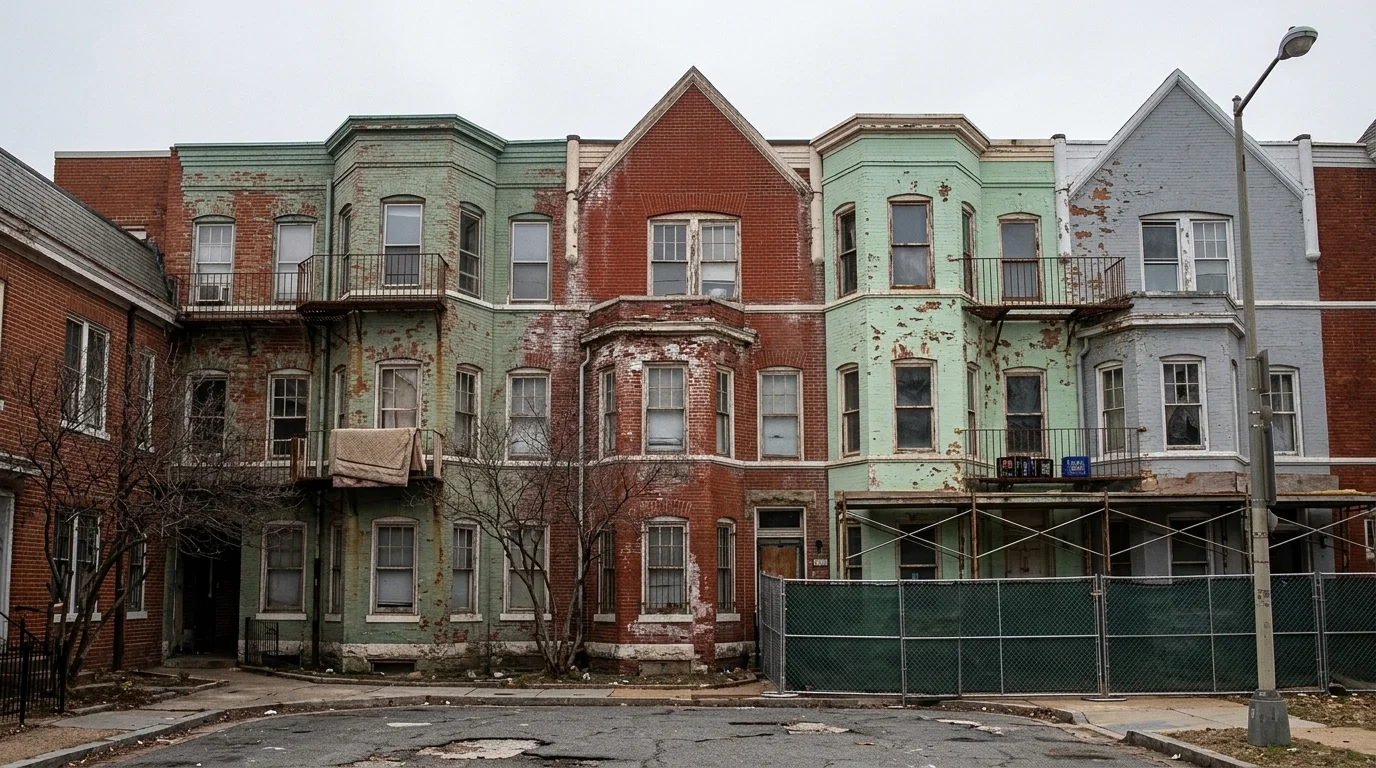
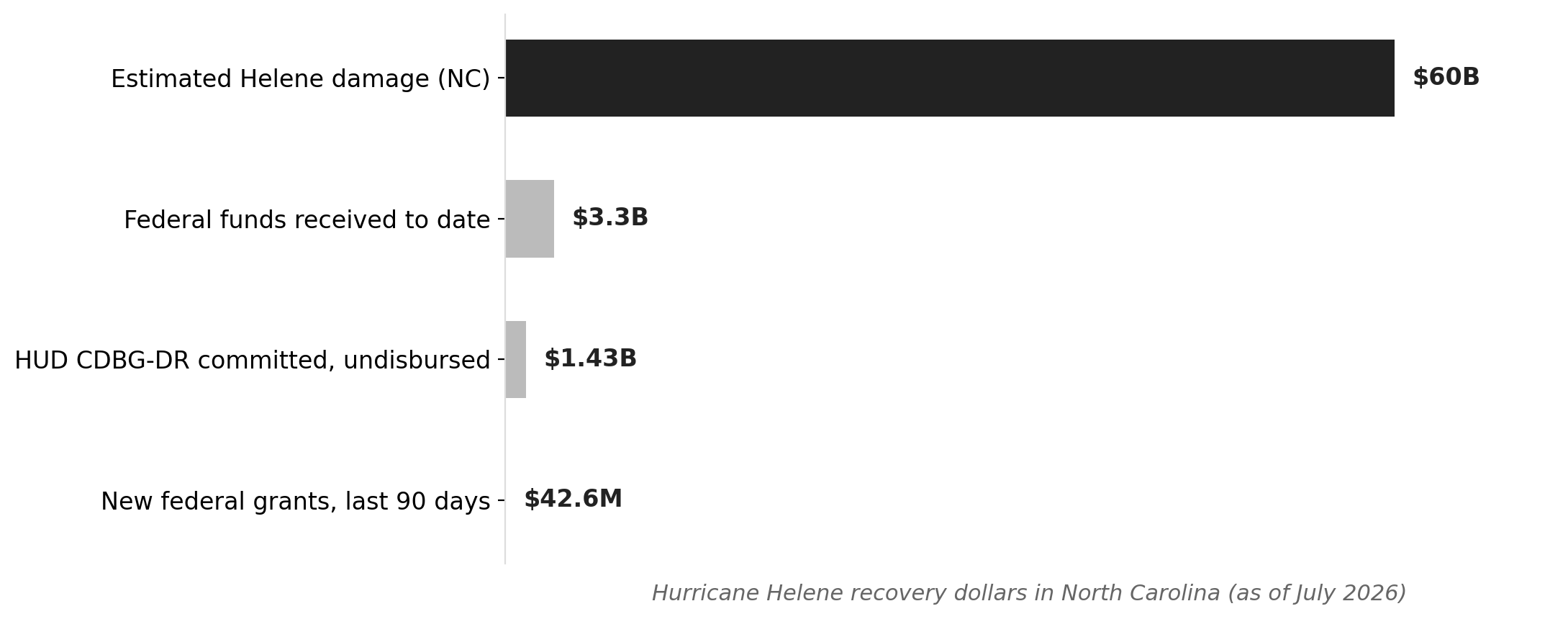
A $1.428 billion federal grant sits fully committed to North Carolina's Hurricane Helene recovery, awarded by HUD on July 29, 2025, with an action plan approved by April 2026. As of the latest federal data, it has disbursed zero dollars.
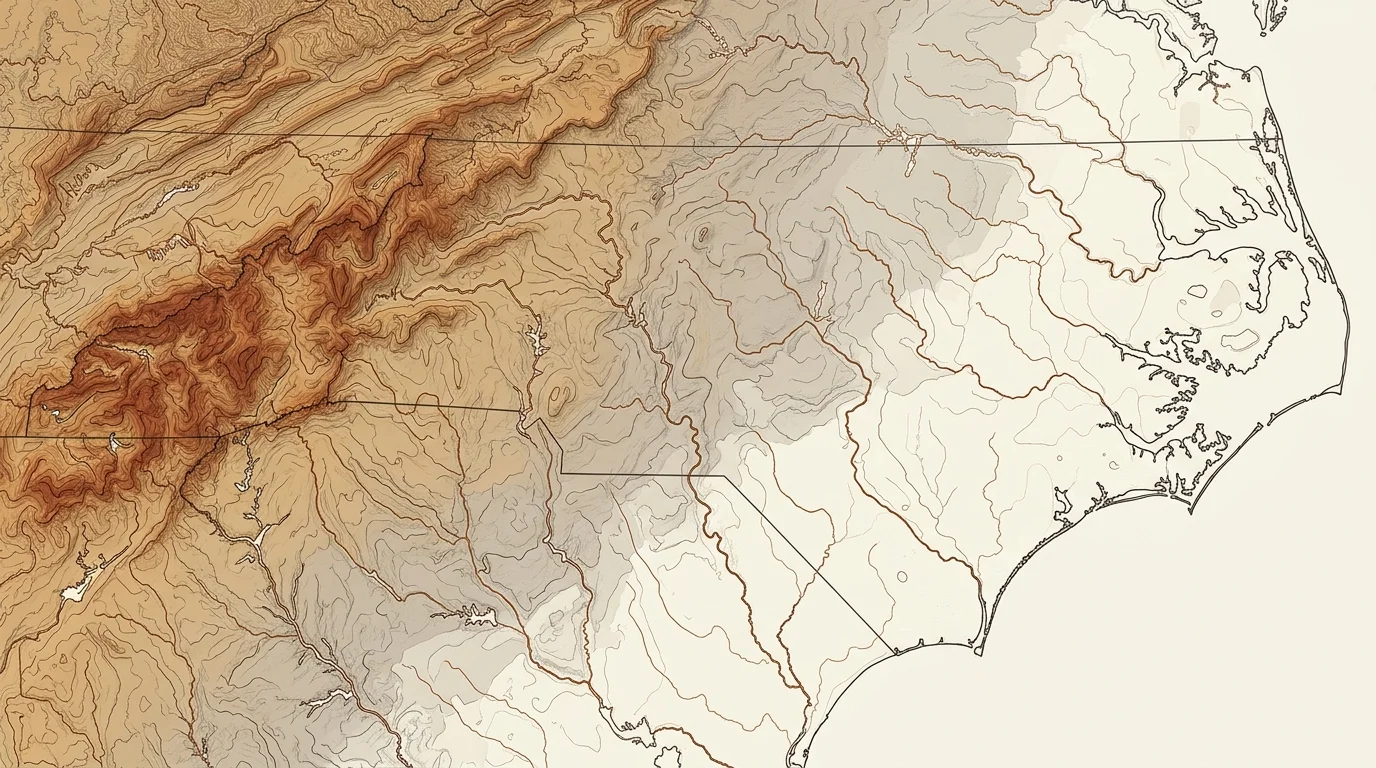
That figure is the sharpest edge of a broader slowdown. New federal hurricane-keyword grant commitments to North Carolina in the trailing 90 days total $42.6 million, down 94 percent from $762 million in the same window a year earlier. Part of that drop is a statistical artifact: the prior-year window captured a one-time $663 million EPA revolving fund spike and $63 million in USDA forestry aid. But the collapse in new commitments is real, and it arrives against a landscape of staggering unmet need. Governor Josh Stein's office estimates Hurricane Helene caused nearly $60 billion in total damage across western North Carolina. As of July 2026, the state has received roughly $3.3 billion in federal funds, about five cents on the dollar.
The reason the pipeline has slowed is not a shortage of committed money. It is Washington.
Source: NationGraph.
The Trump administration canceled $11 billion in disaster payments to 45 states in fall 2025, a move reported by E&E News that prompted North Carolina to join a coalition of 20 states suing the administration over abruptly terminated hazard mitigation grants. In June 2025, DHS Secretary Kristi Noem imposed a rule requiring individual approval for any FEMA grant payment above $100,000, effectively creating a manual bottleneck for the largest and most urgent disbursements. FEMA's Disaster Relief Fund was subsequently drained to emergency levels. According to ProPublica's reporting on the grant freeze, hazard mitigation spending slowed to a trickle through fall 2025 across every affected state.
The CDBG-DR grant, administered through NC Commerce's Division of Community Revitalization, was designed to be the cornerstone of western North Carolina's housing recovery. HUD allocated the $1.428 billion on January 16, 2025; the state's action plan was approved in April 2026. Eighty percent of the funds, roughly $1.1 billion, is earmarked for the most-impacted counties including Buncombe, Haywood, McDowell, and Rutherford. A separate $225 million allocation goes directly to the City of Asheville. None of it has reached homeowners.
The housing math is unsparing. The NC Budget and Tax Center estimates that the entire $1 billion housing allocation covers less than 20 percent of the $5.3 billion in unfunded residential damage in western North Carolina. The unspent grant isn't a solution to the housing gap; it is the floor beneath which recovery cannot begin.
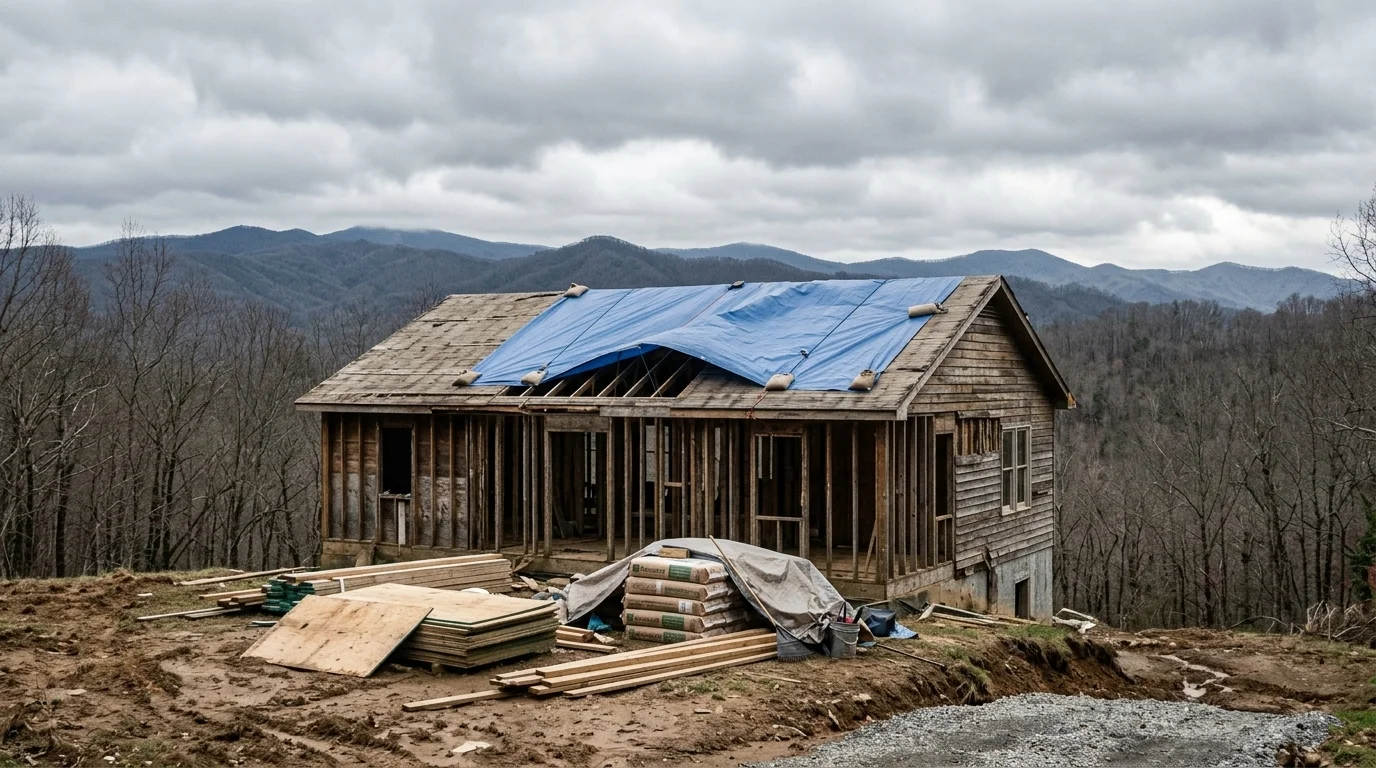
The rest of the active federal portfolio is moving, but slowly. North Carolina holds more than $2 billion in active DOT hurricane-designated grants and $805 million in EPA water infrastructure grants, most running through the early 2030s. The three new commitments in the trailing 90-day window are modest by comparison: a $29.9 million USDOT Emergency Relief grant, a $10.6 million USDA Emergency Watershed Protection grant targeted at Chimney Rock Village, and a $2.1 million USDOT supplemental award. Chimney Rock, a mountain town of fewer than 200 residents, lost virtually its entire commercial district to the September 2024 flooding and has been waiting for watershed stabilization work before any meaningful reconstruction can begin.
Facing the federal gap, North Carolina's Republican-controlled state legislature has passed six Helene relief packages, appropriating $524 million from the state's Helene Fund and $120 million in bridge funding for home reconstruction. A proposed state budget would set aside an additional $700 million, much of it structured to unlock federal matching requirements once the CDBG-DR dollars begin to flow. Governor Stein traveled to Washington in July 2026 to advocate for $10 billion in additional federal funding.
The political arithmetic is uncomfortable for both parties. Democratic Governor Stein is pressing a Republican administration for funds the administration has publicly deprioritized. The Republican legislature has filled part of the gap with state dollars but cannot replicate the scale of federal housing programs designed specifically for this kind of catastrophic loss. And the mountain geography that made Helene's inland flooding so destructive, washed-out roads, isolated hollows, collapsed infrastructure serving small populations, makes every construction dollar more expensive and every administrative delay more consequential for residents.
The next signal to watch is whether HUD releases the CDBG-DR drawdown portal to NC Commerce before the end of the 2025-2026 state fiscal year, a threshold that would determine whether hundreds of millions in housing reconstruction contracts can be signed before winter. If the funds remain locked, the gap between what has been promised and what has been built will define the Helene recovery story heading into its third year.