Federal hurricane recovery grants to South Carolina jumped 3,241 percent in the last 90 days, from $906,000 to $30.28 million, and nearly every dollar of that surge arrived on a single morning: April 1, 2026, when EPA Region 4 obligated three grants to the South Carolina Department of Environmental Services in one burst. The money is not going to the coast. It is going to the water pipes and septic systems of Upstate South Carolina towns that most people do not think of as hurricane country, because that is precisely where Helene broke things.
The source is the Disaster Relief Supplemental Appropriations Act of 2025 (P.L. 118-158), signed December 21, 2024, which authorized a $3 billion national top-up to the EPA's State Revolving Fund programs for states hit by Hurricanes Helene and Milton. EPA's March 2026 implementation memorandum for that appropriation set a hard deadline: states must obligate all supplemental funds by September 30, 2026, or lose them. That compliance clock is why three grants landed on the same Tuesday in April rather than trickling in over months.
The structure of South Carolina's allocation reflects the specific failure mode Helene created. The largest grant, $17.77 million, goes to the Drinking Water State Revolving Fund. A second grant of $9.40 million is directed explicitly to clean water resilience, with EPA language earmarking it to "improve resilience of septic systems and connect homes to centralized wastewater systems impacted by Hurricanes Helene and Milton." South Carolina then exercised a statutory option to transfer a third $3.10 million emerging contaminants tranche into its drinking water fund, bringing total drinking water hardening to $20.87 million. As EPA's award announcement noted, Regional Administrator Kevin McOmber called the funds "critical to South Carolina as they rebuild with more resilient water systems."
Source: NationGraph.
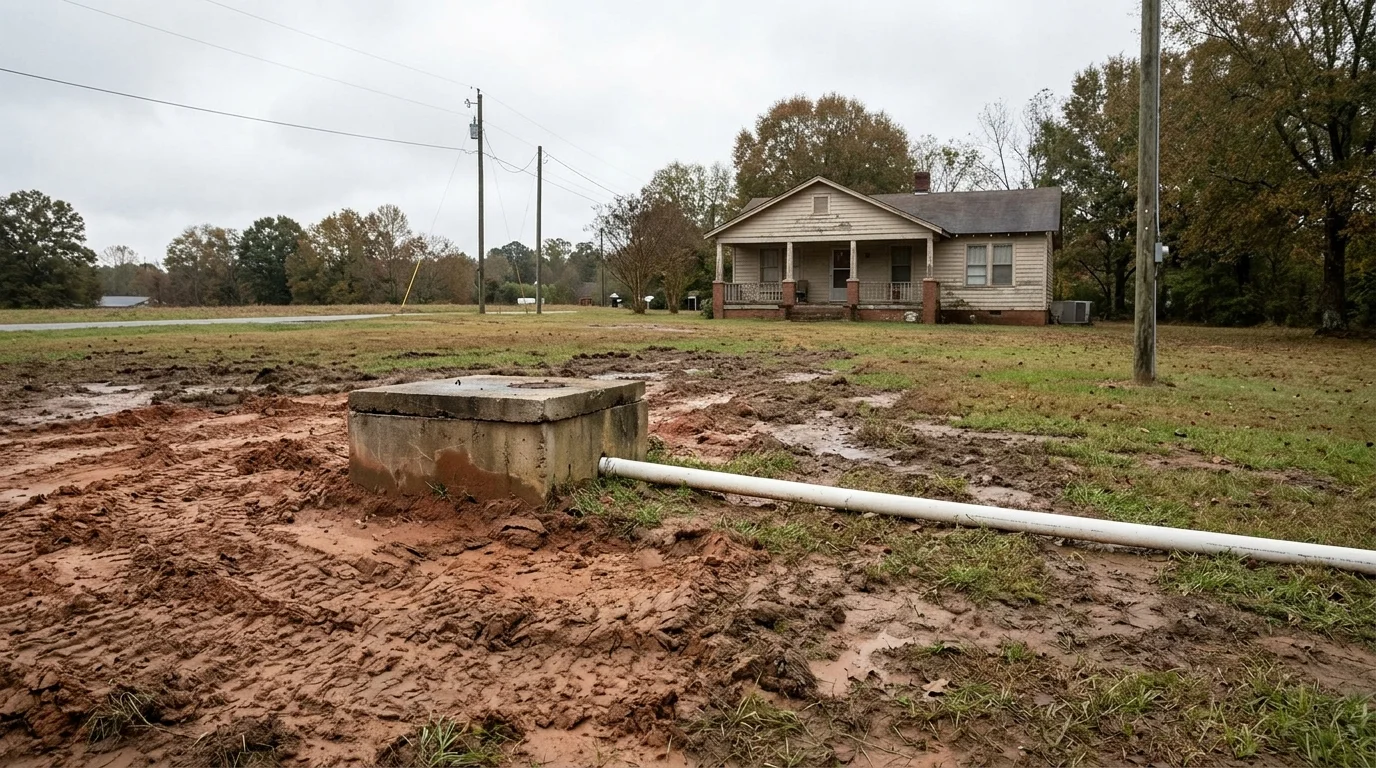
The geography matters here. Helene's South Carolina footprint was concentrated in a 15-county Piedmont and western Upstate corridor, including Aiken, Anderson, Greenville, and Spartanburg counties, areas where the storm's rainfall overwhelmed rural water utilities and thousands of private septic systems in ways FEMA individual assistance grants were not designed to fully fix. Septic failures are chronic in flood events but rarely show up in the post-storm headlines dominated by coastal imagery. The $9.4 million clean water tranche is the federal government's direct answer to that gap.
None of the $30.28 million has been outlayed yet. The grants are committed to SCDES, but local projects still need to be designed, bid, and approved through the SRF loan pipeline before dollars move to actual contractors. That pipeline has a known bottleneck: SRF funds flow as low-interest loans to utilities, not direct grants to homeowners, which means rural water systems and small municipalities need to be ready to borrow and build on a compressed schedule before September 2026. The clock EPA set is now SCDES's engineering problem.
South Carolina is not operating on this track alone. The state already received a separate $2 million emergency water tranche under the American Relief Act of 2025 for immediate Helene repairs, announced in September 2025, meaning the larger SRF appropriation is a second layer on top of fixes already underway. HUD separately approved South Carolina's $150.35 million CDBG-DR Action Plan for Helene housing recovery in August 2025. Chief Resilience Officer Ben Duncan and the South Carolina Office of Resilience are coordinating the federal pipeline across both programs, against a backdrop the state itself has quantified as $2.1 billion in total unmet Helene needs, with $1.7 billion in housing needs alone.
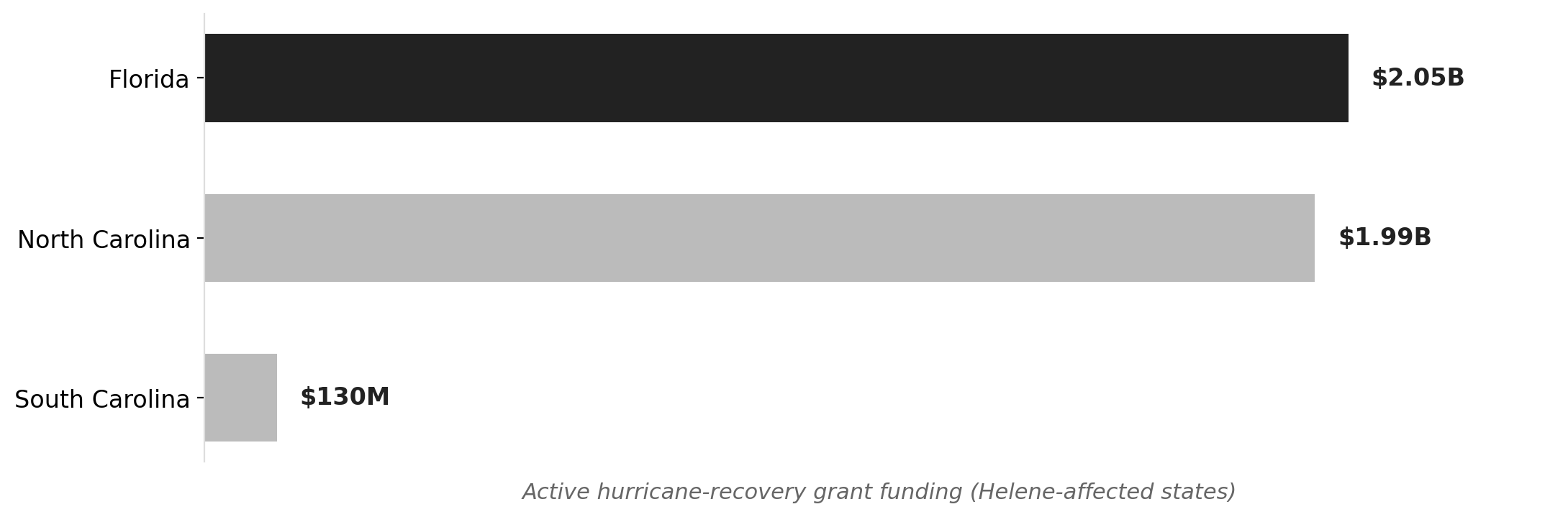
In the national context, South Carolina's $130 million active hurricane grant portfolio across 33 awards places it fourth among the six Helene-affected states, well behind Florida at $2.05 billion and North Carolina at $1.99 billion. The SRF supplemental narrows that gap modestly, but the state's recovery math remains steep. FEMA's disaster declaration DR-4829-SC continues to anchor parallel Public Assistance and Hazard Mitigation Grant Program flows, including an $824,000 culvert repair award to Abbeville County approved in May 2026.
The signal to watch before the 2026 hurricane season opens is whether SCDES can move the SRF funds from obligation to actual loan agreements with Upstate utilities fast enough to matter. If the September 30 deadline slips, the obligation must already be in place, but construction delays could push physical resilience improvements past the storm season the money was meant to protect against. The EPA memorandum that set the clock does not offer extensions.