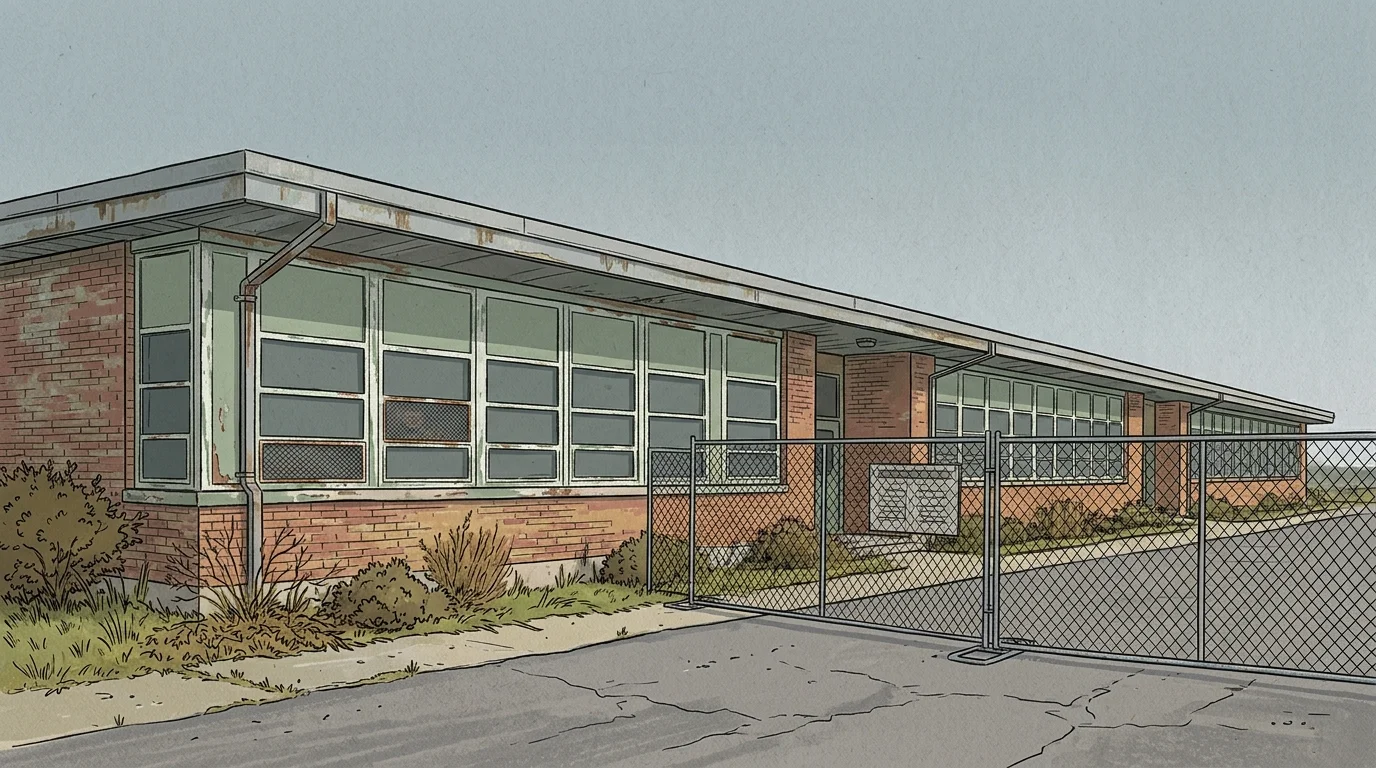
Trumbull, Conn., is moving ahead with the first phase of a major overhaul at Hillcrest Middle School, a building that opened in 1957 and has outlasted the 50-year service life used in standard capital planning by nearly two decades.
The town posted a construction bid for the project on July 2, with Phase 1 work listed on Trumbull's bid portal. The full scope and cost of the project have not been publicly detailed, but the Phase 1 designation signals a multi-stage renovation that will likely take years to complete. Hillcrest is one of two middle schools in the Trumbull Public Schools district.
The project reflects a reckoning playing out across Connecticut's postwar suburbs. Most of the state's middle and high schools were built during the baby boom of the late 1950s through early 1970s, and many are now showing the strain of deferred maintenance. Problems common in buildings of that era include deteriorating HVAC systems, PCB contamination in caulking and light fixtures, and asbestos and lead that must be remediated before any major renovation can begin. The COVID-19 pandemic sharpened the urgency around ventilation and indoor air quality, and federal relief funds gave districts a temporary window to plan larger capital investments.
For Trumbull, a Fairfield County suburb of about 36,000 residents, the financial picture is complicated by the state's school construction reimbursement formula. Connecticut reimburses municipalities between 10 and 80% of eligible project costs, with wealthier towns receiving a smaller share. Because Trumbull ranks relatively high on the state's wealth index, local taxpayers shoulder a disproportionately large portion of the bill compared to cities like neighboring Bridgeport. School capital costs have been a recurring flashpoint in Trumbull's municipal elections, and projects of this scale typically require Town Council and Board of Finance approval, often through a public referendum.
The Hillcrest project grew out of a multi-year facilities study and a Long Range Facilities Plan developed by the Board of Education. What comes next depends on how construction proceeds in Phase 1 and whether the town authorizes bonding for subsequent phases.