Manatee County, Florida is moving to expand its water treatment and wastewater systems to keep pace with a population that has grown by more than 150,000 people since 2000, while simultaneously confronting aging pipes that engineers say are entering a critical failure window.
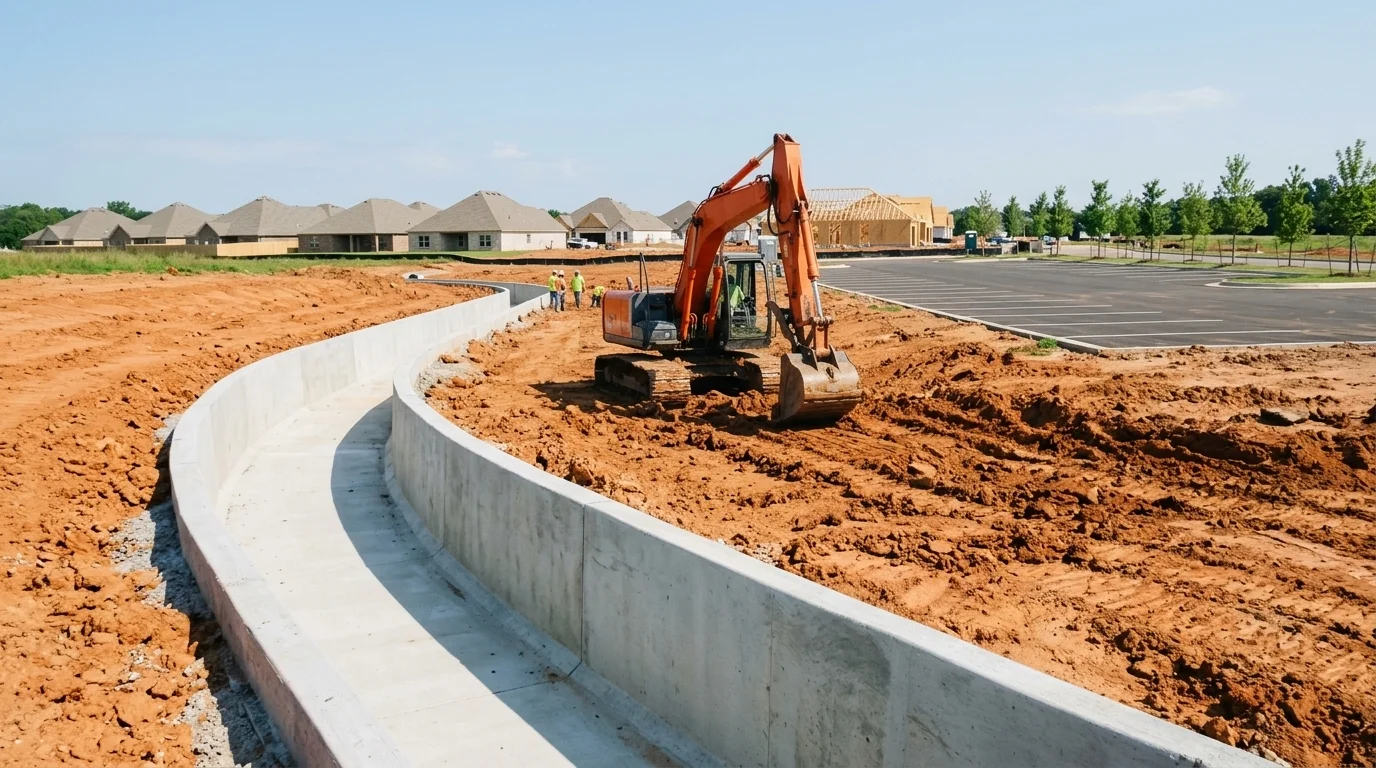
The county is hiring engineers to work on four interconnected projects: adding a new treatment basin at the Lake Manatee Water Treatment Plant, expanding the North Regional Water Reclamation Facility to 12.5 million gallons per day, replacing and rehabilitating aging prestressed concrete cylinder pipe (PCCP) across the system, and hardening pipelines against storms and flooding. Together, the projects represent what is likely hundreds of millions of dollars in eventual construction costs, all of which will ultimately be paid by county ratepayers through their water bills.
The growth pressure behind these investments has been building for years. Manatee County, anchored by Bradenton on the Gulf Coast just south of Tampa Bay, was one of the fastest-growing counties in the nation through the 2010s and 2020s. Utilities typically begin expansion engineering when they reach 75 to 85 percent of permitted capacity, and Florida's regulatory framework requires that planning happen well before systems hit their limits. The wastewater facility expansion also reflects the state's push to maximize reclaimed water for irrigation, reducing strain on drinking water supplies and nutrient discharge into Tampa Bay.
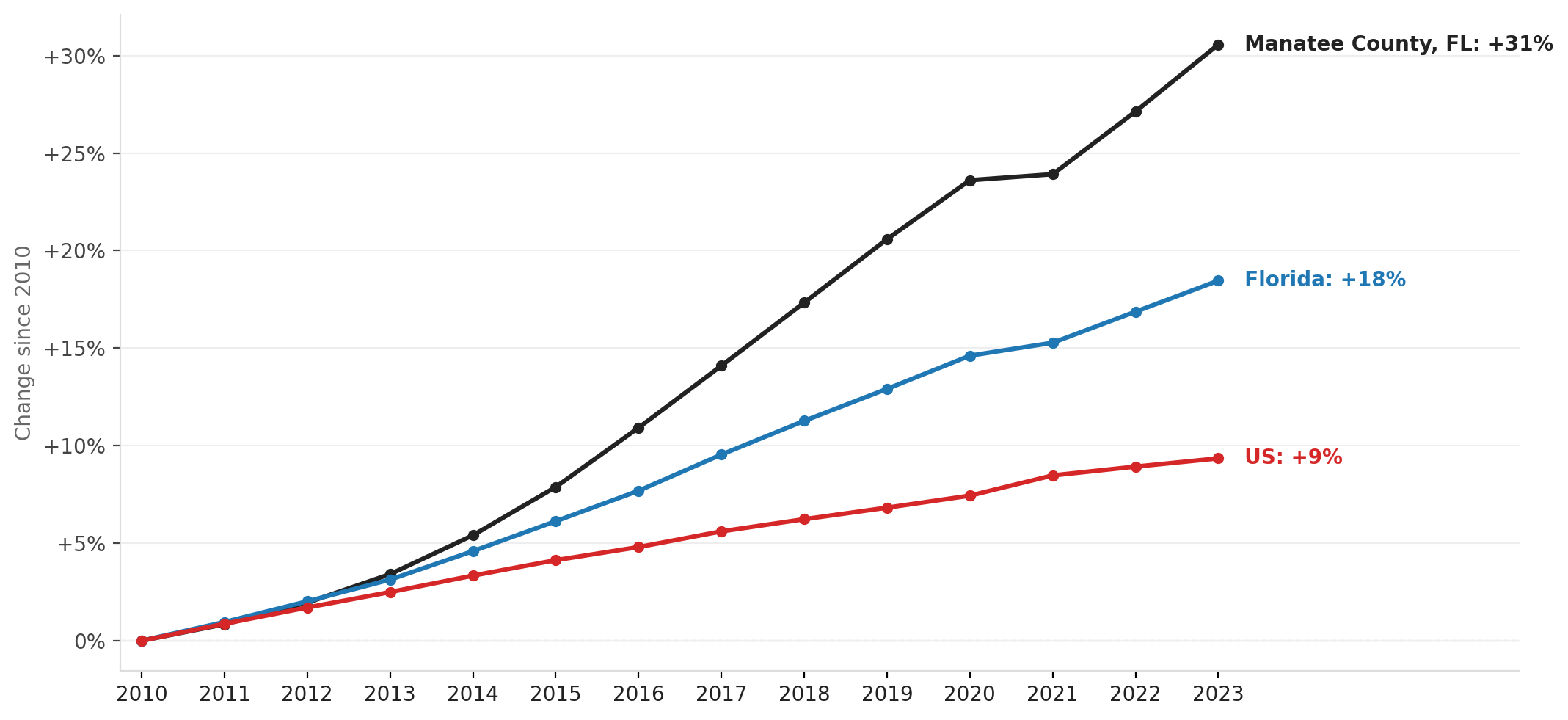
Source: U.S. Census Bureau, American Community Survey.
The pipe replacement work addresses a different kind of urgency. PCCP was widely installed across Florida during the development boom of the 1970s through 1990s, and much of it is now approaching or past its designed lifespan. Corrosion of the internal prestressing wire can cause sudden, catastrophic failures, producing sinkholes and prolonged service outages with little warning. Utilities across the country have spent billions addressing the problem after high-profile breaks in places like Prince George's County, Maryland, and San Diego.
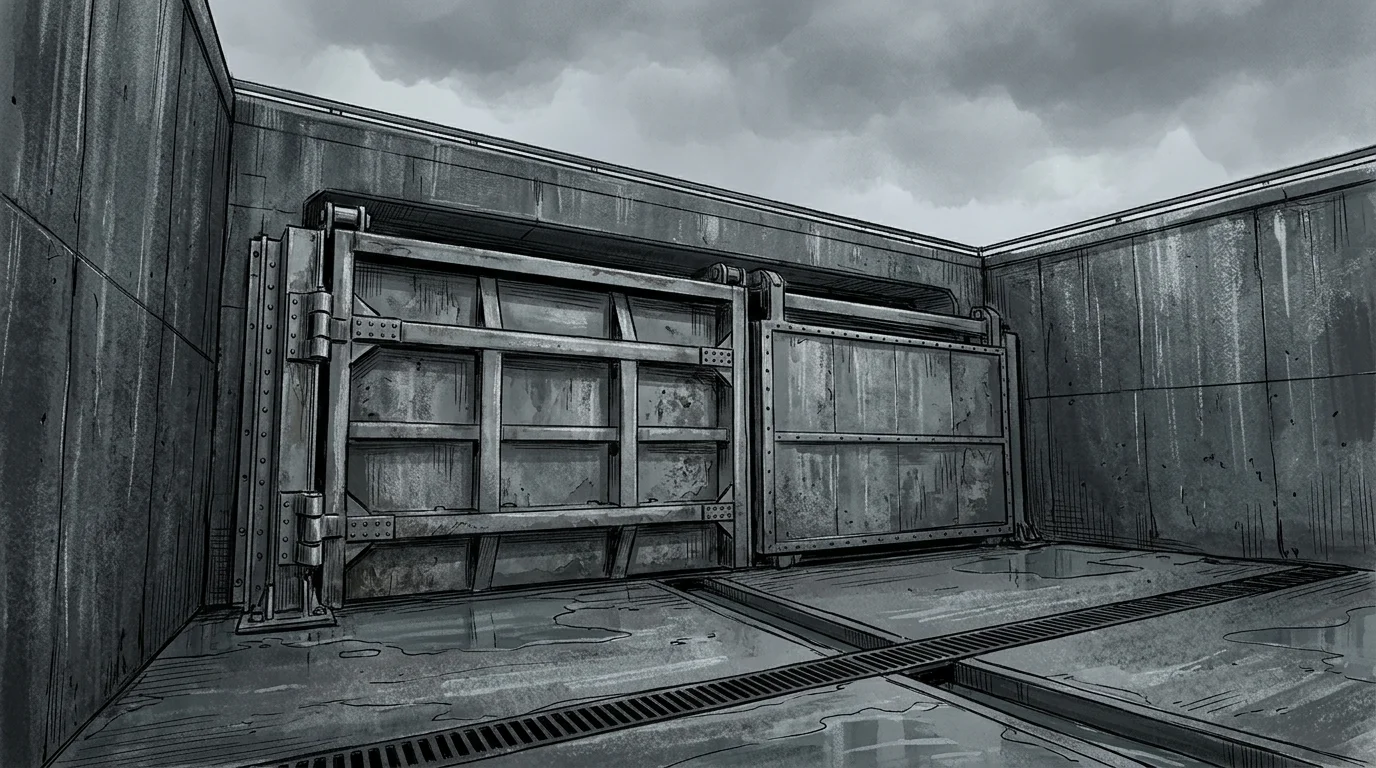
The resilience component reflects lessons drawn from Hurricane Ian's 2022 devastation of Southwest Florida, which forced utilities across the region to reassess how well their systems could withstand major storms. Manatee County was not in Ian's direct path, but the storm accelerated planning for infrastructure hardening throughout the area. Heightened public attention to water system vulnerabilities in the county dates back even further, to the 2021 Piney Point emergency, when a former fertilizer plant's wastewater reservoir threatened to collapse and required emergency discharges into Tampa Bay.
The county is evaluating engineering firms now, with the full project scope posted June 3, 2026. Design and construction on individual projects would follow over the coming years, with ratepayers likely seeing the financial impact reflected in utility rates as the work proceeds.