Federal flood-control dollars flowing into Utah have hit $9.94 million in the past 90 days, compared to $125,078 in the same window last year. The number is striking, but the story behind it is more complicated than a sudden federal windfall: the money reflects a years-long planning process finally reaching its obligation stage, and the agency delivering it has simultaneously shut the door on any new projects entering that same queue.
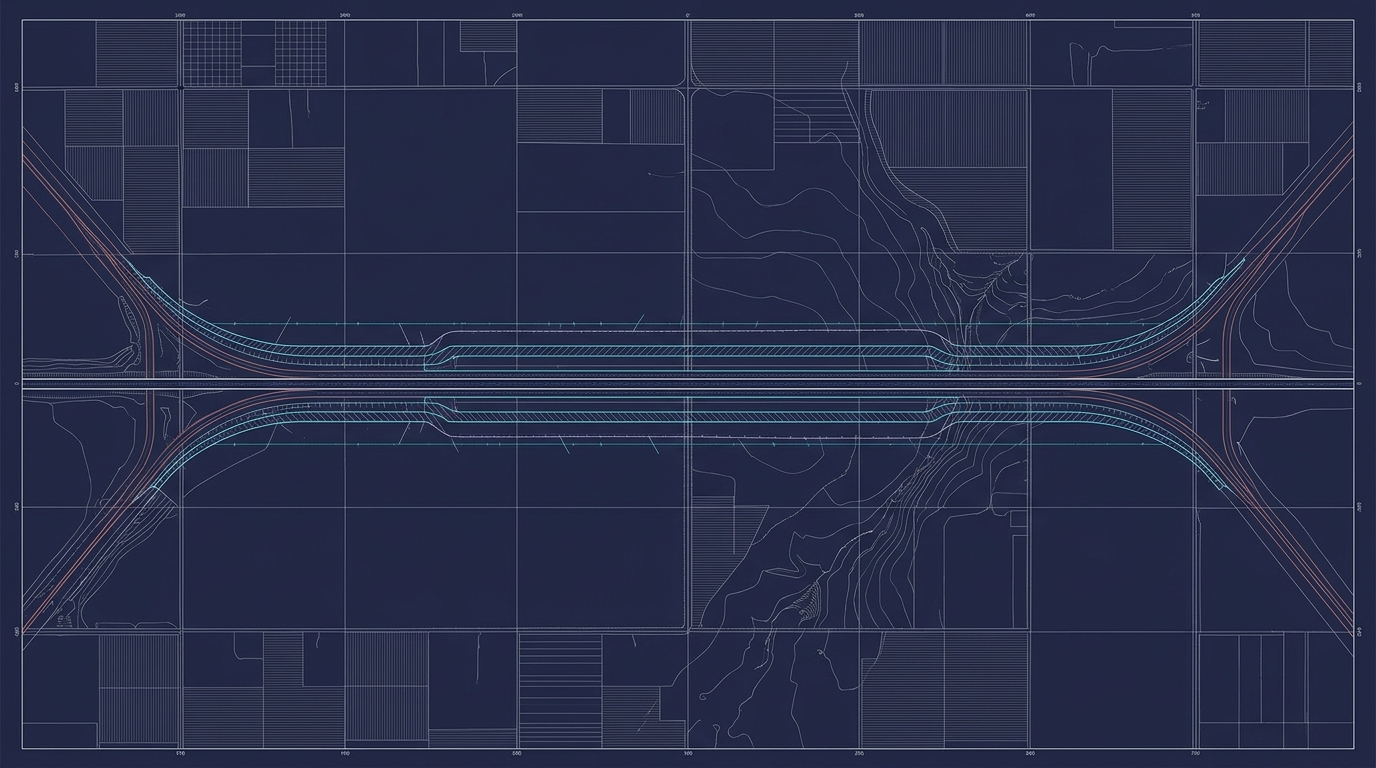
The anchor of the surge is a single USDA Natural Resources Conservation Service (NRCS) Watershed Protection and Flood Prevention grant awarded to Washington County on June 22, 2026, running through May 2029. The $9.94 million funds the Gould Wash Flood Protection Project in Hurricane City, a fast-growing retirement and tourism community in Utah's southwestern canyon country. The project calls for improvements along Gould Wash and the construction of a dry detention dam on Bureau of Land Management land upstream of the city, designed to intercept the monsoonal flash floods and burn-scar debris flows that funnel directly into the community's path.
Hurricane City is not a hypothetical risk case. Its population has grown roughly 4.59 percent annually, approaching an estimated 26,000 residents by 2025, and it sits at the base of a wash-prone desert canyon that drains thousands of acres of upland. Washington County experienced direct flash flooding from remnants of Hurricane Priscilla in October 2025, and flash flood warnings continued to be issued for Washington County burn scars as recently as July 2026. The Forsyth Fire burn scar has made post-fire debris flows an acute near-term threat, not a long-range planning scenario.
Source: NationGraph.
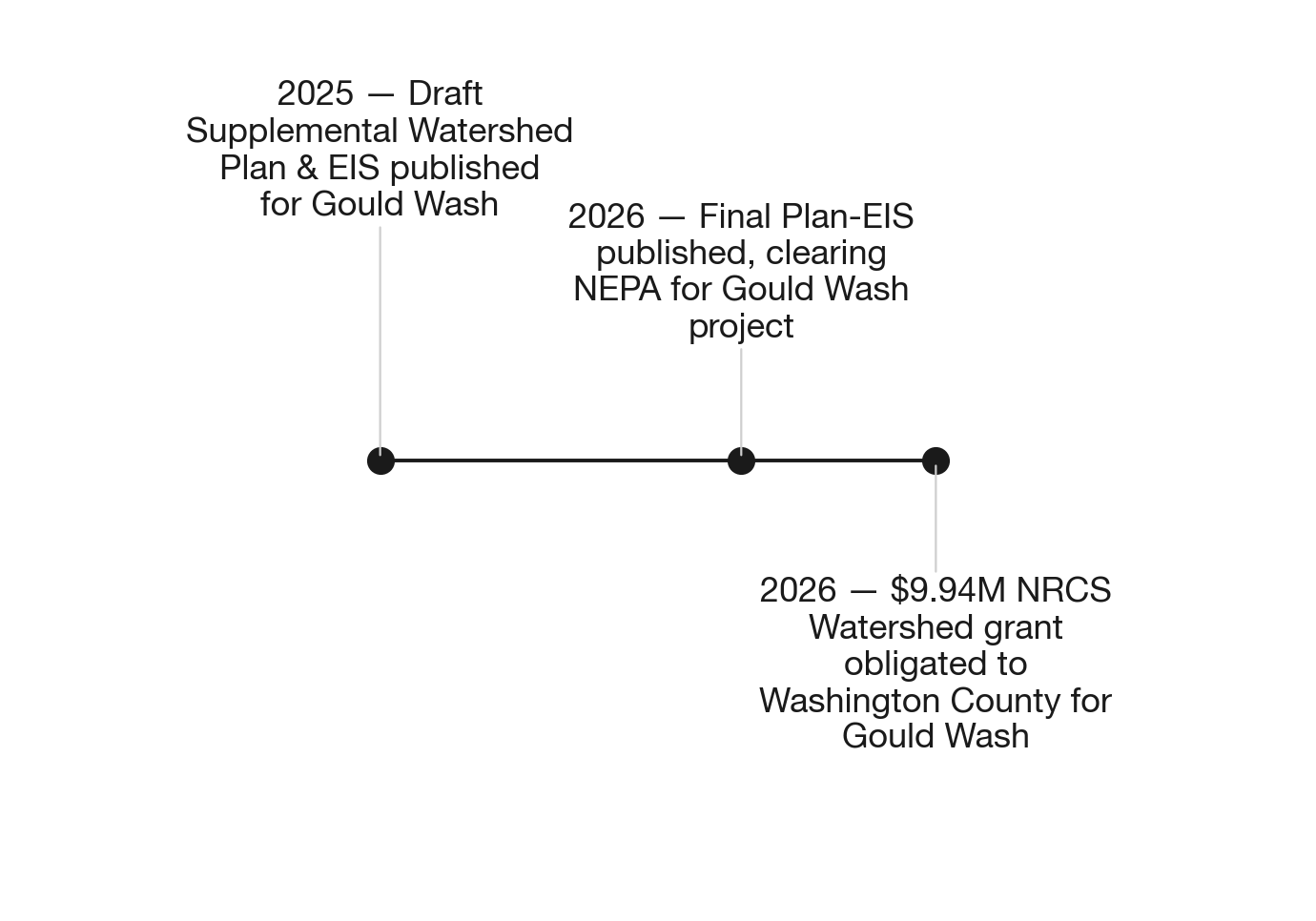
What took so long to get here is the federal environmental review process. NRCS and its cooperating agencies, including BLM, the Army Corps of Engineers, and EPA, published a Draft Supplemental Watershed Plan and Environmental Impact Statement for the Gould Wash project in September 2025. The Final Plan-EIS followed in March 2026. That completed the NEPA runway the project had been taxiing down for years, and the obligation of funds came roughly three months later. The grant is the product of bureaucratic patience, not a new appropriation or a policy shift in Washington.
A second significant award reinforces how the current surge is being driven by already-queued projects reaching their funding stage rather than new federal generosity. In April 2026, NRCS issued a $5.19 million Emergency Watershed Protection grant to Sevier County for the Richfield-West Sevier Watershed flood control project, protecting roughly 947 structures and 2,540 acres of agricultural land from documented recent flooding. Emergency Watershed Protection grants move faster because they bypass the longer NEPA pipeline, but they require a triggering disaster event, not a planning process.
The critical context for both awards: NRCS Utah's own program page discloses that it will not accept new Preliminary Investigation Findings Report applications for any watershed project in 2026 due to federal funding constraints. Communities that don't already have projects in the NRCS pipeline cannot get into it until at least 2027, and given how long the Gould Wash process took, a community starting a new application next year would be looking at construction in the early 2030s at the earliest.
That gap matters in a county still growing. Washington County is among the fastest-expanding counties in the American West. The same retirement migration and Sunbelt reallocation driving its population growth is placing more structures, roads, and residents in drainages that haven't had infrastructure upgrades commensurate with the new exposure. The Santa Clara and Virgin River drainages have a multi-decade history of flood damage, and more of Washington County's growth is pressing into those corridors.
For residents of Hurricane City and communities like it, the Gould Wash funding is concrete progress: a detention dam upstream means the next major storm doesn't automatically translate into inundated neighborhoods. Construction is funded through May 2029, meaning the project should be operational before the next serious monsoonal cycle after that. The Sevier County award offers comparable protection for Richfield and its agricultural surroundings.
What to watch: whether NRCS reopens its Utah application window in early 2027 as suggested, and whether any of the county's remaining unprotected drainages, including the Santa Clara Watershed, have the documentation ready to enter the queue the moment it does. Washington County's public works office published a notice on the Santa Clara Watershed plan as recently as June 2025, suggesting work on at least one successor project is already underway. The question is whether federal capacity will be there to meet it.