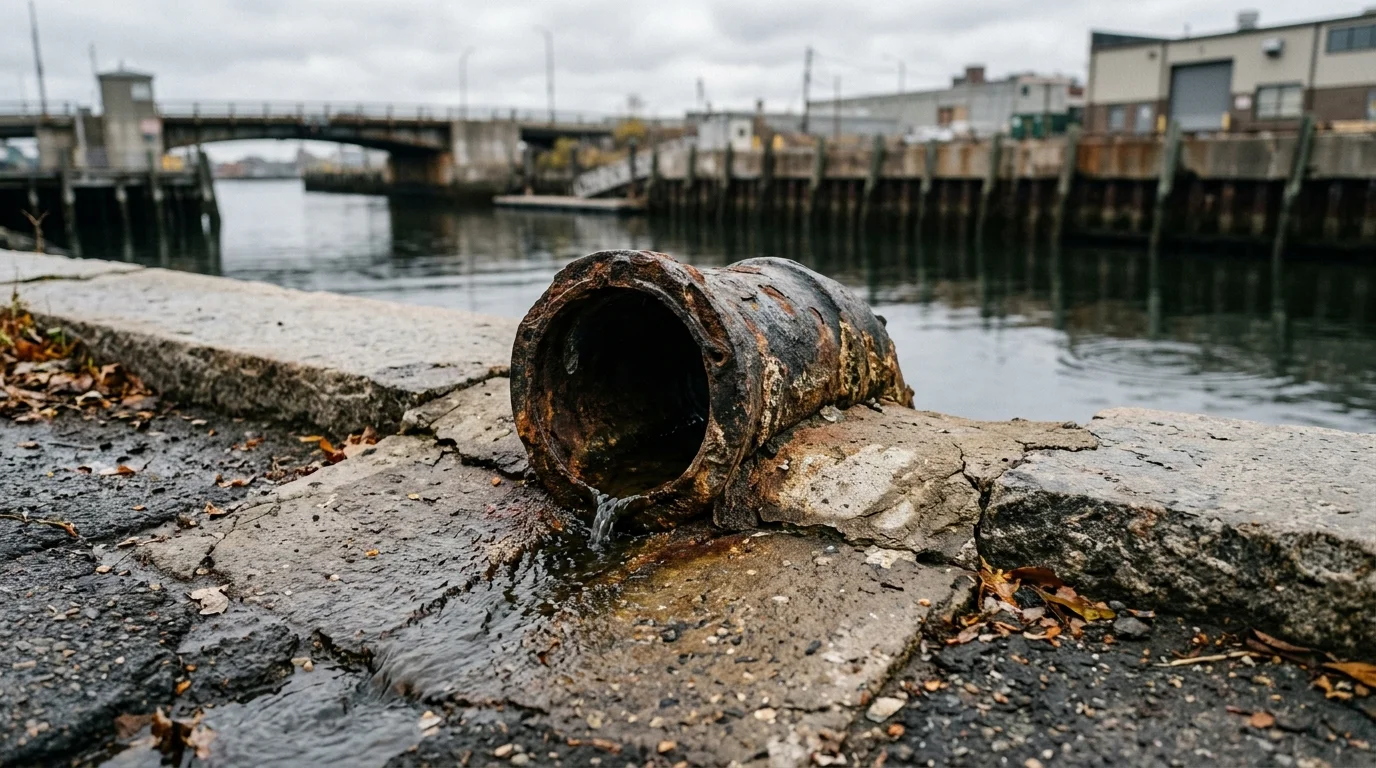
Boston is now zeroing in on one of the most stubborn sources of sewage pollution left in its waterways: individual homes whose plumbing quietly empties into storm drains that flow untreated into the Charles River, Boston Harbor and surrounding waterways.
The Boston Water and Sewer Commission (BWSC) is seeking contractors for a citywide project to find and disconnect sanitary house laterals, the private pipes that connect homes to the street sewer main, that are currently routed into storm drains instead of the sanitary system. Every time someone in one of those homes flushes a toilet or runs a sink, untreated sewage goes directly into local waterways. Federal and state regulators call these "illicit connections" and have increasingly targeted them under Clean Water Act enforcement.
The problem is rooted in Boston's age. The city built much of its sewer infrastructure in the 1800s as a combined system, a single network of pipes carrying both sewage and stormwater together. Over generations, some homes were connected in ways that made sense at the time or were simply done wrong, with no separation between what should go to a treatment plant and what drains to the nearest stream or harbor inlet.
Source: NationGraph.
Boston Harbor became a national symbol of the consequences. By the 1980s it was so polluted it became a flashpoint in the 1988 presidential race, ultimately forcing a landmark federal cleanup centered on the Deer Island Treatment Plant that cost roughly $4.5 billion. That project cleaned up the treatment side. The underlying pipes under city streets are a separate, slower fight.
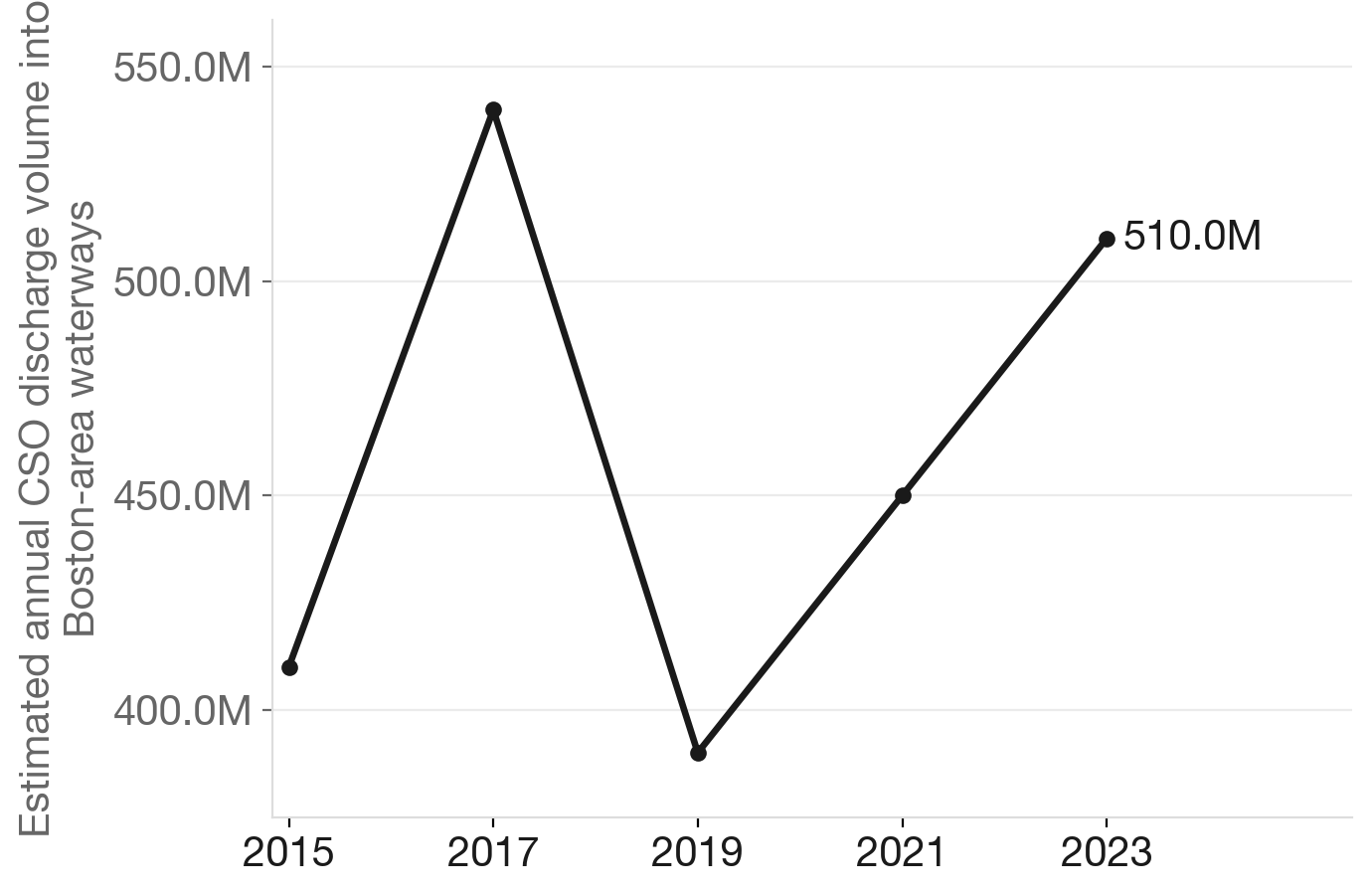
Since the 1990s, BWSC has operated under a federal consent decree requiring it to progressively eliminate combined sewer overflows, the events where heavy rain overwhelms the system and pushes raw sewage into waterways. Climate change is intensifying the pressure: more frequent and intense rainstorms are making overflow events more common, and regulators have grown less patient with the pace of fixes. A 2021 Massachusetts law now requires public notifications every time a sewage overflow occurs, and those alerts have made visible just how often untreated sewage still reaches local waters.
The current project, listed on the state's bid portal, represents the granular, block-by-block work that the big infrastructure projects couldn't do: tracking the problem to individual properties and correcting it at the source. BWSC serves roughly 675,000 Boston residents, and nearly every neighborhood's stormwater eventually reaches a waterway that someone swims in, paddles on, or fishes from. The stakes are high along a harbor that has seen major public investment in recent years, including the ongoing expansion of the 43-mile Harborwalk along Charlestown's Little Mystic Channel.
Ratepayers will ultimately foot the bill, as they have for most of BWSC's CSO compliance work over the decades. Water and sewer rates in Boston have risen steadily to fund these projects, and that tension between cost and speed of cleanup is likely to continue as the city works toward full compliance.