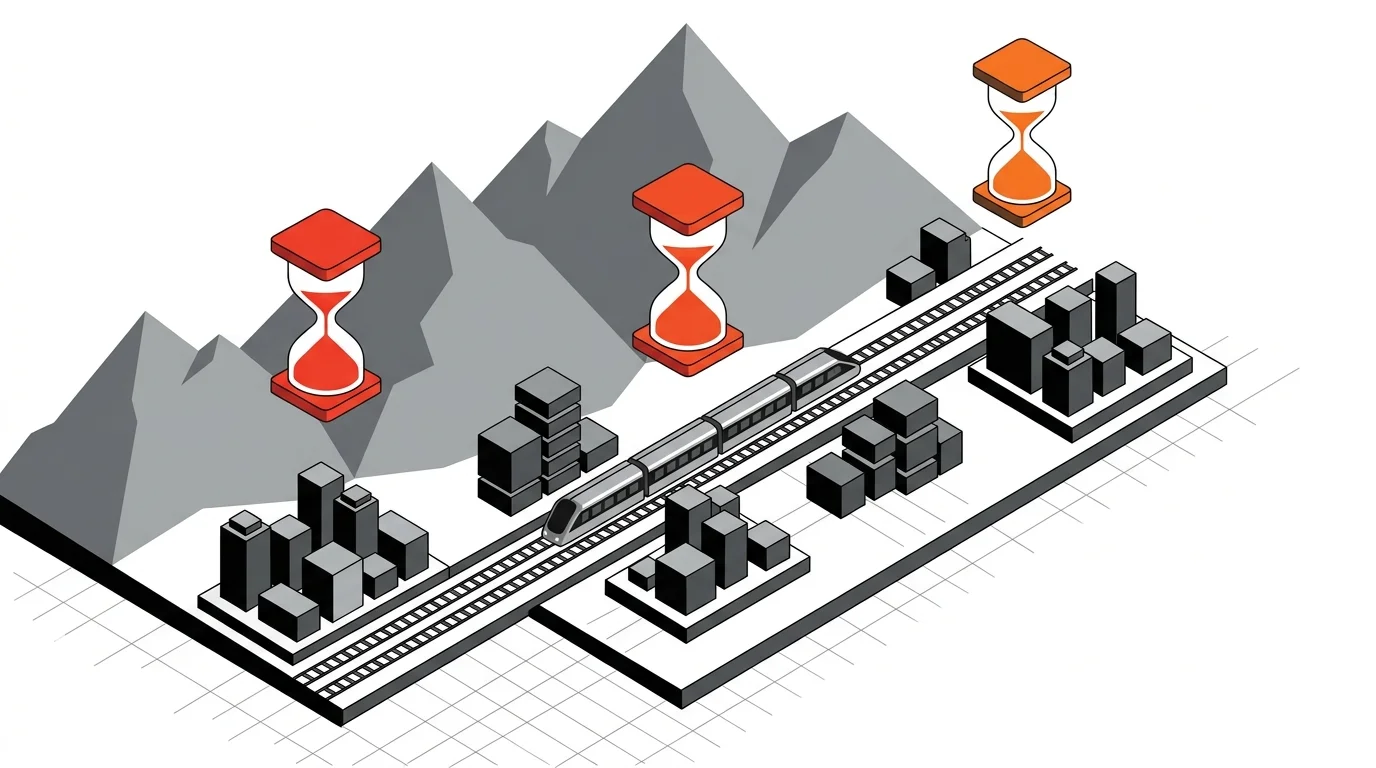
Fifteen Georgia municipalities, housing authorities, and state agencies issued their first housing-category RFP in more than twelve months during the trailing 30 days, and the timing is not a coincidence. Three separate clocks ran out at roughly the same moment, and dormant procurement pipelines opened all at once.
The three triggers are distinct but overlapping. First, Georgia DCA awarded $10 million in Community HOME Investment Program (CHIP) grants to 12 communities on June 17, 2026, funded through HUD's HOME Investment Partnerships Program. CHIP awards carry a hard condition: grantees must expend all funds and complete all activities within three years of their contract start date. Four months after award, those communities are now past the point where they can wait on contractor solicitations. Second, HUD's NSPIRE affirmative-requirements scoring took effect October 1, 2026, after HUD extended the original compliance date via PIH 2025-27. Housing authorities and HUD-assisted property managers that haven't procured third-party inspection services now face affirmative-scoring deductions across six property-condition categories on their next HUD audits. Third, October is the start of Georgia's fiscal procurement year, the calendar moment when agencies with unspent planning budgets are authorized to issue new solicitations.
Each of those three mechanisms would have produced some procurement activity on its own. All three landing in the same 30-day window explains why the number of first-time-in-twelve-months filers jumped rather than ticked up gradually.
Source: NationGraph.
The procurement mix reflects exactly which institutions each mechanism targets, and the two federal programs are doing different things to different actors. Georgia DCA's June 17 CHIP awards went to local governments and nonprofits as builders and rehabbers: four communities received $1.5 million each for new single-family construction, eight received $500,000 each for owner-occupied rehabilitation. Those grantees now need to put contractors under contract. Cairo's Kennedy Place Rural Workforce Housing Initiative, Statesboro's CHIP-funded development contractor qualification, and McDonough's residential rehabilitation contractor pool are all direct products of that spend-it-or-lose-it pressure. Macon-Bibb County's Affordable Housing Fund property management contract fits the same pattern at the county scale.
NSPIRE, by contrast, targets housing authorities and HUD-assisted property managers as inspection subjects, not builders. It requires them to procure inspection services, not construction crews. Georgia DCA's own NSPIRE inspection services RFP is the clearest example: the agency administers HUD-subsidized portfolios statewide and must now demonstrate compliance with the new six-category affirmative scoring framework or absorb score deductions that affect its federal reporting. Savannah's Fairgrounds Housing Infrastructure solicitation sits at the intersection of both streams, combining physical improvement work with compliance-driven planning.
The political environment around NSPIRE adds urgency to the inspection-services side. Georgia Senator Jon Ossoff has requested an OIG inquiry into NSPIRE inspection quality on HUD-financed Georgia properties, a move that puts Georgia housing authorities on notice that their inspection procurement choices will be scrutinized. Agencies that haven't lined up qualified inspectors before their next HUD review are now exposed not just to score deductions but to political attention.
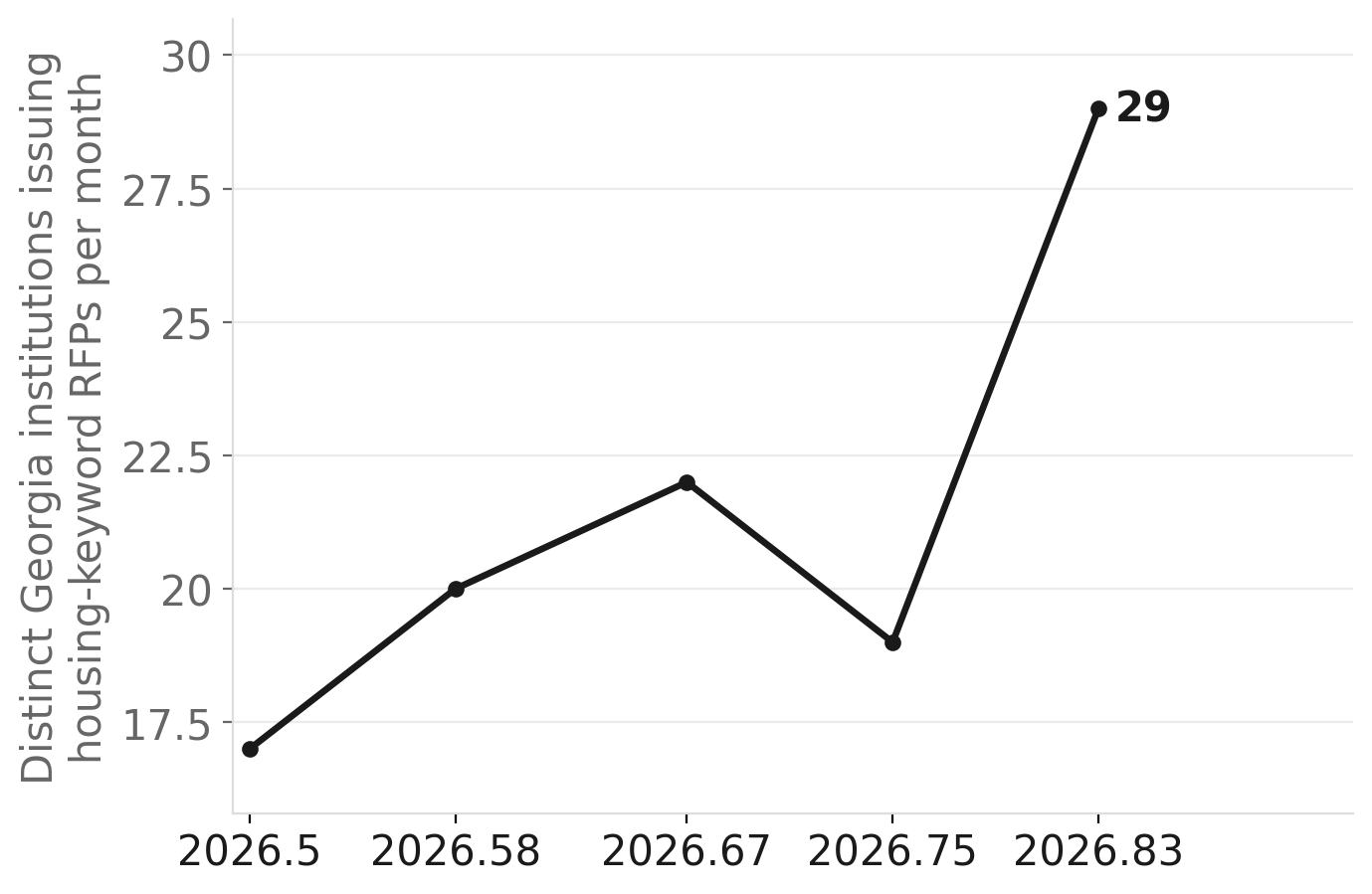
The scale of the backstop matters here. HUD's active housing grant portfolio in Georgia stands at more than $800 million obligated across 732 grants currently in performance. Georgia DCA holds active CDBG grants totaling more than $265 million from the 2025 tranche alone, running through 2031. That depth means the state has consistent procurement pressure even in quiet months; what October 2026 represents is a confluence of activation events on top of an already substantial baseline. Monthly data show 29 distinct Georgia institutions issuing housing-keyword RFPs in October, above the summer baseline of 17 to 22, but not so far above it that the spike looks anomalous in isolation. The 15 first-time-in-twelve-months filers are the more telling figure: they are agencies that had been sitting out the market and chose this month to re-enter.
For contractors in Georgia's affordable housing space, rehabilitation firms, new-construction developers, property managers, and now inspection-services providers, the practical implication is a compressed solicitation calendar. Multiple agencies are now competing for the same vendor pool simultaneously, which can extend award timelines and, in smaller markets, limit the number of qualified respondents.
The next signal to watch is how quickly CHIP grantees move from RFP to award. Communities that awarded contracts by December 2026 will have the clearest path to spending within the three-year window. Those that slip into early 2027 will face tighter completion timelines, and any that miss the expenditure deadline risk recapture of funds back to DCA. Georgia DCA's own monitoring of CHIP expenditure rates, which it reports to HUD as the state's HOME participating jurisdiction, will determine whether this procurement burst translates into completed units or becomes a cautionary case for the next CHIP cycle.