Six North Carolina institutions issued transit-related RFPs for the first time in over a year during the past 30 days, and the timing is not coincidental: the Infrastructure Investment and Jobs Act's surface transportation authorizations expired September 30, 2026, and nobody in Raleigh or Washington can say with confidence what the funding landscape looks like after that date.
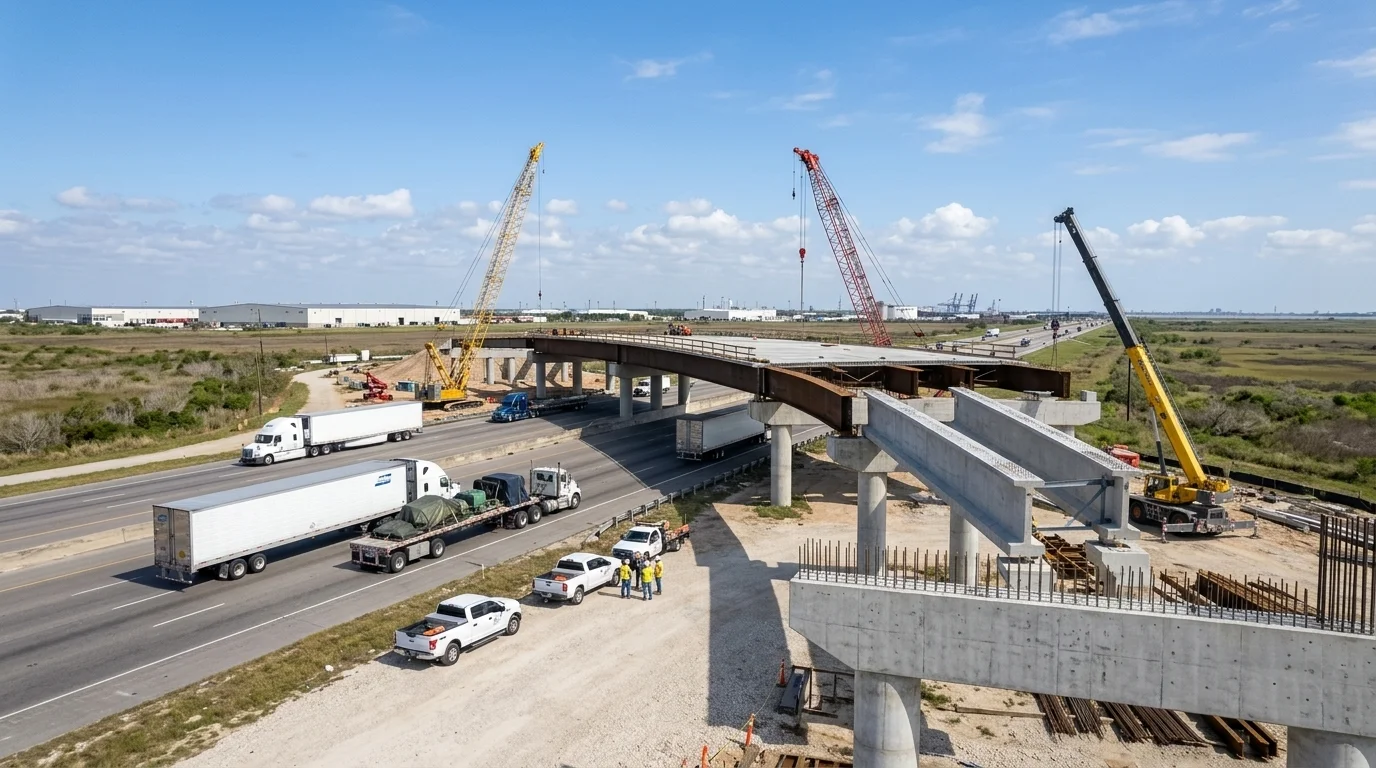
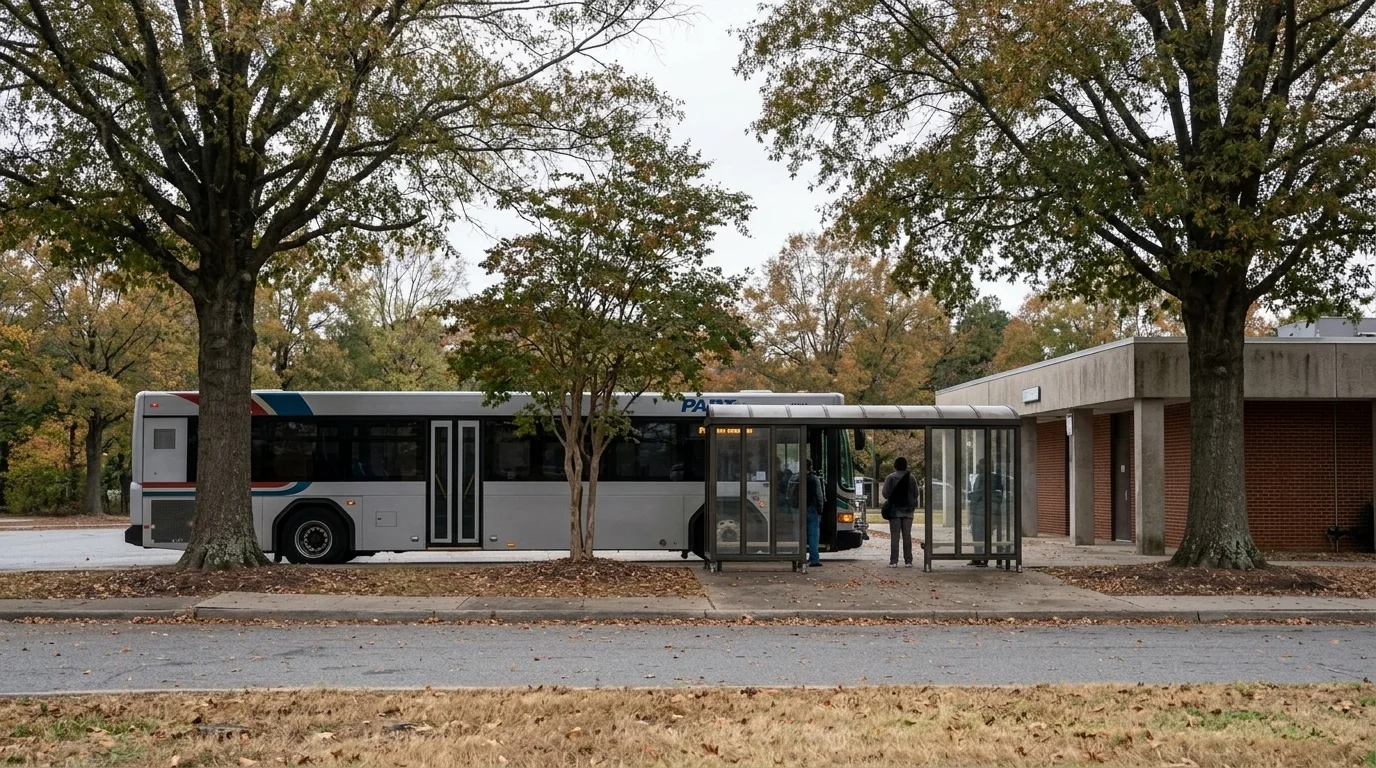
The most substantive procurements come from the Piedmont Triad. The Piedmont Authority for Regional Transportation, which connects Greensboro, Winston-Salem, and High Point with roughly 376,100 annual riders, issued RFP 01-OpsSas-2026 for transit operations software, with responses due November 13. The Winston-Salem Transit Authority, simultaneously rolling out a wholesale route restructuring under its new Vision Plan (service changes went live August 30), issued a design-build RFQ for transit facility improvements in Forsyth County. These are genuine capital procurements, not bookkeeping exercises.
Zoom out and the month looks even more striking. September 2026 produced 14 unique NC institutions and 24 RFPs mentioning transit, among the highest monthly totals in the past 18 months. That is a system-wide signal, not a coincidence of two agencies hitting their renewal cycles at the same time.
Source: NationGraph.
Three distinct forces converged to produce this burst, and they should not be collapsed into a single story.
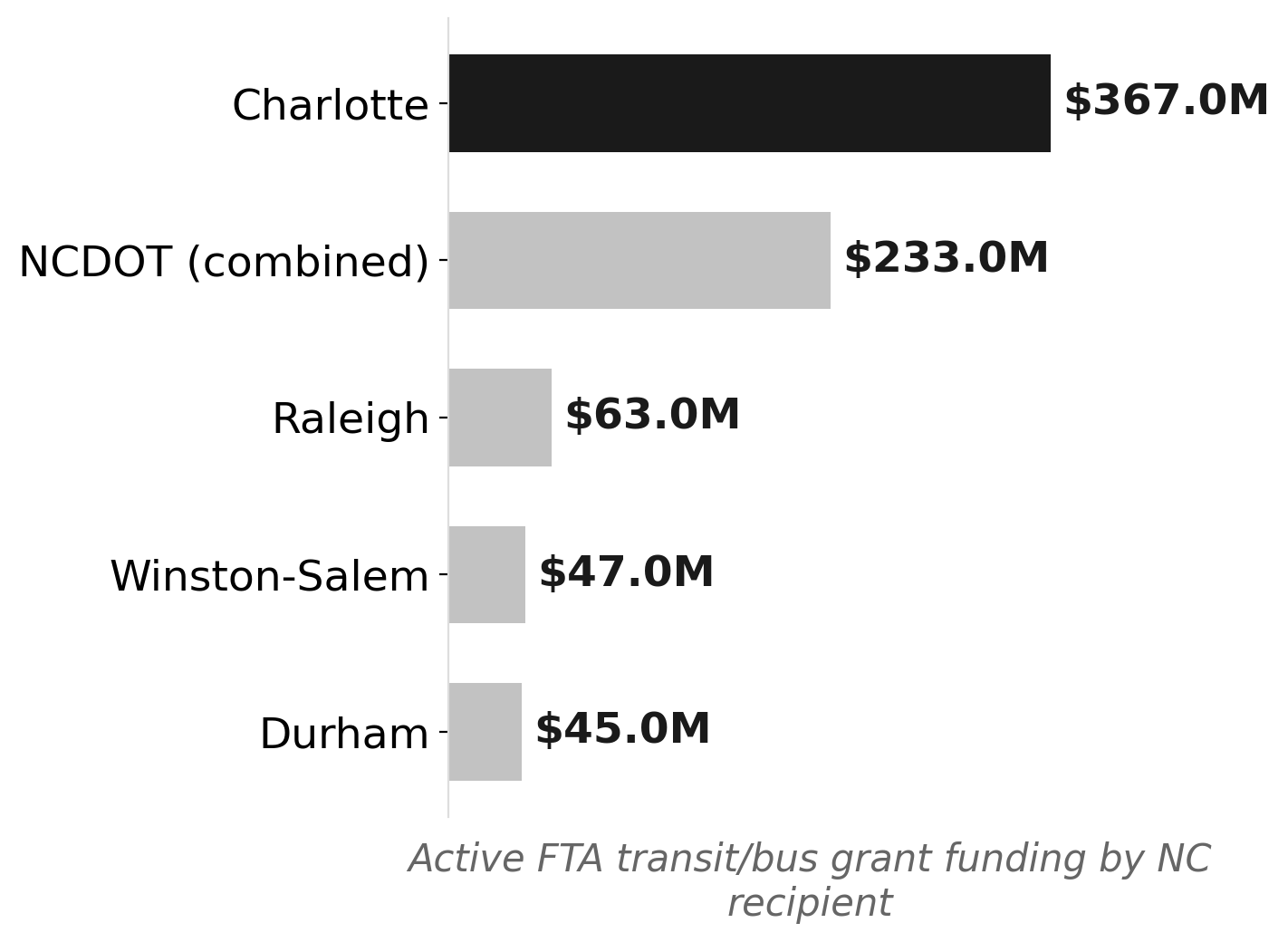
The first is the baseline: North Carolina's active FTA grant portfolio is enormous. Charlotte carries $367 million in currently active federal transit grants. NCDOT holds $233 million. Raleigh, Winston-Salem, and Durham carry $63 million, $47 million, and $45 million respectively. That money flows through FTA Section 5307 urbanized area formula grants and Section 5339 bus and bus facilities grants, programs that have been the financial spine of NC transit capital planning for years. GoTriangle, Chapel Hill Transit, and Durham received more than $32 million in FTA Buses and Bus Facilities grants in early 2026, a signal that the pipeline was still open and agencies were right to position for it.
The second force is the federal deadline. Congress enacted P.L. 119-416, the Continuing Appropriations and Extensions Act of 2027, on September 2, 2026, two weeks before the fiscal year ended. The law preserves many IIJA surface transportation formula programs past September 30, but it does not extend the advance appropriations from Division J of the original IIJA. The National Association of Counties has warned that formula programs without those advance appropriations would revert to pre-IIJA baseline levels, which are substantially lower. The proposed successor legislation, the BUILD America 250 Act at $580 billion over five years, has not passed. For a transit agency writing a multi-year software or facilities contract, the rational move is to get the RFP out the door while current rules still govern.
The third force is Winston-Salem's own internal reinvention. WSTA's contract with RATP Dev USA as its new private management operator created an organic procurement cycle for facility upgrades and system tools that is independent of the federal deadline. The agency's Vision Plan restructured routes, rebranded the system, and set in motion a capital needs assessment that would have driven an RFP regardless of what happened on Capitol Hill. That confluence of an agency-specific reform cycle and a federal funding cliff landing in the same month explains why Forsyth County in particular accounts for more than one item in this procurement snapshot.
For riders and local officials, what matters is what agencies are actually buying. PART's operations software procurement is directly tied to its role managing the Piedmont Triad Regional Model, a multimodal planning framework that underpins how federal formula dollars get allocated across a three-city corridor. Getting that software contract signed before the funding rules shift is a form of institutional hedging. WSTA's facility design-build RFQ is the physical infrastructure side of the same calculation: lock in a contractor for work that will be paid from grants already obligated, before re-authorization uncertainty can freeze approvals.
The state is making parallel bets. The FY2026-27 budget includes a $28 million first-tranche state appropriation to match $532 million in federal funds for a new Asheville-to-Salisbury intercity rail corridor, a project that signals transit investment retains bipartisan support in a Republican-led General Assembly even as Washington's funding framework is in flux.
The November 13 deadline on PART's software RFP is the next concrete marker to watch. If responses come in and a contract moves forward before year-end, it would confirm that agencies are succeeding in their sprint to close procurements while the federal rulebook is still legible. If the response pool is thin, or if the award stalls, that would tell a different story about what procurement acceleration looks like when the dollars behind it are uncertain.