Virginia's water utilities filed 15 infrastructure procurement requests in May 2026, three times the monthly average of the past year, the highest single-month count in 13 months. The spike is not a coincidence of project schedules. It is a race against two clocks running simultaneously: a federal funding deadline that expires in four months, and a state contamination mandate that will cost utilities up to $904 million whether or not the federal money is captured in time.
The IIJA's water infrastructure authorization expires September 30, 2026. States that have not obligated their remaining FY2022-2023 emerging contaminant and lead service line funds by that date risk losing them to faster-moving states. EPA's reallotment tables already show redistribution underway as of May 2026. Virginia holds $271 million in active IIJA Drinking Water State Revolving Fund grants, $97 million in Clean Water SRF grants, and $42 million in WIIN Emerging Contaminants grants, all awarded since July 2024. Losing even a fraction of that to reallotment would force localities to cover the gap from a state budget that is currently stalled over an unrelated data-center tax dispute.
At the same time, Governor Abigail Spanberger signed nearly 30 environmental bills on May 6, including SB 138, which requires PFAS discharge monitoring at industrial users of publicly owned treatment works, and HB 1443, which mandates PFAS testing of biosolids. Those bills add state-level compliance obligations on top of the federal PFAS National Primary Drinking Water Regulation, which requires Virginia waterworks to complete initial monitoring by April 2027 and install remediation systems by 2029. The Virginia Department of Health estimates those capital costs at $643 million to $904 million statewide, plus $72 million to $88 million in annual operating costs once systems are running.
Source: NationGraph.
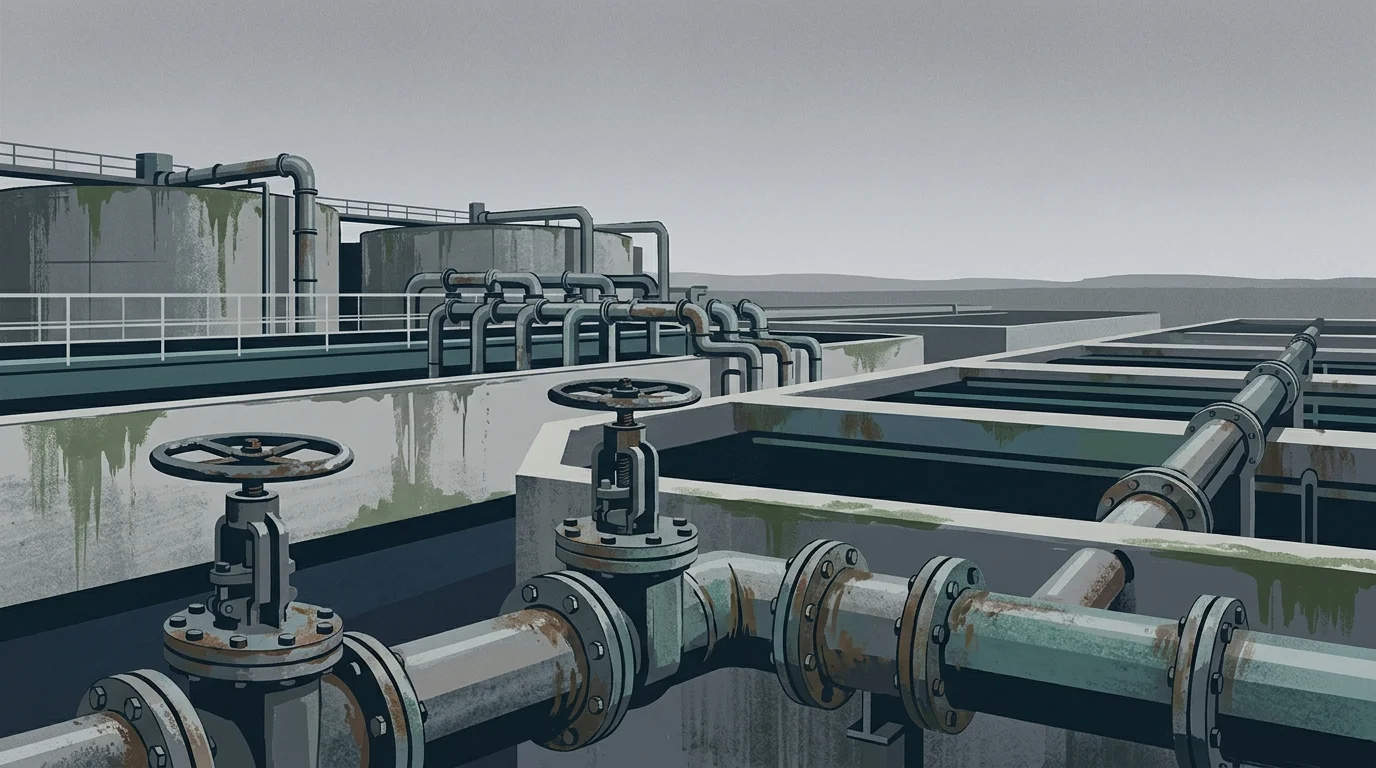
The active procurements in May reflect utilities moving on both fronts at once. The Charlottesville area's Rivanna Water and Sewer Authority, James City County's Kingswood water distribution main replacement, New Kent County's Colonies Water System upgrades, and Gloucester County's surface water treatment plant filter media replacement are among the active solicitations. These are not planning studies or grant applications. They are construction-ready RFPs, meaning the funding decisions behind them have largely already been made and the clock is now on contractors.
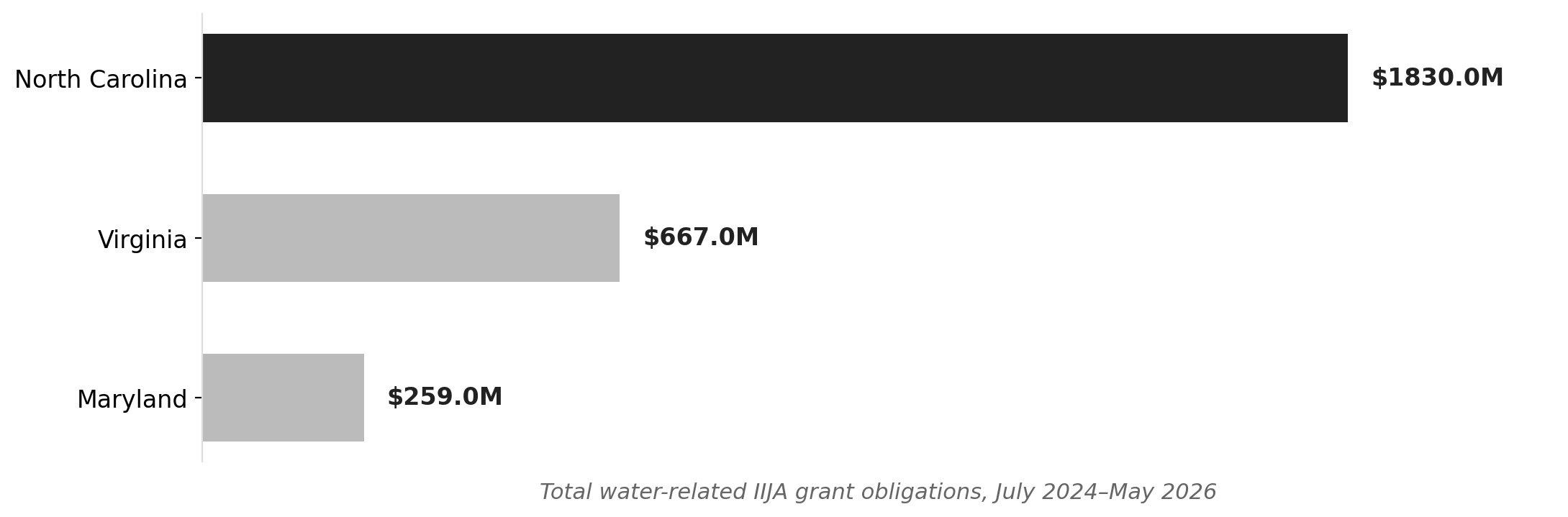
Virginia's position among its neighbors makes the stakes clearer. Since July 2024, Virginia has obligated $667 million in total water-related IIJA grants, second among Mid-Atlantic and Southeast peers only to North Carolina at $1.83 billion. Maryland, a state of comparable population density and infrastructure age, has obligated $259 million. Virginia's aggressive draw-down pace is a deliberate strategy, but it also means the commonwealth has more to lose if the remaining funds are not locked in before the September window closes.
One factor giving utilities additional leverage this year is the arrival of PFAS litigation settlement proceeds. Payments from 3M and DuPont began flowing to water systems in summer 2025, providing capital that can be combined with federal grants to fund treatment upgrades that neither source alone would cover. The practical effect is that systems which completed their UCMR 5 monitoring, Virginia's Department of Health reported results from roughly 95 percent of expected samples as of January 2026, now have both the contamination data and the financial architecture to move from testing to remediation in a single procurement cycle.
For residents, the near-term signal is a wave of construction activity at water treatment facilities and along distribution mains, concentrated in the corridor from the Northern Neck to the Shenandoah Valley. The medium-term effect is that utilities securing federal dollars now will avoid passing the full cost of PFAS compliance onto ratepayers later. The Virginia Department of Health's $904 million high-end capital estimate, spread across systems that did not capture federal grants, translates directly to rate increases.
The next hard deadline is September 30, 2026. Before that, the stalled state budget needs a resolution: localities waiting on state matching funds cannot finalize some procurement structures until Richmond clarifies what coffers are available. The General Assembly's budget standoff is, in a quiet way, the single variable most likely to determine whether Virginia captures its full federal allocation or watches a portion of it leave for North Carolina or Georgia. The RFP surge of May 2026 suggests utility managers are not waiting to find out.