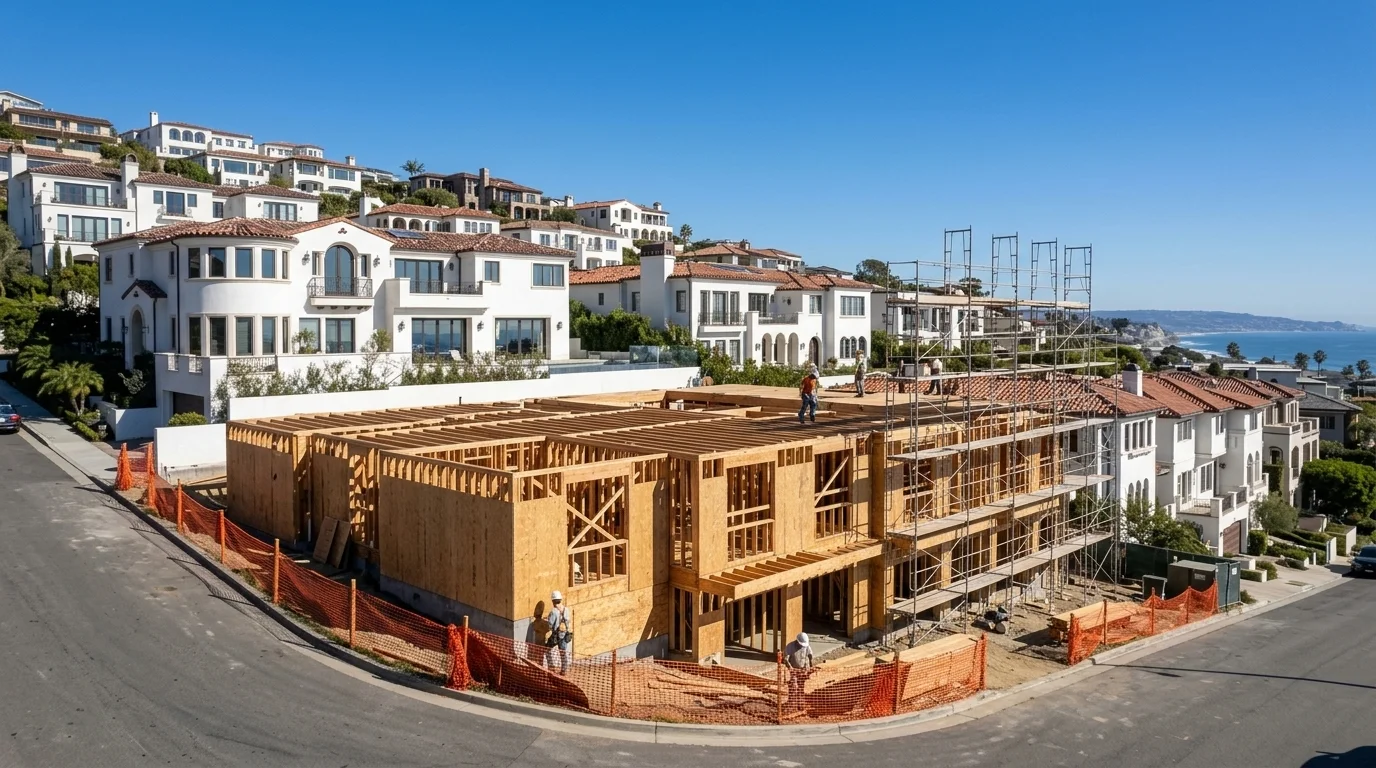
Solana Beach, one of Southern California's wealthiest coastal enclaves, is now actively recruiting private developers to build affordable housing within its borders, an acknowledgment that market forces alone will not produce the units the state is requiring it to build.
The city, a 3.5-square-mile community of about 12,700 residents where the median home sells for more than $2 million, posted a developer solicitation on Nov. 1 seeking private partners to deliver affordable units on what is likely city-controlled land. The specific site, unit count and subsidy structure were not immediately available, but the move itself signals a significant shift for a city that incorporated in 1986 partly to slow high-density development.
The driving force is California's 6th Cycle Regional Housing Needs Allocation, which assigned Solana Beach a target of 875 new units for the 2021-2029 planning period, with roughly 340 of those required at very-low and low-income levels. For a city that has built almost no affordable housing in decades, that number is enormous. Cities that fall short risk losing state transportation funding, exposure to the "builder's remedy" that strips local control over project approvals, and potential enforcement by the state Attorney General, who has publicly warned wealthy coastal cities about noncompliance.
With coastal parcels trading above $500 per square foot and much of the city subject to California Coastal Commission oversight, private developers have little financial incentive to build income-restricted units without substantial public support, whether city land, fee waivers or state gap financing. The collapse of California's redevelopment agencies in 2012 eliminated the primary local tool cities once used to fund exactly these projects, leaving Solana Beach dependent on state bond programs and inclusionary fees that won't stretch nearly far enough on their own.
The situation mirrors what other high-cost cities have faced. San Rafael, in similarly expensive Marin County, recently put city-owned land on the table to attract affordable housing developers, using public property as the subsidy that private financing alone can't provide.
Neighboring cities have already felt the pressure. Encinitas spent years in litigation over its Housing Element. Coronado has faced state scrutiny. Solana Beach itself initially submitted a Housing Element that state regulators found noncompliant before it was revised and adopted.
What happens next depends heavily on what the city is offering developers in return, specifically whether it brings land, density bonuses or direct financing to the table. Those details, once the RFP process moves forward, will determine whether any developer finds the project financially viable enough to build.