Eight Washington water utilities issued engineering RFPs in the last 30 days after going silent for more than a year each, a sudden cluster driven by a hard calculation: Washington DOH's Drinking Water State Revolving Fund application cycle closes November 30, 2026, and the federal capitalization behind it is almost certainly never this large again.
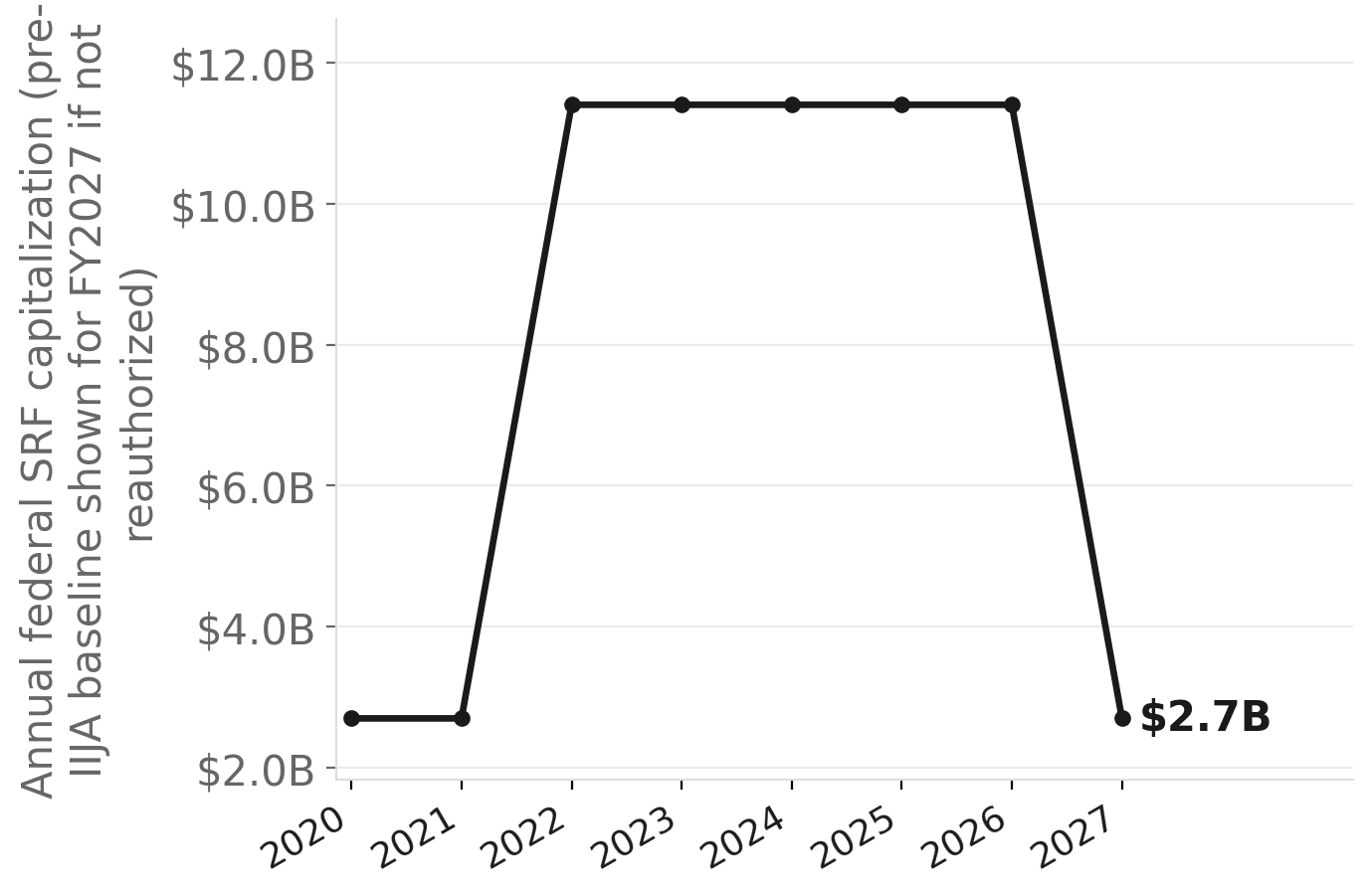
The dollar context makes the urgency legible. Washington's DWSRF received approximately $143.8 million in EPA capitalization grants in FY2025 alone, spread across four active grants, more than double the $69.4 million the state received in FY2024. That surge flows directly from the Infrastructure Investment and Jobs Act, which quadrupled annual national SRF capitalization from roughly $2.7 billion to $11.4 billion over FY2022 through FY2026. The IIJA's water authorization expires September 30, 2026. What gets funded in the November 30 cycle is, in many utilities' internal calculations, the last draw on an unusually full well.
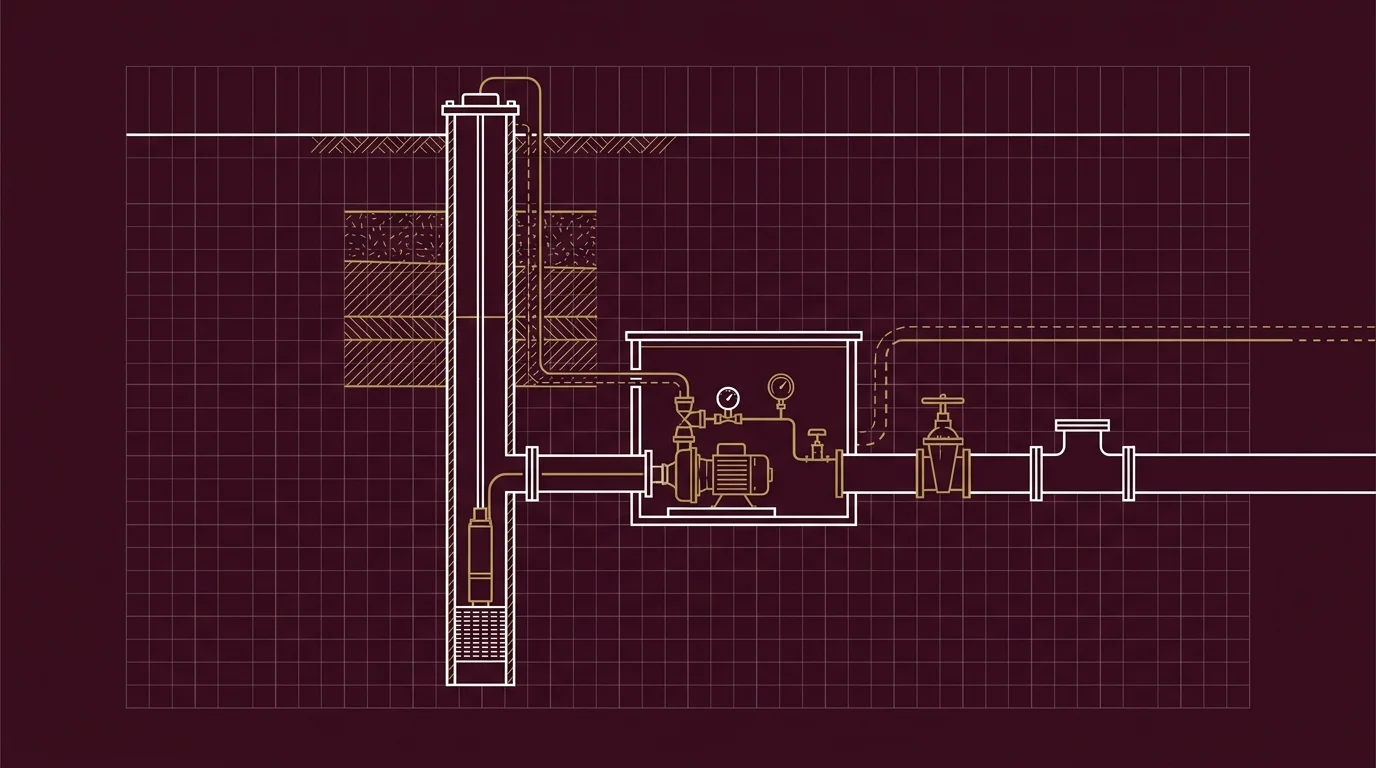
The entities that surfaced in the last 30 days span the full range of Washington's water system geography. Rock Island, a Douglas County city of 1,721 residents, issued an engineering RFQ, the kind of first-step procurement that precedes a formal SRF application. Renton, a King County city of more than 100,000, posted an RFP for corridor water improvements. Lake Chelan Reclamation District sought SCADA support; Coal Creek Utility District in Snohomish County went out for Advanced Metering Infrastructure. Lacey and Royal City each have well construction projects in procurement. Mercer Island and Cowlitz County added pump station work to the list. The project types track almost exactly with DWSRF eligible categories under the Safe Drinking Water Act: well construction, treatment upgrades, SCADA and control systems, and metering.
Source: NationGraph.
None of these entities had issued a comparable procurement in the prior 12 months. The timing is not coincidental. Washington DOH published updated DWSRF guidelines on August 1, 2026, and scheduled application workshops for August 19, September 9, and October 14, a sequence designed to pull in utilities that had not yet started the paperwork. The workshops are running now, concurrent with the RFP surge. A utility that hasn't retained an engineer by mid-October will struggle to produce the technical documentation DOH requires by November 30.
For small systems in particular, the administrative burden of SRF applications has historically been the reason they don't apply. The DOH workshops are explicitly aimed at that gap. Updated DWSRF guidelines published by DOH partners walk applicants through the new eligibility criteria and documentation requirements that took effect August 1. The presence of Rock Island and Royal City in the current RFP cluster, both small, rural systems in Eastern Washington, suggests those outreach efforts are reaching their intended audience.
The funding mechanism matters here, and it's worth being precise. The DWSRF, administered by DOH's Office of Drinking Water, provides low-interest loans and some grants to public drinking water systems for capital construction, lead service line replacement, and emerging contaminant remediation. It is a distinct statutory program from the Clean Water State Revolving Fund, which covers wastewater and stormwater under the Clean Water Act and is administered separately. Both programs received IIJA-amplified capitalization, and both face the same September 30 authorization expiration, but the current RFP cluster is almost entirely drinking water work, pointing toward the DWSRF deadline as the proximate driver.
The broader funding picture adds pressure. Washington's active EPA water-related grant portfolio totals $562 million in obligated federal funds across all programs. But the question of what comes next is unsettled. The White House's FY2026 budget proposed a 31.5 percent cut to SRF appropriations, and reauthorization at IIJA-era funding levels is uncertain, according to an Environmental and Energy Study Institute analysis. Congress has not signaled it will restore the quadrupled capitalization in a successor bill. The result is that utilities watching the legislative calendar are treating November 30 as something closer to a final window than a routine annual cycle.
For residents of the counties involved, Douglas, Chelan, Thurston, King, Snohomish, the practical outcome of this procurement surge is a queue of projects that, if funded, would replace aging well equipment, upgrade control systems, and extend metered water delivery to systems still running on manual reads. Whether those projects clear the application finish line depends on how quickly engineers can be hired and how completely utilities can assemble the documentation DOH requires.
The next signal to watch is the October 14 workshop, the last in DOH's pre-deadline series. Utilities that have not yet issued RFPs by that date are functionally out of the current cycle. The project priority list DOH submits to the legislature by February 1 will show which applications made it through, and which systems will be waiting for a funding environment that may look considerably smaller.