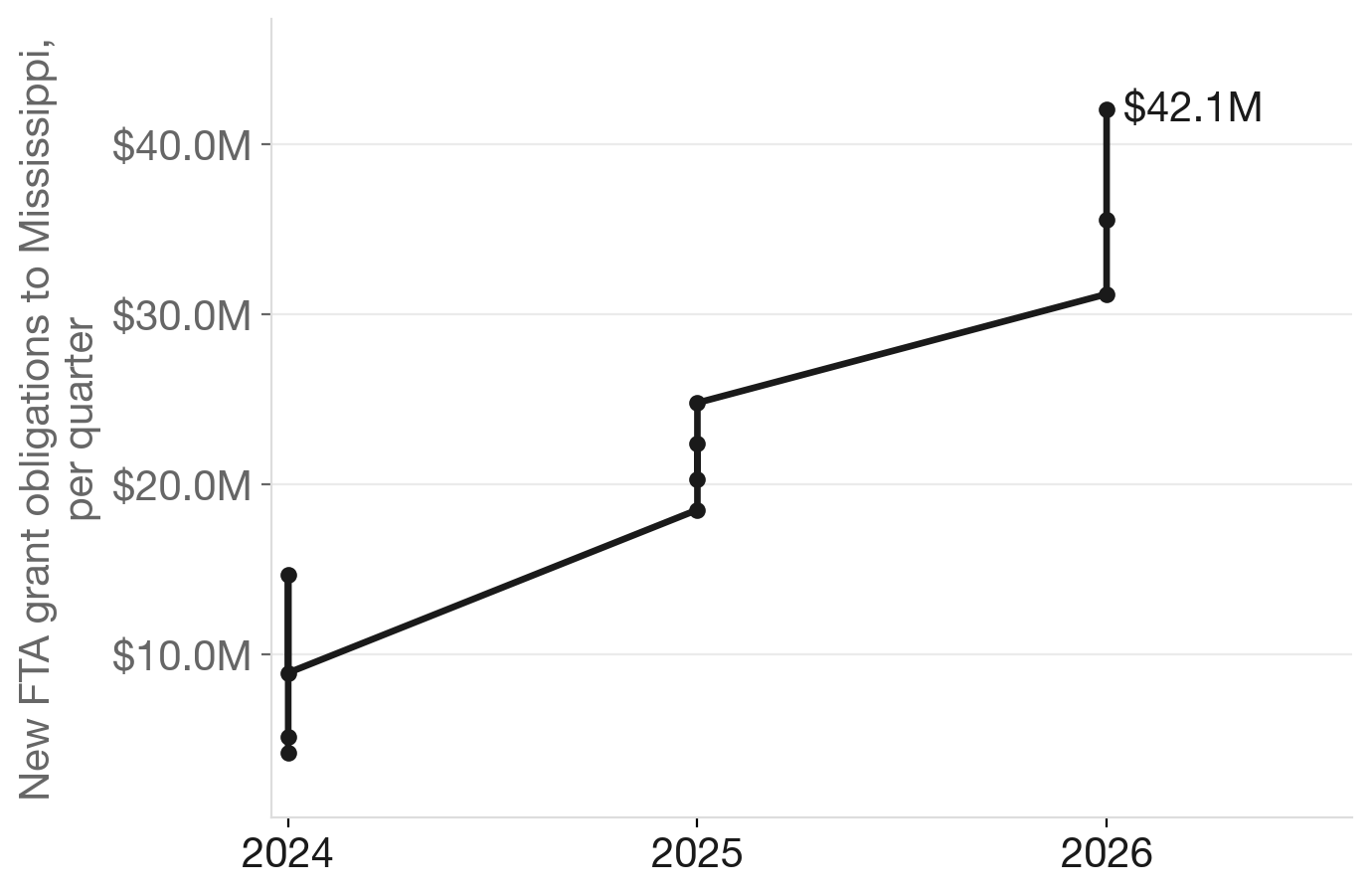
Federal transit grants newly obligated to Mississippi have hit $42.1 million in the trailing 90 days, more than double the $20.3 million in the same window a year ago. The surge is not an accident. It is the concentrated result of four years of Bipartisan Infrastructure Law funding ramping toward a peak, colliding with a hard expiration date: September 30, 2026, when IIJA transit authorizations run out.
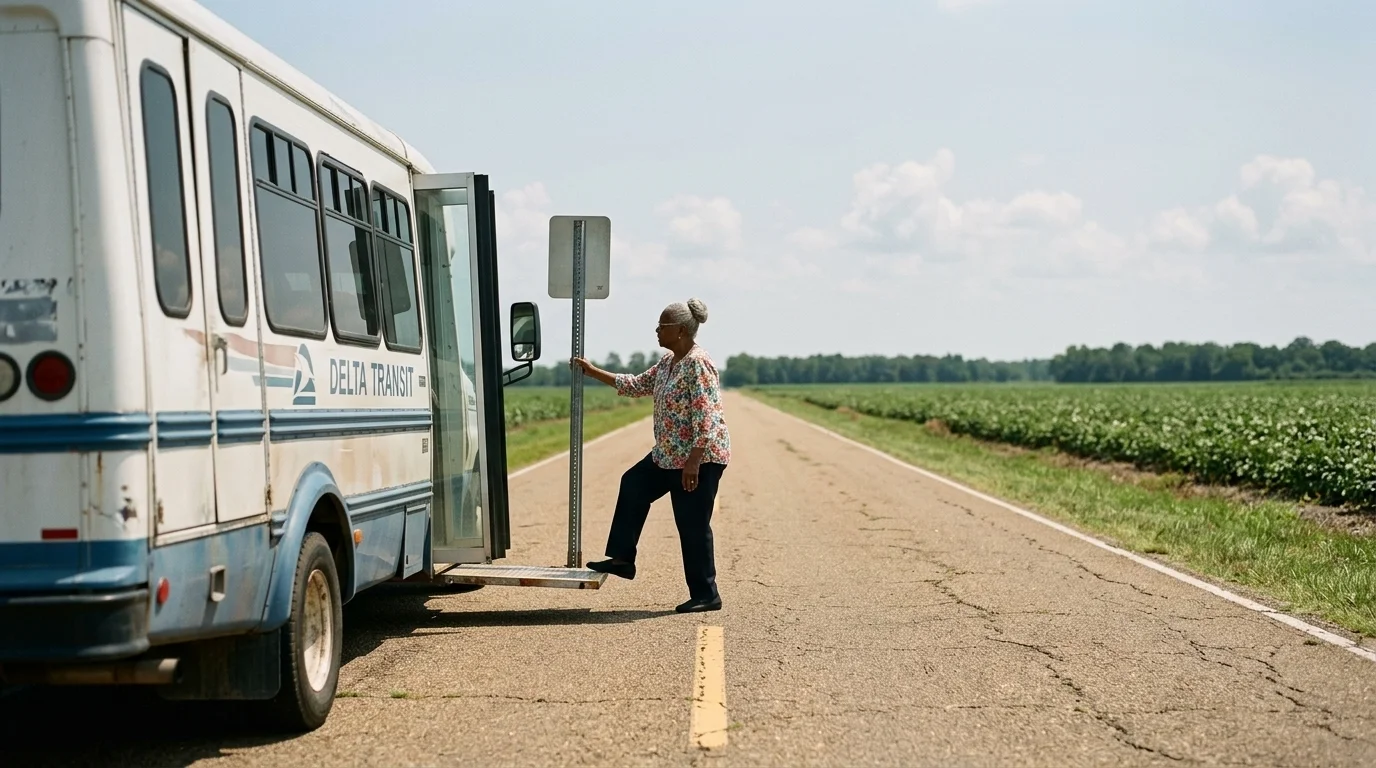
The single largest award in this period is a $21.5 million FTA Section 5311 Rural Area Formula Grant obligated to the Mississippi Department of Transportation on August 26, 2026. That money flows through MDOT as a pass-through to roughly 44 rural sub-recipients across the state, covering operating expenses, capital, and intercity bus service through providers including Delta Bus Lines and Greyhound. The FTA's Section 5311 program apportions funds by rural land area, rural population, and the share of low-income individuals in rural areas, a formula that weights heavily in Mississippi's favor. With most of the state's population living in communities under 50,000 people, and with some of the highest poverty rates in the country, Mississippi is structurally positioned to capture a disproportionate share of every dollar the rural formula allocates.
A separate and distinct award landed one day earlier: $6.5 million to Hattiesburg's Hub City Transit under the FTA's competitive Bus and Bus Facilities / Low or No Emission program (Section 5339), obligated August 25, 2026. Unlike the Section 5311 formula grant, this was a competitive capital award won directly by Hub City Transit for fleet and facilities investment. Hattiesburg has been a recurring FTA competitive awardee; Senators Roger Wicker and Cindy Hyde-Smith championed prior Hub City grants in earlier cycles. A third distinct program added $3.1 million: an FTA Section 5310 Enhanced Mobility of Seniors and Individuals with Disabilities grant obligated to MDOT on August 11, 2026, targeting capital and operating support for senior and disabled riders. These are three separate programs with different purposes, different recipient structures, and different competitive pools, but all three draw from the same IIJA authorization, and all three share the same urgency.
Source: NationGraph.
The urgency is real. The IIJA (P.L. 117-58) authorized $108 billion in transit funding over FY2022 through FY2026, building in a staircase increase each year. National Section 5311 rural formula funding rises from $781 million in FY2022 to $856 million in FY2026. The Bus and Bus Facilities program peaks at $1.1 billion in FY2026 under current law. FTA announced $2 billion in combined Low-No and Bus competitive awards covering 165 projects in 45 states in November 2025, with selections published in the Federal Register in January 2026. Agencies that have apportioned FY2026 funds must obligate them before the authorization clock expires, or risk losing access to the peak-year allocations. That legal pressure, more than any single policy decision, explains why Mississippi's quarterly numbers jumped the way they did, with the data showing the breakout beginning around Q3 2024 and surging sharply through 2025 and into 2026.
For Mississippians who rely on rural transit, the practical effect is arriving in layers. The Section 5311 pass-through will sustain operations for dozens of local systems that provide the only motorized transportation option in counties with no fixed-route service. The Hub City award equips Hattiesburg's fleet for a grant period running through 2037. The Section 5310 allocation extends mobility options for seniors and disabled residents in a state with an older-than-average population and limited alternatives to personal vehicles. Mississippi's total active FTA grant portfolio now spans more than $130 million in currently running federal transit commitments.
The open question is what comes next. Congress is now drafting the successor to the FAST Act, and the post-September 2026 funding levels for rural transit, bus programs, and senior mobility grants are not yet settled. The IIJA's staircase increases do not automatically continue. If the next reauthorization bill resets rural formula funding closer to pre-IIJA baselines, states like Mississippi, which have built sub-recipient networks around the higher annual allocations, would face a structural gap. Agencies managing multi-year grant agreements signed under peak-year IIJA awards will be operating those projects well into the 2030s, against an uncertain federal backdrop.
The deadline that forced this quarter's awards is September 30. The more consequential deadline is whatever date Congress sets for the next reauthorization vote.