
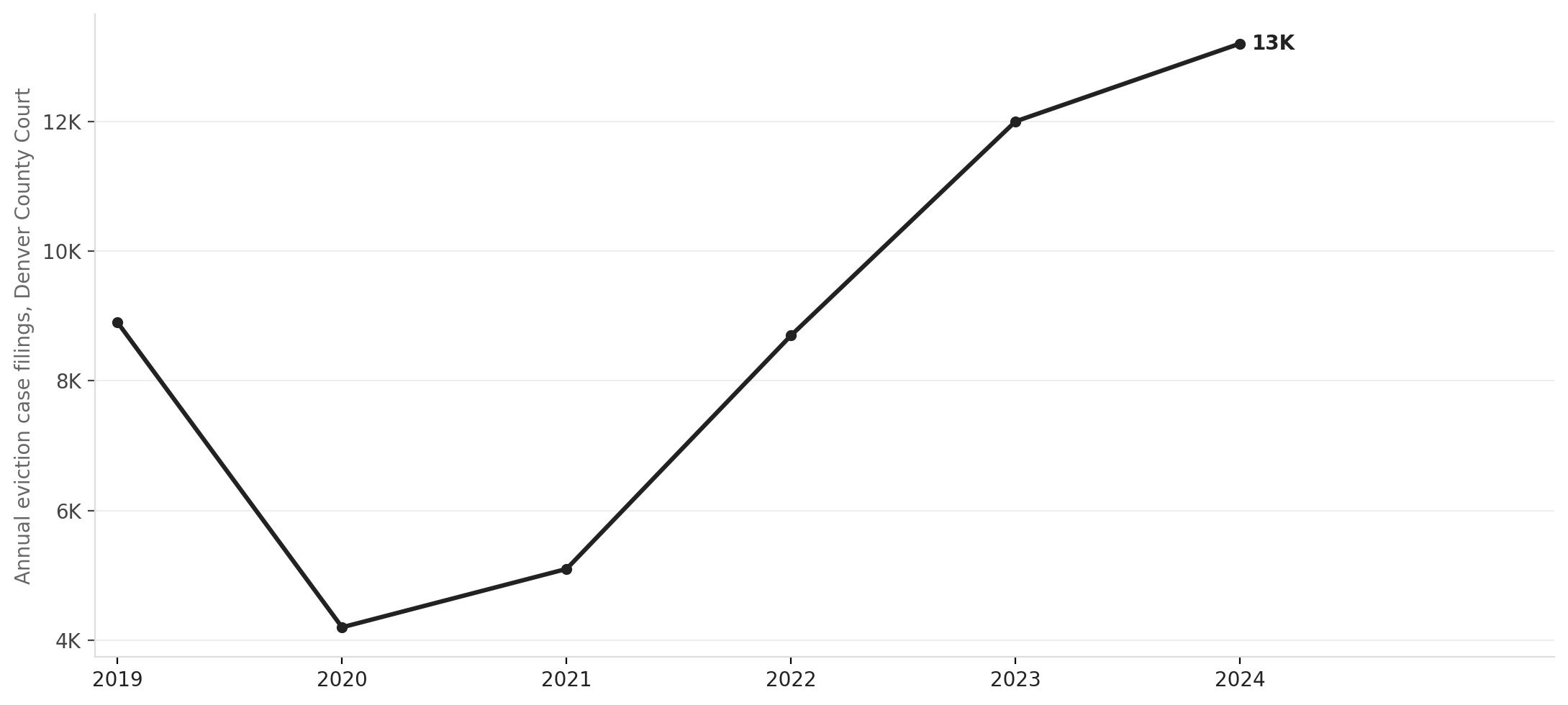
Denver is moving to keep more low-income renters in their homes amid record-high eviction filings two years running, funding free legal representation for tenants who would otherwise face landlords' attorneys without any help.
The city's Department of Housing Stability (HOST) is contracting with legal aid providers to supply courtroom defense and legal advice to residents facing eviction, a direct response to what the city calls "increased risk of eviction caused by economic impacts." The contract would run January 1, 2026 through December 31, 2026, with possible extensions. Proposals are due April 28. Denver has posted the funding opportunity on the HOST partner resources page.
The stakes are significant. Nationwide, more than 90% of tenants appear in eviction court without a lawyer, while the majority of landlords have legal representation. Studies from New York City, which became the first U.S. city to guarantee legal counsel to low-income tenants in 2017, found that represented tenants avoid eviction in roughly 84% of cases. Denver began funding eviction legal defense through HOST in 2021, and this contract continues that effort as pandemic-era safety nets have largely disappeared.
Source: NationGraph.
The collapse of federal protections has driven the caseload. The CDC eviction moratorium ended in August 2021, and Emergency Rental Assistance Program funds have been exhausted across most of the country. Denver metro rents rose roughly 30 to 40 percent between 2019 and 2023, while wage growth lagged. The result has been eviction filings in Denver County well above pre-pandemic norms in both 2023 and 2024.
Colorado's legal landscape makes attorney access especially consequential. Unlike many states, Colorado does not require landlords to have "just cause" to evict a tenant at the end of a lease, meaning a skilled defense lawyer can make the difference between a family staying housed or not.
The services HOST is funding go beyond the courtroom. In addition to in-court representation, providers may offer tenant-landlord mediation, help connecting residents to emergency rental assistance, and a coordinated call center to route callers to the right services. The layered approach mirrors strategies being tested in cities like Cleveland and Philadelphia, where legal defense is bundled with upstream prevention services.
Eviction prevention is also central to Mayor Mike Johnston's broader housing agenda. Johnston, elected in 2023 on a pledge to end unsheltered homelessness, has made HOST his primary policy vehicle, and his House1000 initiative aims to move unsheltered residents indoors. Keeping renters in their homes before they lose them is a key part of that strategy, as Denver also works to build out a permanent family shelter system for those who do fall through the cracks.
The contract will take effect against a tighter city budget. Johnston has publicly warned of fiscal pressure tied to migrant response costs and slower sales tax growth, making the scope and funding continuity of the 2026 eviction defense contract a question worth watching as the city finalizes its budget later this year.