A deteriorating tunnel beneath 38th Street South in Minneapolis is getting a structural overhaul, as the city pushes to shore up underground infrastructure that was built decades ago and was never designed for today's rainfall.
The 38th Street corridor runs through the Powderhorn and Bryant neighborhoods in south Minneapolis, passing near George Floyd Square at 38th and Chicago. Any major construction in this stretch carries both practical and symbolic weight, in a part of the city that has faced disinvestment for decades and drew global attention in 2020. The rehabilitation is expected to address the kind of structural deterioration common in mid-century tunnels: crumbling concrete, failing brick liners and separating joints. The industry-standard fix for this type of damage avoids tearing up the street entirely, instead using trenchless techniques that repair the tunnel from the inside.
The timing reflects two pressures that have been building for years. Minnesota has seen a 42% increase in heavy precipitation since 1958, according to the state climatology office, and tunnels built for a smaller, less paved city are increasingly overwhelmed by intense storms. Flash flooding hit south Minneapolis neighborhoods hard in 2023 and 2024, and a 2019 city audit flagged multiple tunnels in the area as being in fair-to-poor condition.
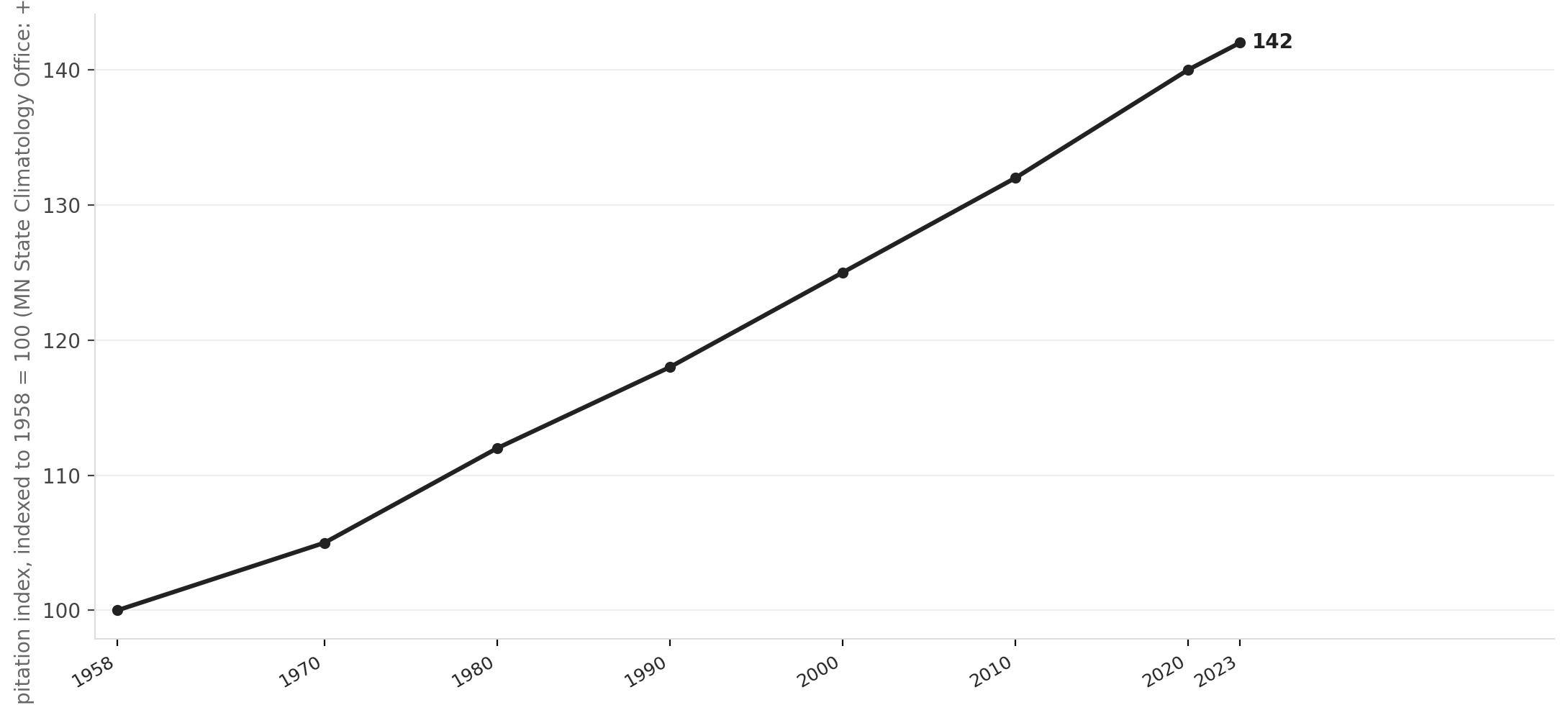
Source: NationGraph.
Federal money has helped accelerate the work. Minnesota is receiving roughly $6.8 billion over five years through the 2021 Infrastructure Investment and Jobs Act, including hundreds of millions earmarked for water infrastructure and climate resilience. Minneapolis has been working through its tunnel inventory for the past decade, completing projects on Washington Avenue and Hiawatha, among others. The city is also moving to replace lead water pipes serving 500,000 residents, part of the same broader infrastructure push.
The city has posted the project to its bids and RFPs portal as a future opportunity. Specific cost figures and a construction timeline have not yet been disclosed. The contractor selection process is the next step before work can begin.