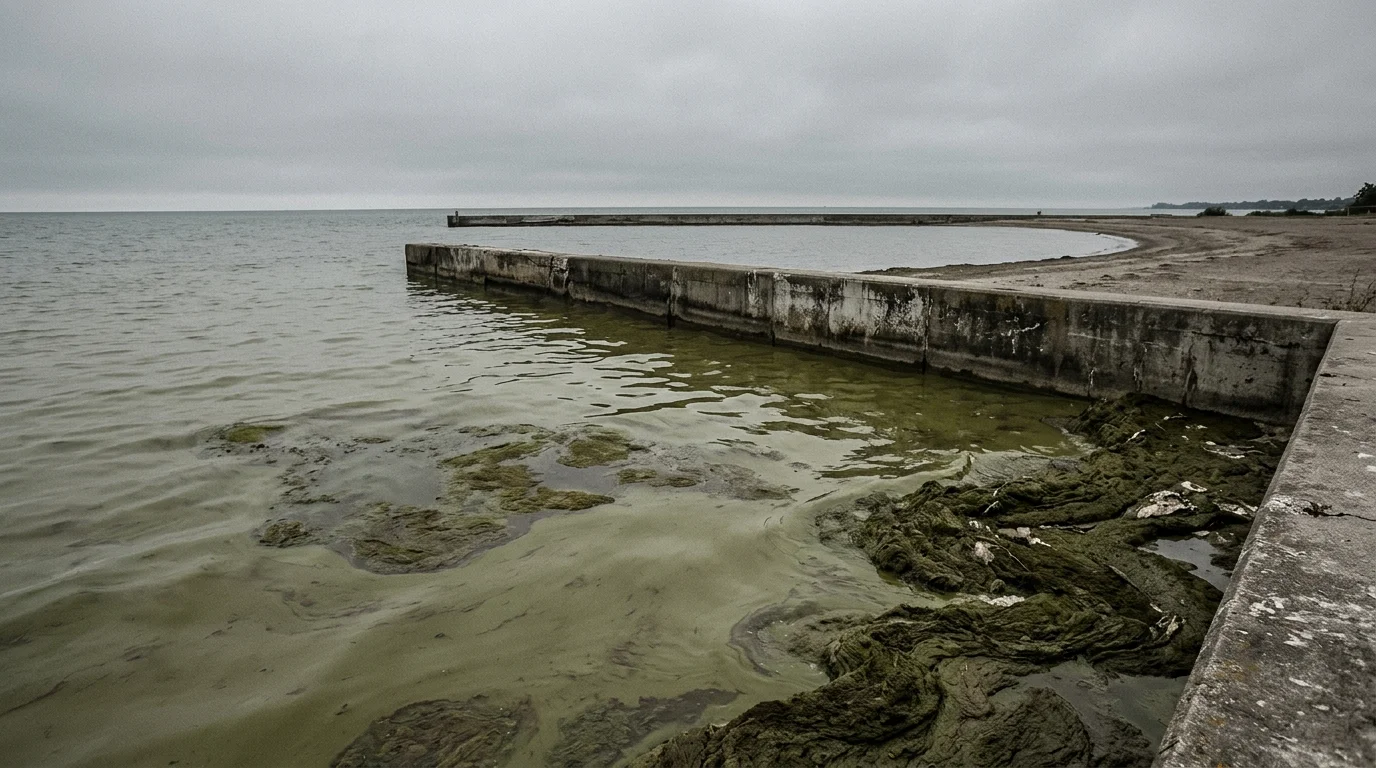
Lake St. Clair's shoreline communities have spent recent summers dealing with something that smells as bad as it looks: thick, foul mats of toxic algae piling up on beaches, clogging marinas, and coating seawalls from Anchor Bay to St. Clair Shores. Now, officials are moving to test whether any of it can actually be removed.
A field trial solicitation posted June 16, at the height of algae season, calls for contractors to pilot removal methods on the lake, which sits on the Michigan-Ontario border and forms the recreational and economic backbone of Macomb County, Michigan's third-largest county. The project is explicitly experimental: no Great Lakes community has solved this problem at scale, and the trial will test approaches like mechanical harvesting, suction dredging and shoreline vacuuming to find out what might work.
The culprit is Microseira wollei, a toxin-producing cyanobacterium that lives on the lake bottom and began forming unprecedented mats along Lake St. Clair's shores around 2019 before exploding into a full crisis by 2022. Residents describe buildup several feet thick in places. The lake's average depth is just 11 feet, which makes it especially vulnerable to this kind of bottom-growing algae.
Source: NationGraph.
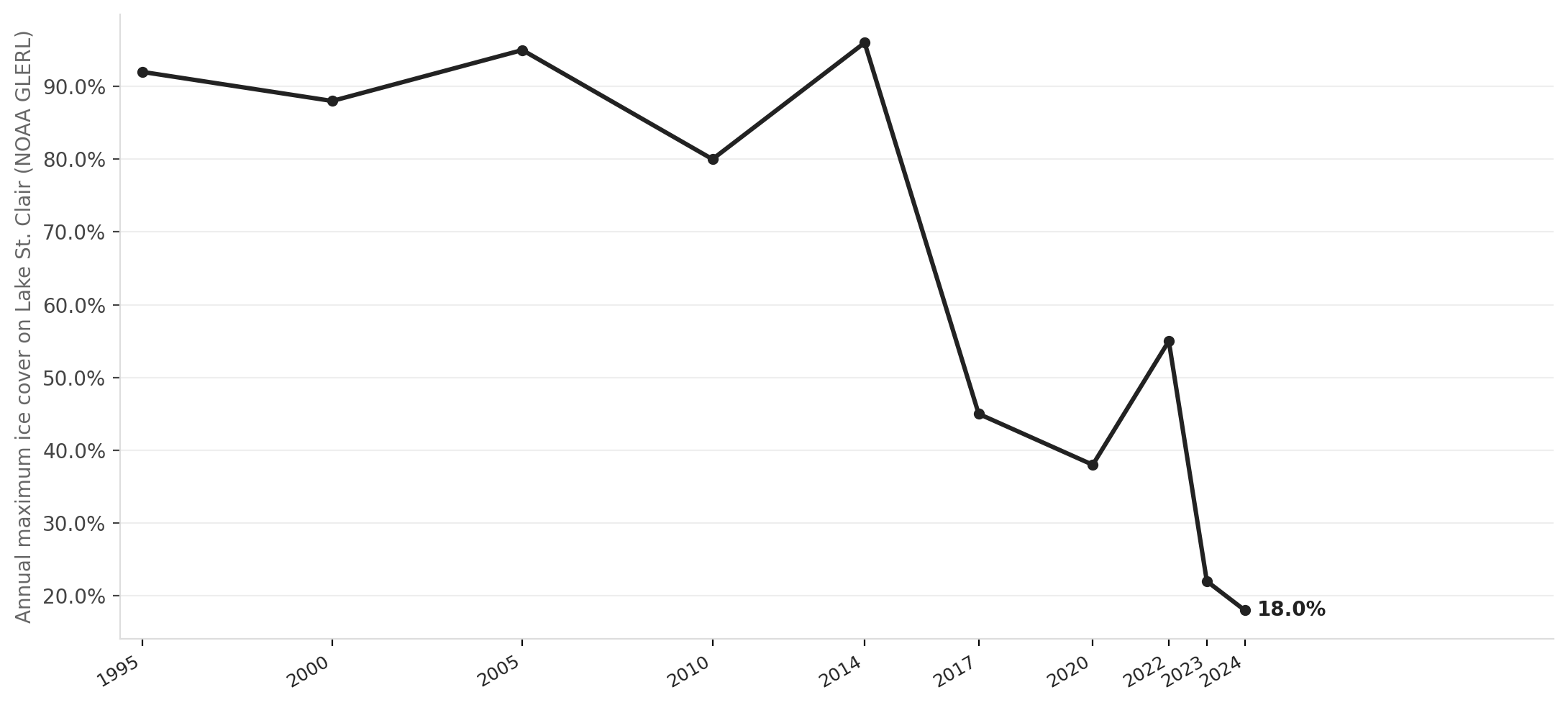
Several forces converged to create the problem. Invasive zebra and quagga mussels have filtered the water clearer over the past three decades, letting more sunlight reach the lake bed and fueling benthic algae growth while suppressing phytoplankton. Warmer winters have extended the growing season. And decades of phosphorus-laden agricultural runoff from the Clinton River watershed in Michigan and the Thames River basin in Ontario have loaded the lake with nutrients the algae thrives on.
Microseira wollei is not federally regulated, and Michigan's environmental agency has limited authority to compel cleanup, pushing local governments to act on their own. Macomb County Public Works Commissioner Candice Miller, a former U.S. Congresswoman who has made Lake St. Clair her signature issue since leaving Congress, has repeatedly called the muck one of the top threats to the lake.
The stakes are high. The lake supports an estimated $4 billion regional boating, fishing and tourism economy and one of the largest freshwater boating fleets in North America. Property values in shoreline communities like Harrison Township, Chesterfield and Grosse Pointe are directly tied to water quality.
As NationGraph has reported, officials have been working toward exactly this kind of hands-on trial. Whoever is selected will essentially be developing a playbook that the broader Great Lakes region is watching closely. Results from this summer's pilot will help determine whether a larger cleanup effort is feasible, and what it might cost.