Red Feather Lakes, a high-elevation mountain community about 50 miles northwest of Fort Collins, Colo., is pushing forward with large-scale forest thinning and prescribed burns aimed at reducing the risk of a catastrophic wildfire reaching its doorstep.
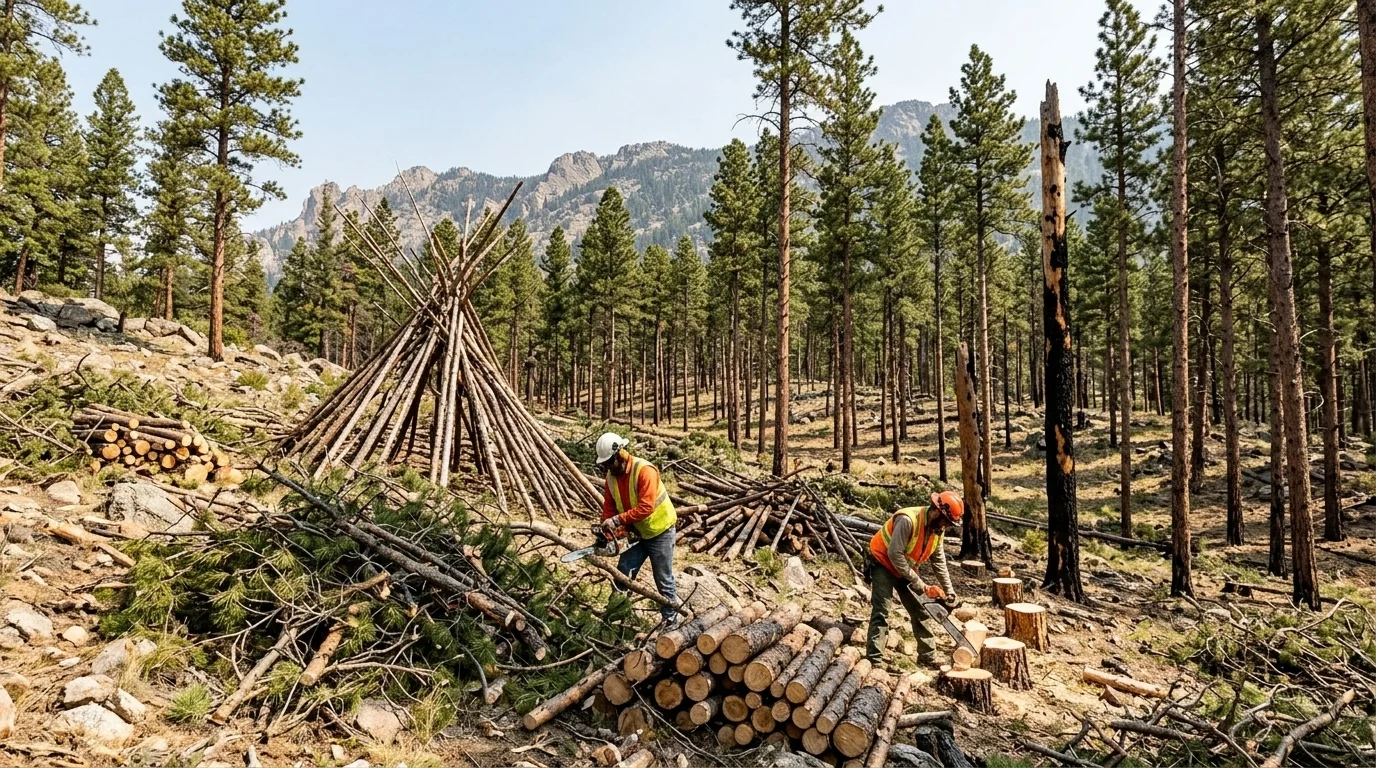
The work centers on what foresters call stand-scale treatments: removing smaller trees and ladder fuels with chainsaws and heavy equipment, then following up with controlled burns to reset the forest toward something closer to its historical fire-adapted structure. The goal is to create enough of a buffer around homes and ridgelines that a future fire behaves like a manageable surface fire rather than a canopy-torching crown fire.
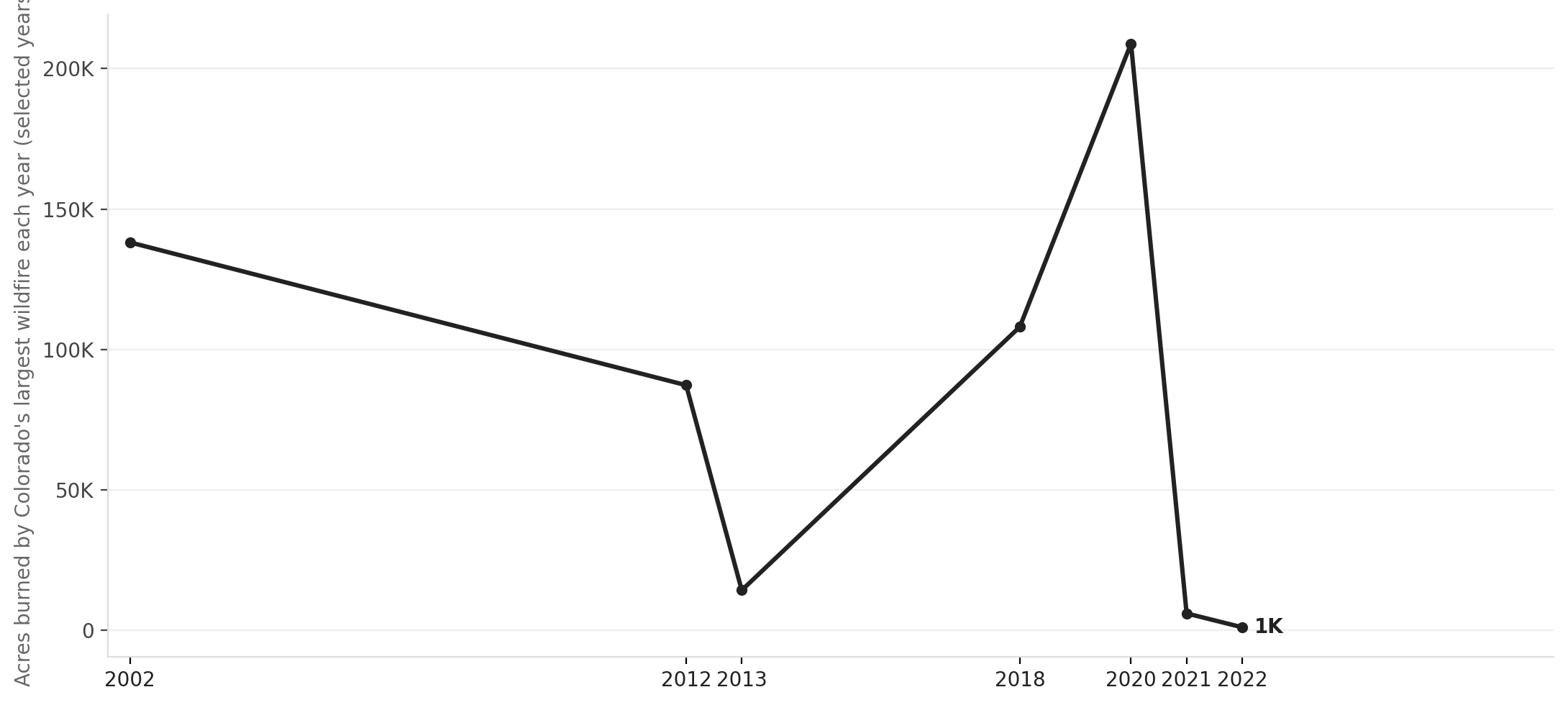
The stakes are concrete. In 2020, the Cameron Peak Fire burned 208,913 acres in the mountains surrounding Red Feather Lakes, destroying 461 structures and forcing mass evacuations. It remains the largest wildfire in Colorado's recorded history. Some of the national forest surrounding the community burned, but pockets of dense, unburned forest loaded with fuel remain right next to homes. As detailed in earlier coverage of the community's ongoing recovery, those unburned patches represent some of the highest near-term risk.
Source: NationGraph.
The underlying problem took a century to build. Decades of aggressive fire suppression left Colorado's ponderosa and lodgepole pine forests at three to 10 times their historical tree densities. Ecosystems that once burned in frequent, low-intensity fires now carry enough accumulated fuel to produce the kind of fast-moving, stand-replacing fires that destroyed neighborhoods across the state in 2020 and 2021. A warming climate has added urgency: Colorado's fire season is roughly 78 days longer than it was in the 1970s.
For Red Feather Lakes homeowners, this has become a financial issue as much as a safety one. Many have faced insurance non-renewals or sharp premium increases in recent years, and documented fuels treatment around the community is increasingly a factor in whether coverage remains available at all.
The project is being solicited through the Rocky Mountain Bid System, posted July 15, 2026. The issuing agency was not specified in the solicitation, though the work aligns with ongoing efforts by the Northern Colorado Fireshed Collaborative, a partnership of the U.S. Forest Service, the Colorado State Forest Service, Larimer County and local fire districts. The total acreage and contract value were not disclosed.
Prescribed burning in Colorado carries political weight. After a U.S. Forest Service prescribed burn in New Mexico escaped in 2022 and became the state's most destructive wildfire on record, federal agencies faced a national pause on burn operations and heightened public skepticism. Any burning planned around Red Feather Lakes will likely face close scrutiny from residents concerned about smoke and escaped-fire risk.
Contractor selection will determine when work can begin, and the community's window for treatment work narrows each year as fire seasons start earlier and run longer.