Minneapolis is pressing forward with the next phase of its years-long transformation of Hennepin Avenue, this time targeting the traffic signals and curb ramps that determine whether the corridor's bike lanes actually work for cyclists and people with disabilities.
The city is now seeking an engineering firm to rebuild bikeway infrastructure, upgrade traffic signals, and bring pedestrian facilities into ADA compliance along the avenue, which runs as a primary north-south artery from downtown through Uptown and into south Minneapolis. The solicitation is posted on the city's bids and RFPs portal, though specific cost estimates and segment boundaries were not publicly listed at the time of publication.
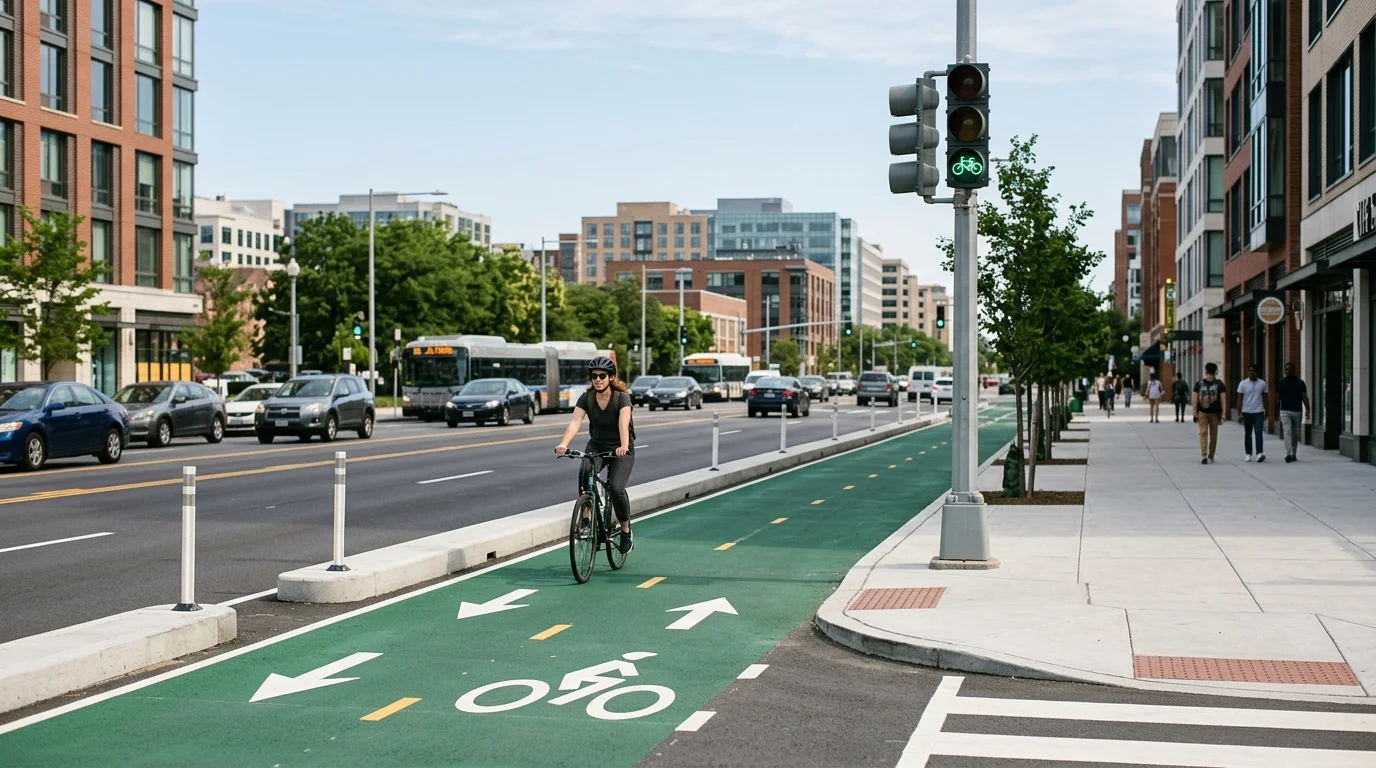
The signal work matters as much as the pavement. Bike-specific signal phases and leading pedestrian intervals, which give cyclists and walkers a head start before cars move, are a core piece of protected bikeway design that Minneapolis has been retrofitting across the network. Without them, physical lane separation alone leaves cyclists and disabled users exposed at intersections, where most serious crashes happen.
Source: NationGraph.
The ADA component carries federal weight. Minneapolis, like many cities, is working through a multi-year transition plan to bring curb ramps, signals, and pedestrian facilities into compliance with federal accessibility law. The Department of Justice has been pressing municipalities on exactly these obligations in recent years.
Hennepin Avenue has been the most politically charged street in Minneapolis for the better part of a decade. The downtown segment was rebuilt between 2022 and 2024 with protected bike lanes and dedicated bus lanes after Mayor Jacob Frey held firm against business-owner pressure to preserve on-street parking. The southern segment through Uptown is currently under reconstruction, a project running through 2027 that has again drawn pushback from businesses near Lake Street.
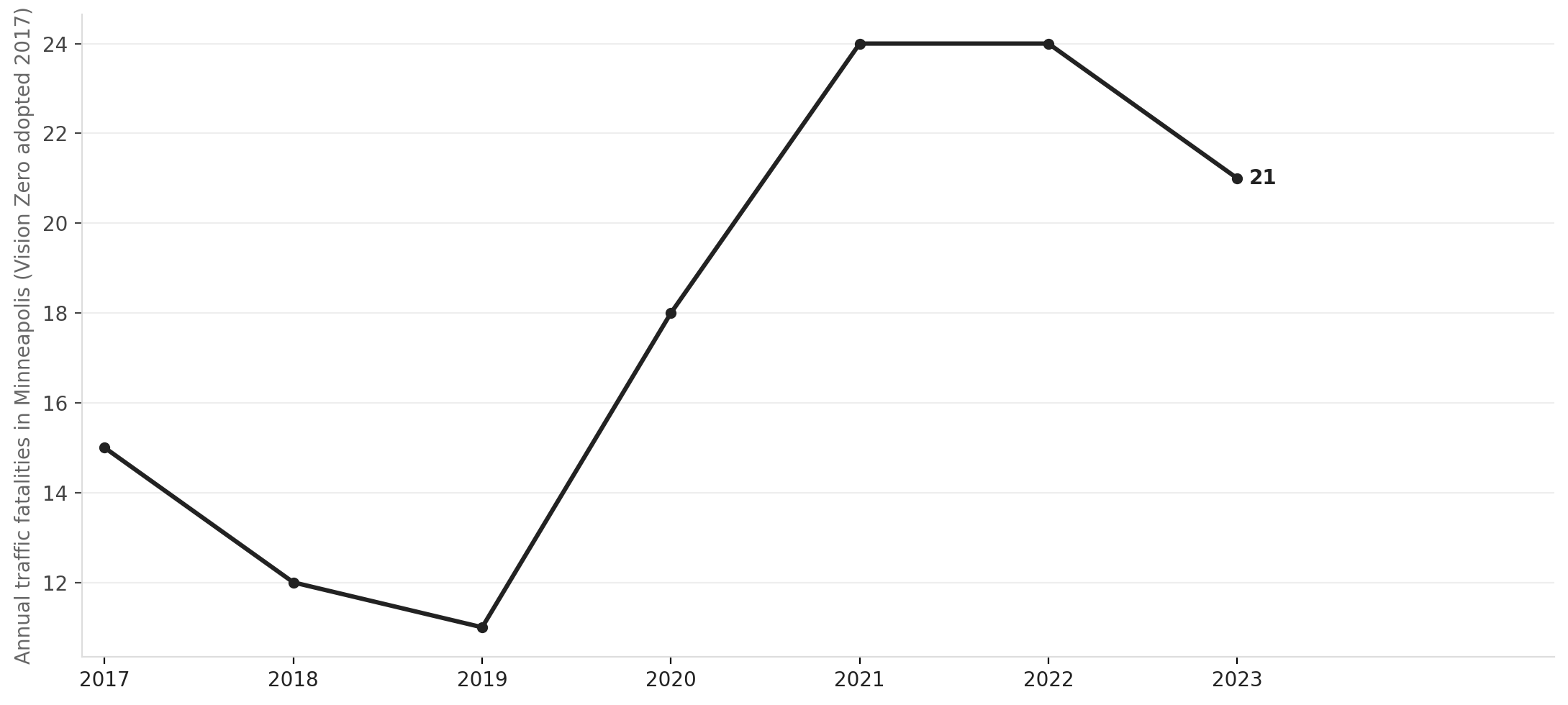
Minneapolis has consistently ranked among the top bike cities in the country, with a pre-pandemic commute mode share around 4%, well above the national average. But the city's Vision Zero pledge, adopted in 2017 with a goal of eliminating traffic deaths by 2027, has been undercut by rising fatalities and serious injuries in the years since, keeping pressure on Public Works to move faster on protected infrastructure. The city is also renovating the Blue Line's busiest Midtown station as part of a broader push to improve multimodal connections across the corridor.
With Minneapolis navigating a tight 2025 budget, federal infrastructure dollars from the 2021 Infrastructure Investment and Jobs Act are increasingly important to projects like this one. Whether this project draws on those funds has not been disclosed in the solicitation.