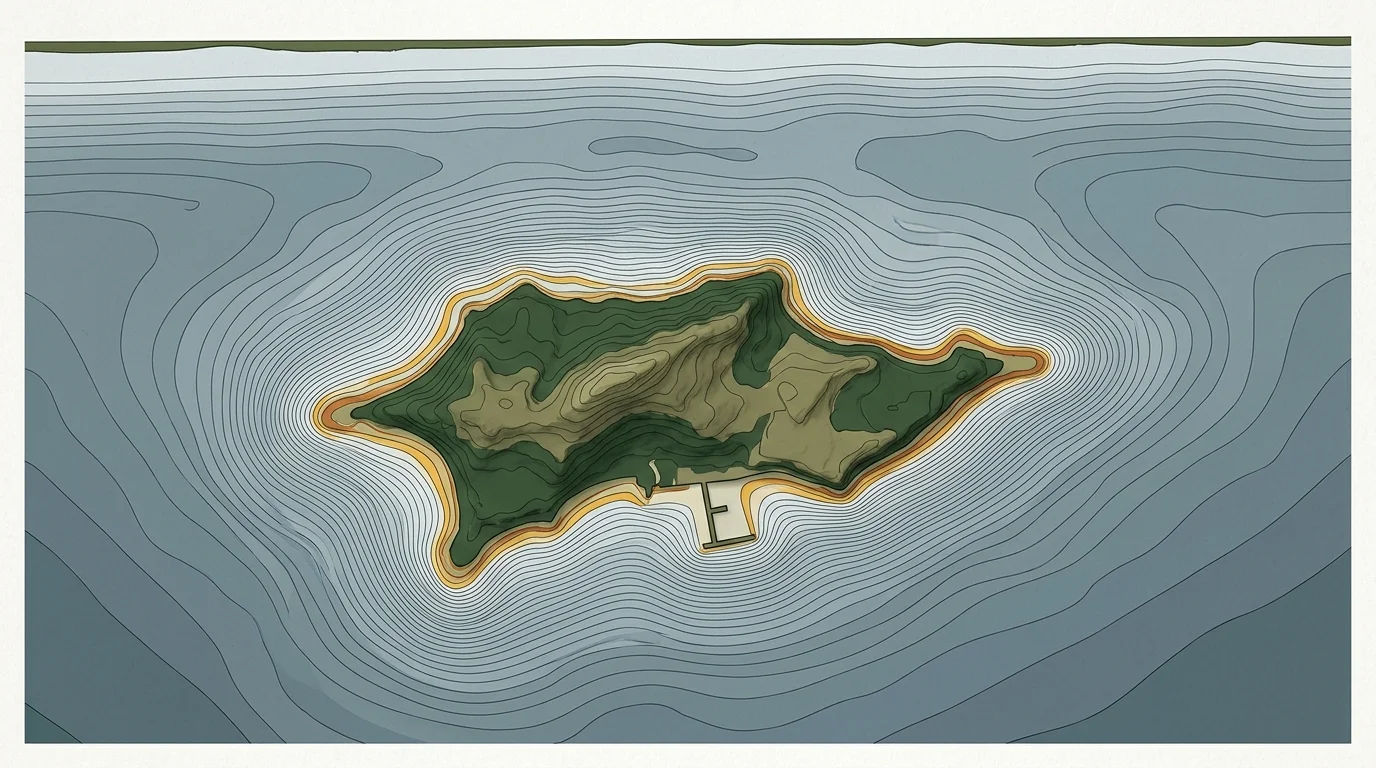
South Bass Island, Ohio sits about four miles off the Lake Erie shoreline, and for the roughly 400 people who live there year-round, the ferry is everything. It's how groceries arrive, how mail gets delivered, how emergency vehicles move, and how residents get to the mainland when they need to. When a storm damages the main dock or heavy weather makes it unusable, there is currently no backup. The island simply waits.
A federal grant of $10.4 million from the U.S. Department of Transportation's Port Infrastructure Development Program is about to change that. The money will fund construction of a roughly 406-foot stone breakwall to shield the existing ferry dock at Put-in-Bay, along with a new standby berth on the inner wall of that breakwall. When the main dock is down for repairs or weather forces a closure, ferries will have a second place to land, load, and unload passengers, vehicles, and cargo.
The project is being built for Put-in-Bay Township Port Authority, with Miller Boat Line serving as the primary operator and subrecipient. Miller has run vehicle ferry service between Catawba Island on the mainland and South Bass Island since 1905, operating year-round and serving as the island's lifeline for freight and emergency access. The new standby berth will also double as a maintenance slip for ferry vessels.
The vulnerability this project addresses is not hypothetical. Lake Erie is the shallowest and most volatile of the Great Lakes, prone to severe storms and sudden water-level swings that have battered shoreline infrastructure across the region in recent years. When service is disrupted, island residents are effectively stranded, relying on small boats or expensive air transport. Winter service is already limited and precarious even in normal conditions.
Put-in-Bay draws an estimated 750,000 or more visitors each year, making it one of Ohio's most popular tourist destinations. Ferry reliability is as much an economic issue as a safety one for Ottawa County, where the island is located. But for year-round residents, it's more fundamental than that.
Federal investment in Great Lakes port infrastructure has historically lagged behind coastal ports, though the Bipartisan Infrastructure Law's $2.25 billion allocation to the Port Infrastructure Development Program has helped close that gap. Similar PIDP grants have funded harbor repairs in places like Port Townsend, Washington and port expansions in Ogdensburg, New York, reflecting widespread unmet infrastructure needs in smaller waterfront communities.
Design, permitting, and engineering work must be completed before construction begins. No public timeline for project completion has been announced.