Ohio received $105.9 million in newly started federal housing grants in the trailing 90 days, more than double the $48.6 million recorded in the same window a year earlier. The number looks like a construction surge or a policy windfall. It is neither. It is a catch-up, legally forced by Congress and compressed into a single July 1, 2026 disbursement date that dropped three large grants onto Ohio's books simultaneously.
Three awards account for roughly 91 percent of the total. The Department of Energy's Weatherization Assistance Program sent a $40.7 million formula grant to the Ohio Department of Job and Family Services, nearly double the $20.3 million Ohio received in the prior program year, to fund energy-efficiency improvements in low-income homes across the state. HUD's Continuum of Care program renewed a $31.2 million grant to Strategies to End Homelessness, the Cincinnati-based nonprofit that manages the Hamilton County CoC, and a separate $24.6 million renewal to Columbus's Community Shelter Board. All three carry a July 1, 2026 start date, the statutory beginning of HUD's Program Year 2026 and the DOE's PY2026 weatherization cycle.
The story behind that alignment begins in Washington. The Consolidated Appropriations Act of 2026 (Public Law 119-75), signed February 3, 2026, allocated $77.3 billion to HUD and included two specific mandates that Ohio's housing advocates had been lobbying for: a requirement that HUD renew all Continuum of Care grants expiring in the first quarter of 2026 within 12 months, and a hard deadline requiring HUD to publish its FY2026 CoC Notice of Funding Opportunity no later than June 1, 2026. HUD met that deadline exactly. As the Bipartisan Policy Center's THUD funding summary notes, Congress added those provisions specifically to protect CoC renewals from administrative delays that had put grants at risk earlier in the year.
For Cincinnati's Strategies to End Homelessness, the gap between the old grant cycle and the new one was not academic. The organization had publicly flagged the risk of a funding lapse and sought bridge money from Hamilton County and the City of Cincinnati while waiting for federal renewal. WVXU reported in late August 2026 that the federal money arrived sooner than feared, but still roughly six weeks behind schedule, meaning the renewed grant hit Ohio's accounts in August and September rather than July 1 on the nose. The bridge funds turned out to be unnecessary, though the scramble itself illustrates how thin the margin was. Strategies to End Homelessness serves a region where 6,489 people experienced homelessness in Hamilton County in 2024, a 7.5 percent increase since 2022, driven partly by the expiration of COVID-era prevention funding. The CoC's year-over-year award swing is the sharpest of any single Ohio entity in this window: $2.1 million in the comparable prior-year period versus $31.2 million now, a roughly 14-fold jump that reflects the full multi-year renewal arriving at once rather than any single-year program expansion.
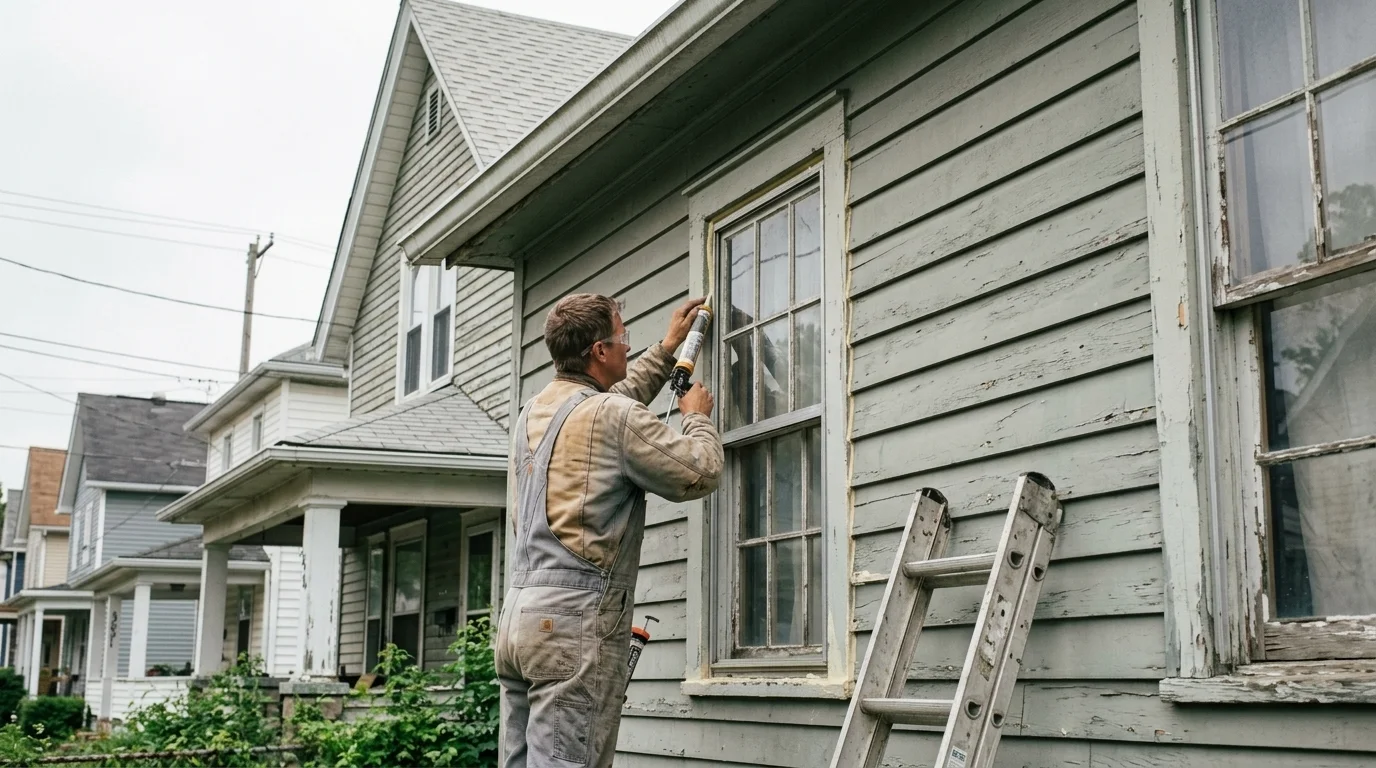
The weatherization piece operates through an entirely different pipeline and serves a different population. The Ohio Home Weatherization Assistance Program, administered by ODJFS, directs federal DOE dollars toward insulation, heating system upgrades, and air-sealing in homes owned or rented by low-income Ohioans, with priority for households with elderly members, people with disabilities, and families with children. Ohio's older housing stock and cold winters make it a high-demand state for the program. ODJFS held a public hearing on its PY2026 HWAP State Plan in August 2026, signaling that implementation of the doubled appropriation is underway. The $20.4 million increase in the DOE formula grant, from $20.3 million to $40.7 million, reflects the broader WAP appropriations increase in the same spending package that funded the CoC renewals, though the two programs are distinct in purpose, agency, and delivery mechanism.
It is worth keeping the $106 million in context. Ohio's active federal housing grant portfolio already stood at $1.48 billion across 1,497 HUD grants and $385 million across three DOE grants before this window opened. The new money sits on top of that base, not in place of it. What changed is not the scale of Ohio's housing investment but the timing: a year's worth of renewal activity, delayed by administrative friction and then legally required to proceed, landed in a single quarter.
For Ohioans in Hamilton County and Franklin County, the practical effect is that homelessness service providers that were rationing capacity and seeking local bridge funding should now have operating budgets through mid-2027. For low-income households statewide, the doubled weatherization allocation means more contractors, more applications processed, and potentially shorter wait times for home energy upgrades. The next signal to watch is whether HUD's compliance with the June 1 NOFO deadline holds for FY2027, or whether the statutory pressure that forced this year's catch-up needs to be renewed in the next appropriations cycle.