Federal transit grants newly started in Wyoming have reached $7.45 million in the trailing 90 days, a 303% jump over the $1.85 million that landed in the same window a year ago, and the state agency driving most of it is not a transit authority. It's WYDOT.
The Wyoming Department of Transportation, operating through its Office of Local Government Coordination, won two competitive awards from FTA's November 2025 selection round that together account for $5.45 million of the total. The larger of the two, a $4.5 million Buses and Bus Facilities competitive grant that formally started July 30, 2026, funds vehicle acquisition, shop equipment, dispatch systems, facility renovations, and bus stop improvements for rural transit providers spread across the state. A separate $945,000 Low or No Emission grant, started August 26, covers four domestically manufactured diesel-hybrid ADA buses and charging infrastructure for the Teton Village service district near Grand Teton National Park. The City of Cheyenne rounds out the quarter with a $1.71 million Federal Transit Formula Grant, activated August 27, covering city service operations through September 2027.
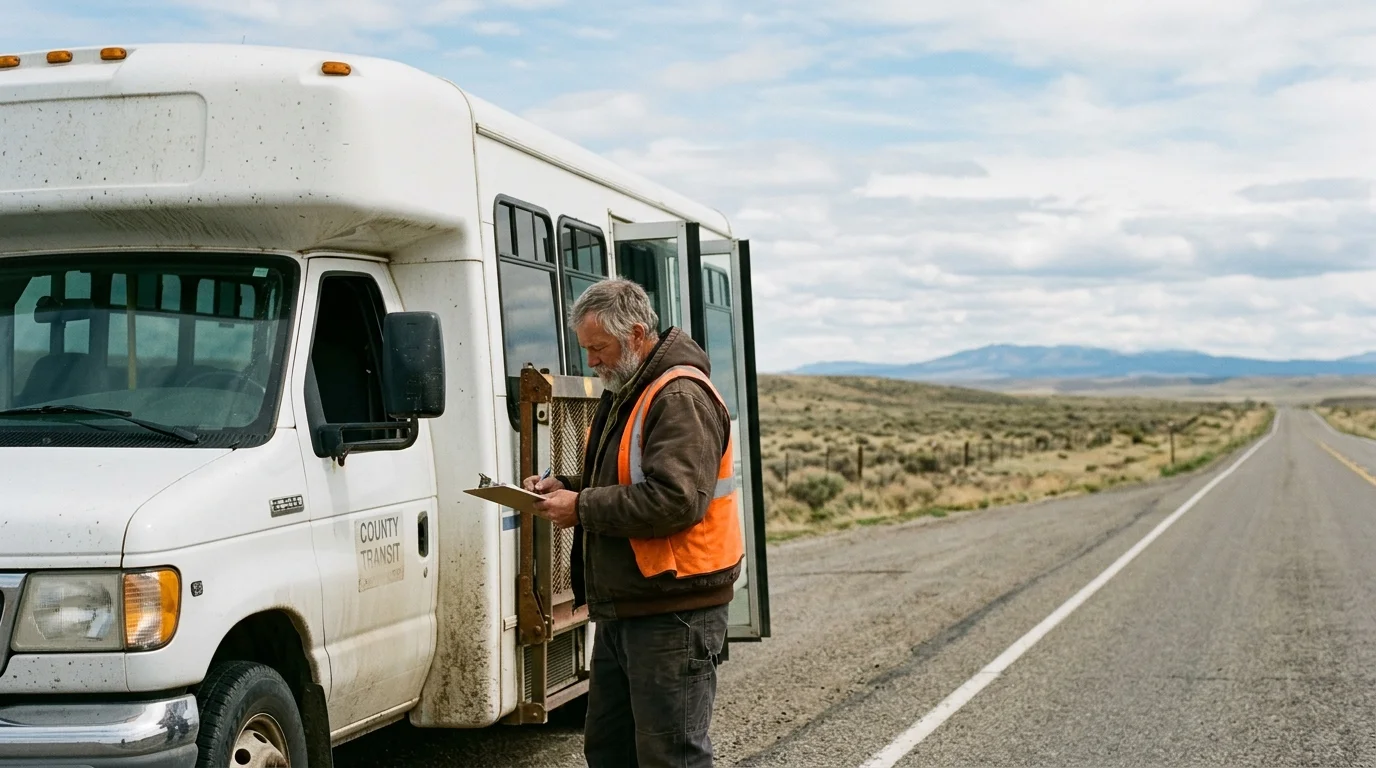
The reason WYDOT sits at the center of this is structural. Wyoming is the least populous state in the country, roughly 580,000 residents across 97,000 square miles, and its transit network reflects that geography: 23 counties each have at least one provider, but many of those providers are senior-center-operated micro-systems with no procurement staff, no legal counsel, and no capacity to write a federal grant application or manage a vehicle purchase contract. WYDOT buys on their behalf. A single WYDOT award often represents a dozen underlying operators, rural senior shuttles, tribal services through the Wind River Transportation Authority, small-city circulators, receiving vehicles and equipment they could not have secured independently.
Source: NationGraph.
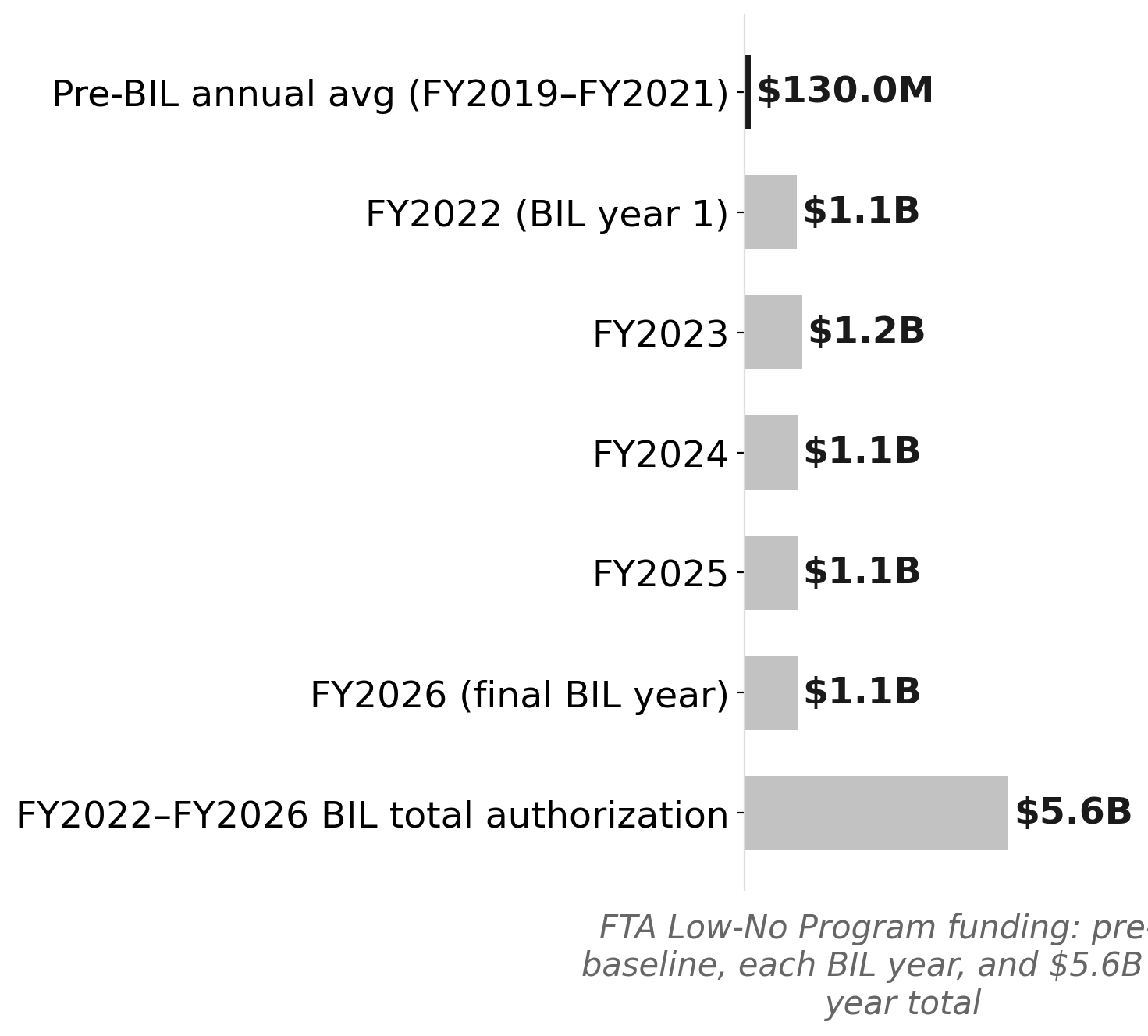
The timing is deliberate. The Bipartisan Infrastructure Law authorized $5.6 billion for the Low or No Emission Program through FY2026, more than ten times pre-BIL levels, and FY2026 is the final year of that authorization window. FTA's November 2025 competitive selection, which distributed roughly $2 billion across 165 projects in 45 states, was the penultimate round. The final round opened July 27, 2026, with $610 million available nationally and applications due September 21, 2026, a deadline that, depending on whether Wyoming submitted, could produce a second tranche of awards in late 2026 or early 2027. State transit officials have clear incentive to compete: formula funding will continue after the BIL window closes, but the large competitive pools that made fleet replacement financially feasible for small rural states will not.
The Teton Village award illustrates how priorities have shifted inside the program as it matures. An earlier Low-No grant of the same $945,000 amount, awarded to the same corridor in FY2023, funded zero-emission electric buses. The current award funds diesel-hybrid vehicles instead, a change consistent with FTA's stated FY2026 emphasis on low-emission projects in places where charging infrastructure and range limitations make full electrification impractical. The Teton corridor carries more than 24,000 cross-state commuters annually between Teton Valley, Idaho and Jackson, Wyoming, on the START Bus system, a ridership profile that makes service reliability a hard constraint.
The spending is already moving off paper. Cheyenne issued an RFP for its Westland Transit Facility renovation in April 2026, corroborating a $3.3 million Buses and Bus Facilities grant that predates the current 90-day window. START Bus in Jackson issued two separate On-Demand Microtransit RFPs in March and April 2026. Casper and Gillette both posted transit-related procurement notices this spring. The RFP pipeline is a leading indicator: procurement activity typically precedes grant drawdowns by six to eighteen months, meaning the full financial impact of the current awards will extend well into 2027 and 2028.
That timeline matters for Wyoming residents in ways that are easy to miss from aggregate figures. For a senior in a rural county whose only connection to a medical appointment or grocery store is a twice-weekly county van, a WYDOT vehicle replacement program is the difference between a newer, accessible bus with working heat and the aging diesel van it replaces. The $4.5 million statewide award explicitly covers ADA accessibility upgrades and bus stop improvements alongside vehicle purchases, infrastructure that directly affects whether these systems can serve passengers with mobility limitations.
The open question heading into fall 2026 is whether Wyoming submitted a competitive application before the September 21 deadline under FTA's FY2026 Bus and Low-No NOFO. A successful application would extend the modernization window; a miss would leave the state dependent on formula allocations alone after the BIL competitive pipeline closes. WYDOT's active grant portfolio already includes roughly $19.1 million in rural and tribal formula grants running through 2028, so the baseline is not zero. But the competitive dollars are what made the current scale of fleet replacement possible, and that pipeline has a closing date.