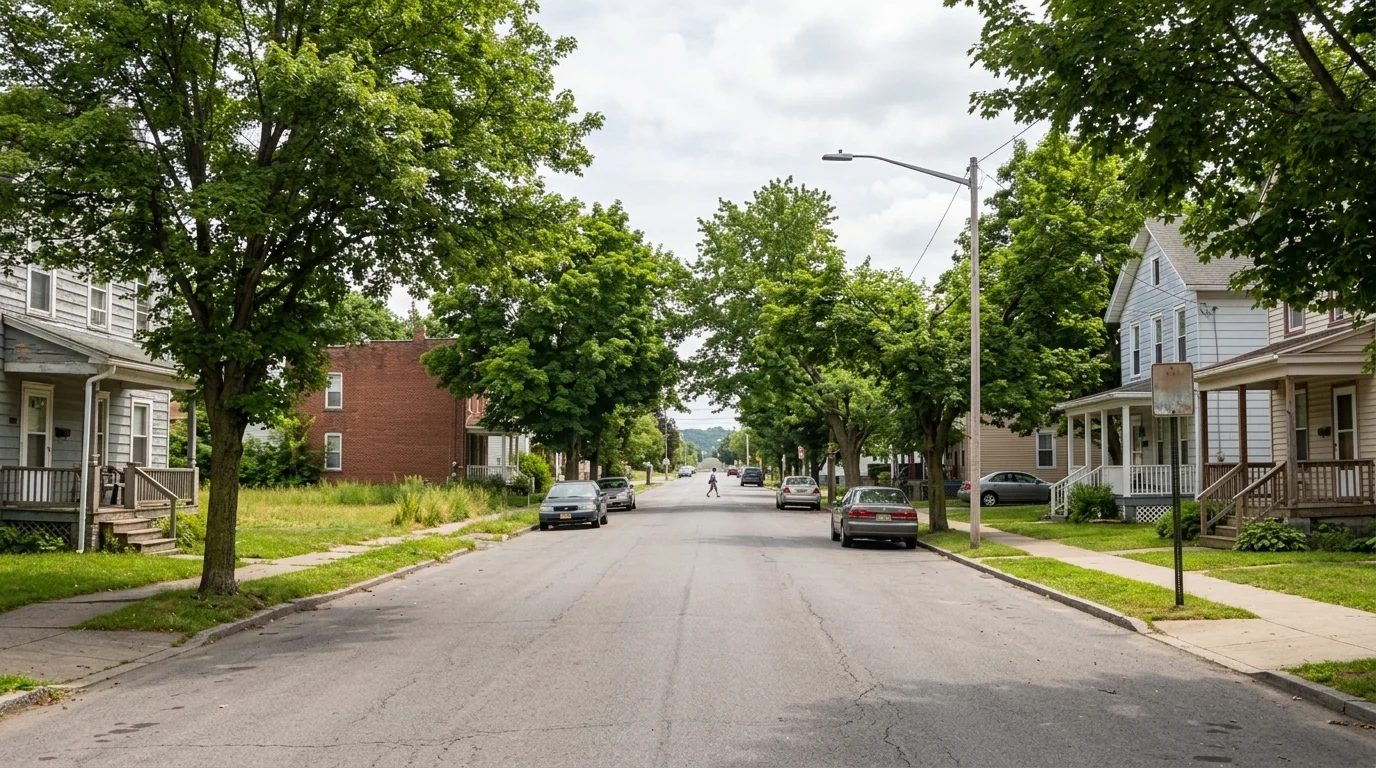
Fourteen New York institutions issued a housing-related RFP in the past 30 days after going silent for more than a year, and almost none of them are in New York City. The towns waking up are places like Barre in Orleans County, Corning in Steuben County, Coxsackie in Greene County, and Corinth in Saratoga County: small municipalities where housing procurement had quietly stalled, not for lack of need, but for fear of what a single lawsuit could do to a project budget.
That fear had a specific name: SEQRA. New York's State Environmental Quality Review Act, on the books for roughly 50 years, required environmental review of most significant land-use actions, including housing projects. In practice, opponents of new development routinely used SEQRA as a delay mechanism, filing litigation that could drag on for years and strand a municipality with signed vendor contracts and no viable path forward. For a small city or village with a thin planning staff and no litigation reserve, that risk was often enough to kill a project before it started.
On May 28, 2026, Governor Hochul signed the FY2027 state budget, which included what her office is calling the 'Let Them Build' agenda, the first significant reform to SEQRA in the law's history. The enacted provisions exempt qualifying new housing from SEQRA review: up to 300 units in urbanized areas, and up to 100 units in non-urban areas outside New York City. The change doesn't eliminate environmental review everywhere, but it removes the primary legal lever opponents had used to tie housing projects in smaller markets to years of costly litigation.
Source: NationGraph.
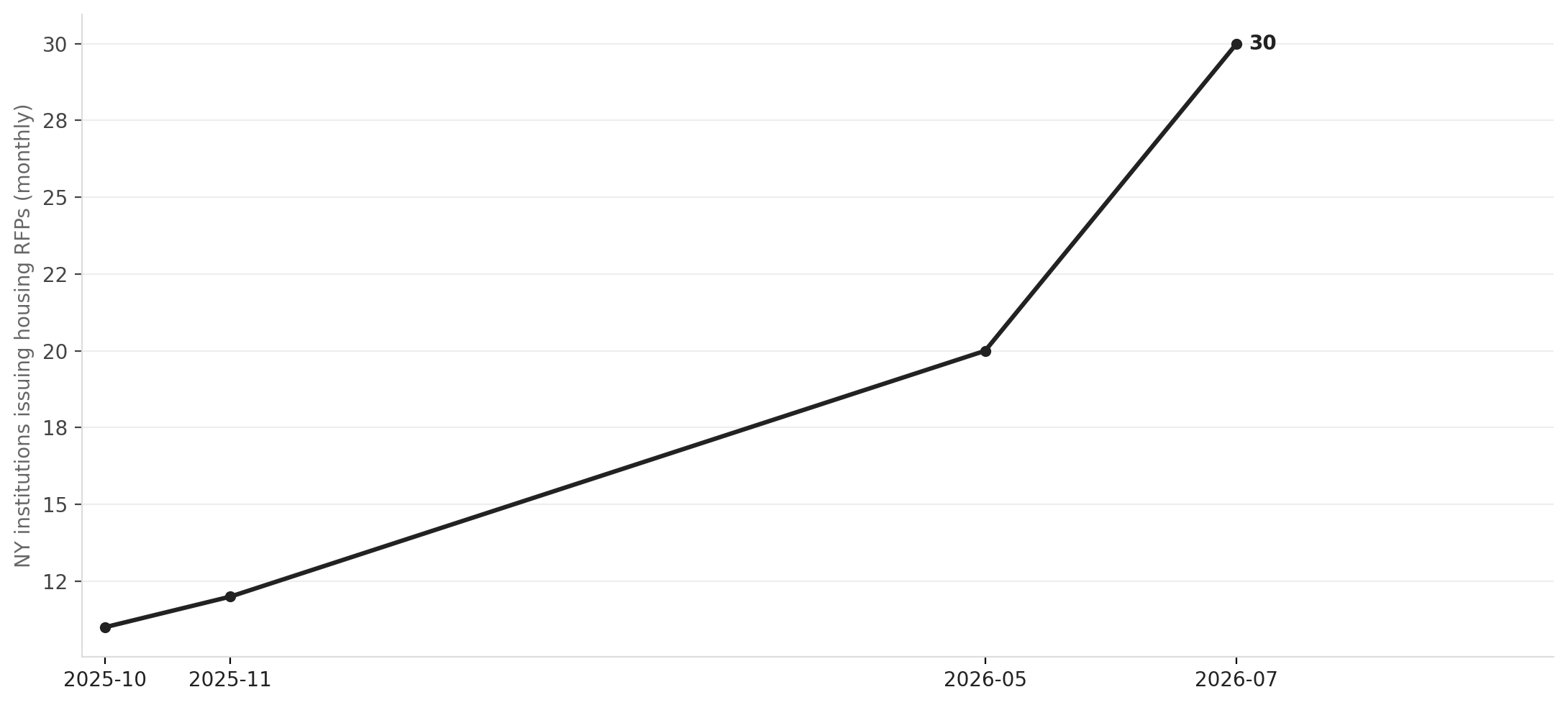
The procurement signal is early but distinct. New York had only 11 to 12 institutions actively issuing housing RFPs in October and November of 2025. That number is now 30 in July 2026, more than double the trough, and climbing. The 14 first-time re-entrants in the past month include the Peekskill and White Plains housing authorities (issuing RFPs for HQS inspections and fee accounting), the New York Department of State's North Country Administrator Program, and several CDBG and CDBG-DR funded rehab and grant administration contracts in smaller counties. These are not marquee projects. They are the unglamorous procurement machinery of functional local housing systems: inspection contracts, administrator services, rehabilitation consultants. Their reappearance suggests municipalities are moving from planning paralysis back to operational mode.
The logic of why SEQRA reform hits smaller markets harder than larger ones is straightforward. A large developer in New York City can price litigation risk into a pro forma and absorb a multi-year delay. A village in Orleans County cannot. The marginal deterrent effect of SEQRA was always larger where project budgets were smaller and legal capacity thinner. As the National Law Review noted, the reforms are specifically designed to accelerate timelines in exactly these markets. NYU housing policy expert Vicki Been described SEQRA reform as a critical step toward affordability, a signal that the academic case for the change had been building for years before Hochul moved it through the legislature.
The capital backdrop is substantial. Thirty-nine new New York housing grants started in the trailing 90 days, totaling $172 million in new federal obligations. The active portfolio is anchored by NYS DHCR's $290 million Weatherization grant running through 2029 and NYC HPD's $66 million HOME Investment Partnership program running through 2034. The FY2027 budget directs more than $850 million in housing capital statewide, layered on top of the $1.5 billion committed in FY2026, which included $100 million for pro-housing communities and $50 million for a Housing Access Voucher Program. That cumulative capital base gives municipalities something to procure against, but only if they're willing to move.
Not everyone reads the FY2027 budget as an unambiguous win for housing. The advocacy group ANHD publicly criticized the budget's allocation of only $20 million for preservation of existing subsidized housing against $250 million for new construction, a ratio that, in their analysis, underserves the communities most at risk of losing affordable units today. That tension between preservation and new supply is unlikely to resolve quickly, and it will shape which markets benefit most from the procurement surge now underway.
The next signal to watch is whether the re-entry holds through the fall procurement cycle. July RFP activity can reflect optimism; October awards reflect actual commitment. If the 14 first-time re-entrants in the past month convert their procurements into signed contracts by the end of Q3, that would suggest the SEQRA reform has genuinely shifted the risk calculus for small-city housing, not just generated a temporary burst of planning-stage activity. The towns that had given up trying are testing the water. Whether the water is warm enough to stay in is the question the next 90 days will answer.