Nevada transit agencies issued 8 procurement solicitations in the last 30 days, nearly three times their trailing monthly average of 2.8, the highest surge multiplier among five Western peer states. Arizona is running at 2.1x; Utah, Colorado, and California are flat or declining. This is not a regional tide. It is something specific to Nevada, and understanding what is driving it requires holding two facts in the same hand at once: the state is completing the most ambitious transit capital project in its history, and the agency doing it has warned it may eliminate 42% of its bus routes by 2028.
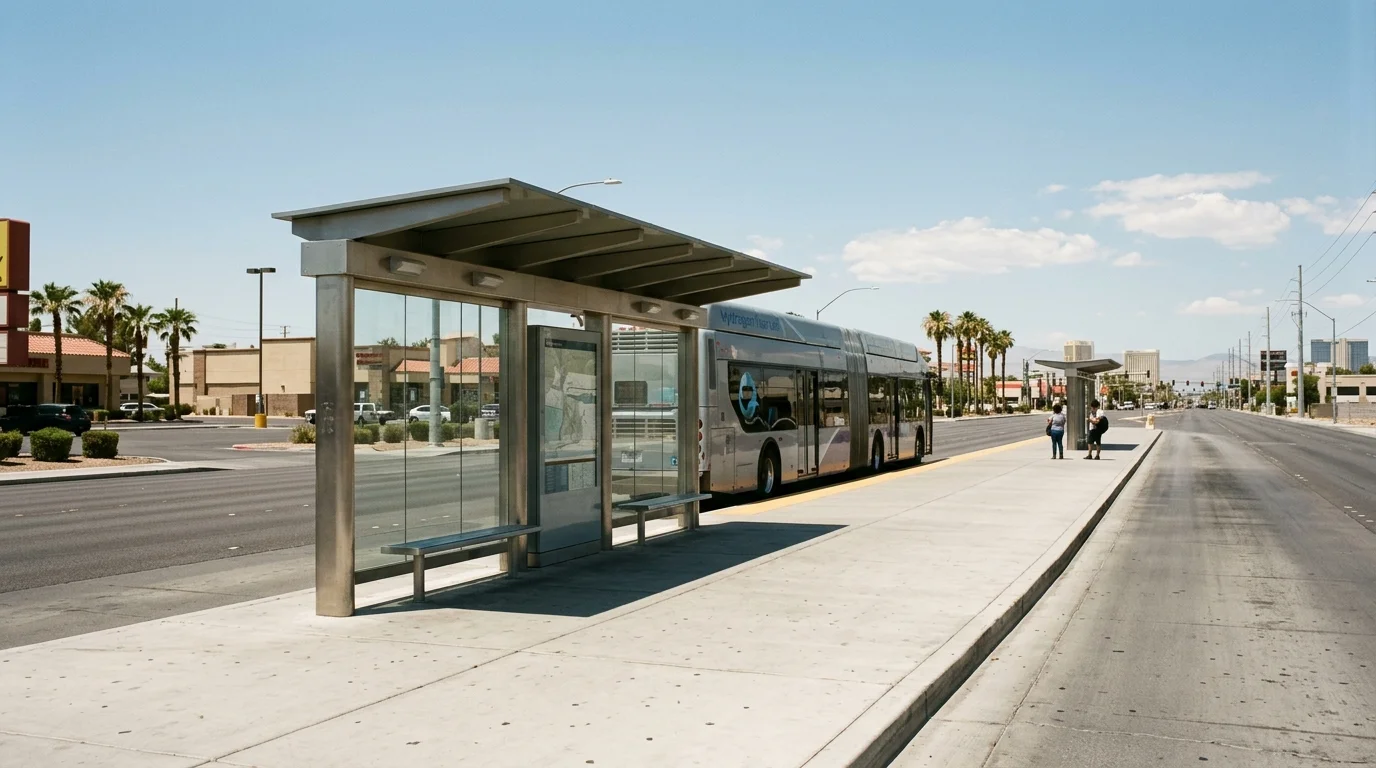
The RFP acceleration has three engines, each drawing from a separate federal program. The first is the Maryland Parkway BRT corridor, a $378 million project anchored by roughly $150 million in FTA Capital Investment Grant funding under Section 5309. The RED LINE launched revenue service on August 23, 2026, putting 15 hydrogen fuel cell buses into service across a 12.5-mile corridor with 29 stations from downtown Las Vegas to UNLV. But a launch is not a closeout. Roadway and utility construction continues through year-end, and RTC Southern Nevada's procurement pipeline remains active with exactly the kinds of contracts you would expect from a system standing up new infrastructure: janitorial services for the Bonneville Transit Center, elevator rehabilitation on a pedestrian bridge at Las Vegas Boulevard and Flamingo, inspection and materials testing. These are not glamorous. They are the operational membrane that a new capital project requires to function.
The second engine is RTC Washoe County. In November 2025, the agency received a $21.5 million FTA Low or No Emission grant under Section 5339(c) to replace a portion of its bus fleet with diesel-electric hybrid vehicles. Washoe already achieved 100% alternative-fuel operation thirteen years ahead of its own schedule, a record that made it a competitive applicant for this program. That grant is now triggering procurement: vehicle contracts, charging and fueling infrastructure, facility modifications. Fleet replacement at this scale generates its own cluster of solicitations.
Source: NationGraph.
The third engine, and the most consequential one for what happens after October, is the expiration clock. The Infrastructure Investment and Jobs Act's surface transportation authorization runs out September 30, 2026. The formula grants that flow annually to urbanized areas under Sections 5307, 5337, and 5339, the programs that fund operations and state-of-good-repair work, distinct from the competitive capital and fleet grants described above, are authorized under IIJA and face reauthorization uncertainty. Congress has introduced the BUILD Act as a replacement vehicle, and the Urban Institute estimates it would reduce FTA authorized spending by at least 23% over five years. Agencies that have not initiated procurements before the authorization lapses risk losing obligated funds to rescission or facing gap years in capital planning. The procurement surge is, in part, a race to get contracts on the street before the window closes.
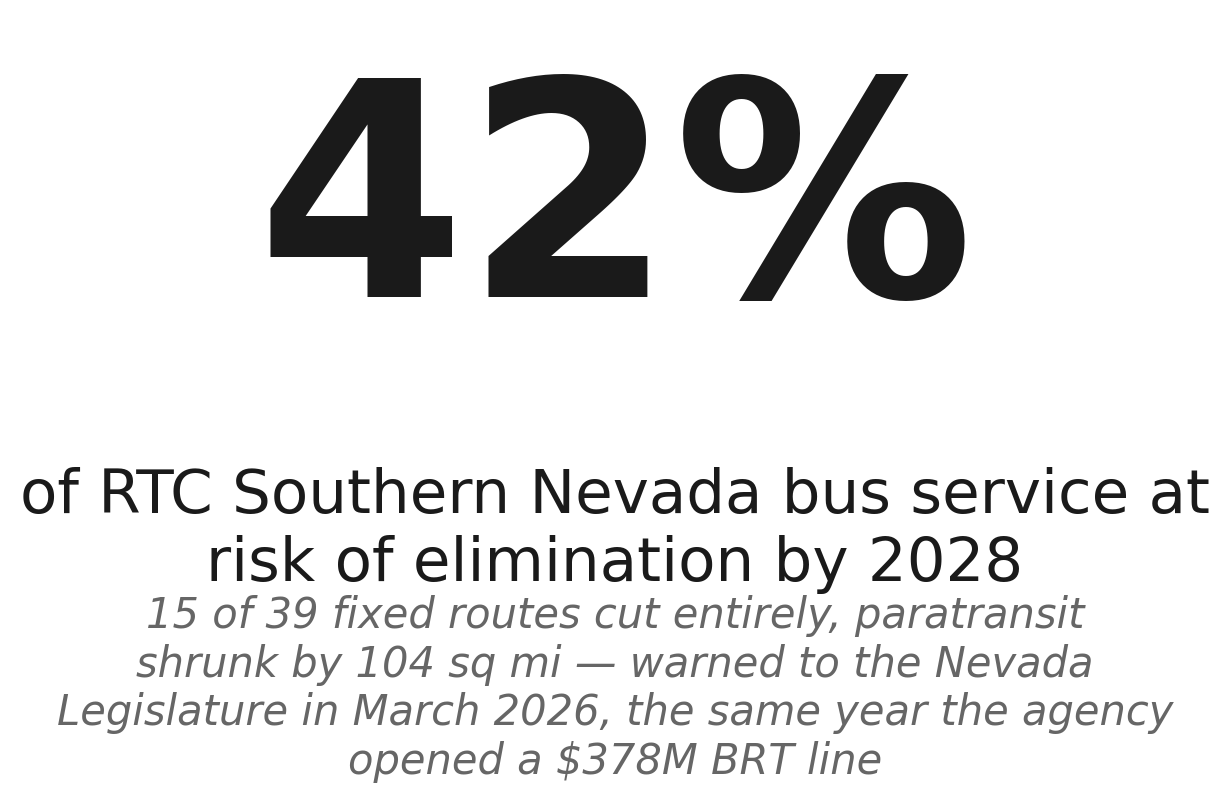
For Nevada specifically, the stakes of that expiration are amplified by a structural constraint no other factor can fix. The state's motor fuel tax is constitutionally restricted to highway purposes and cannot be redirected to transit operations. RTC Southern Nevada carries $282 million or more in active federal transit grants across eleven awards, the largest single-agency concentration in the regional dataset, but it cannot use capital dollars to keep buses running. In March 2026, CEO M.J. Maynard-Carey told Nevada legislators that without a new local revenue source, the agency would cut 15 of 39 fixed routes entirely by 2028, partially retract 22 more, and shrink paratransit coverage by 104 square miles. That is 42% of bus service, in a county of 1.14 million people, in a desert metro where most of the 57.9 million annual riders have no alternative.
The procurement numbers visible right now reflect a system spending federal capital money with urgency and precision. What they cannot show is what comes after. On September 21, 2026, FTA closes applications for a $610 million FY26 Buses and Bus Facilities and Low-No Emission notice of funding opportunity, a program Nevada agencies have competed in successfully before. Whether those applications succeed, and whether Congress produces a reauthorization bill before October 1, will determine whether the current surge represents a transition to a more robust network or a final sprint before a significant contraction. The next signal to watch is not another RFP. It is what the Nevada Legislature does about local transit revenue before the 2027 session closes.