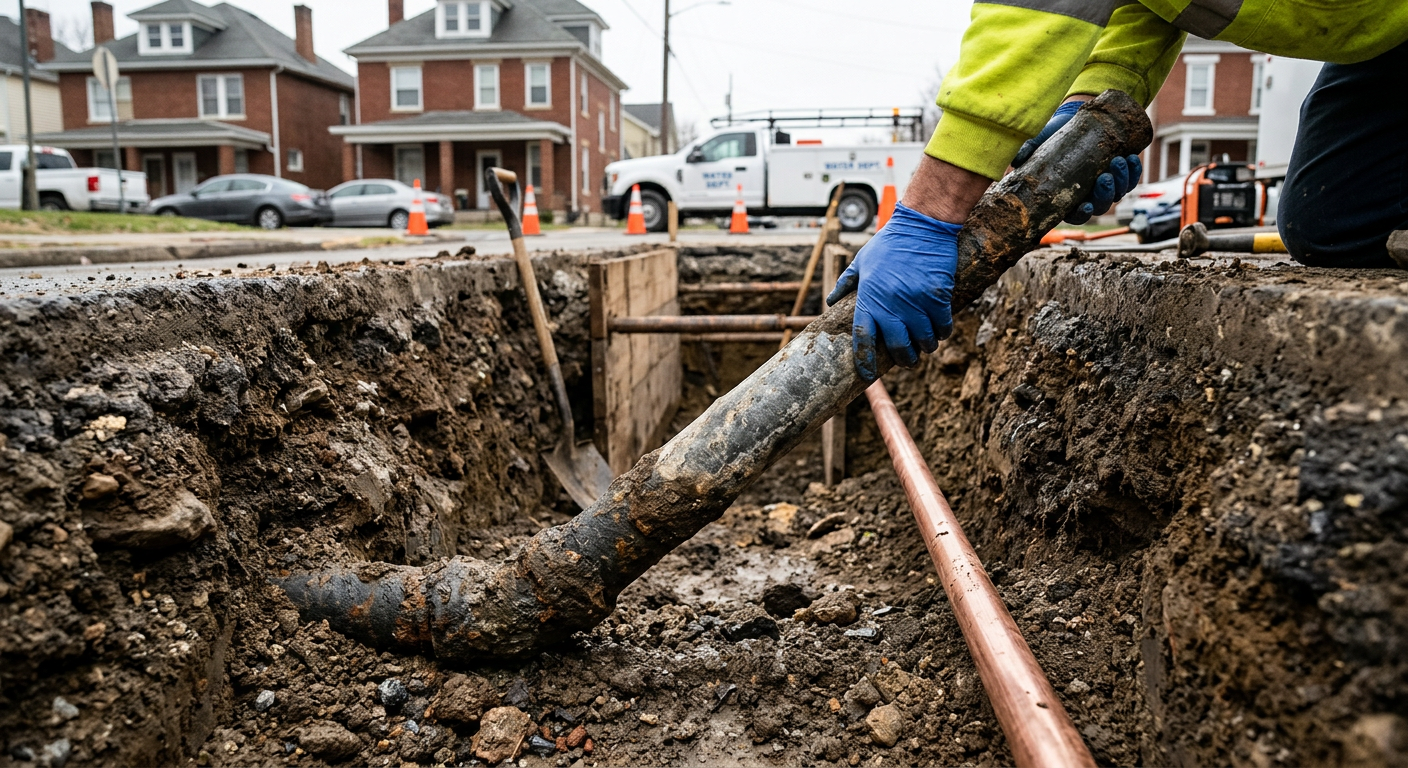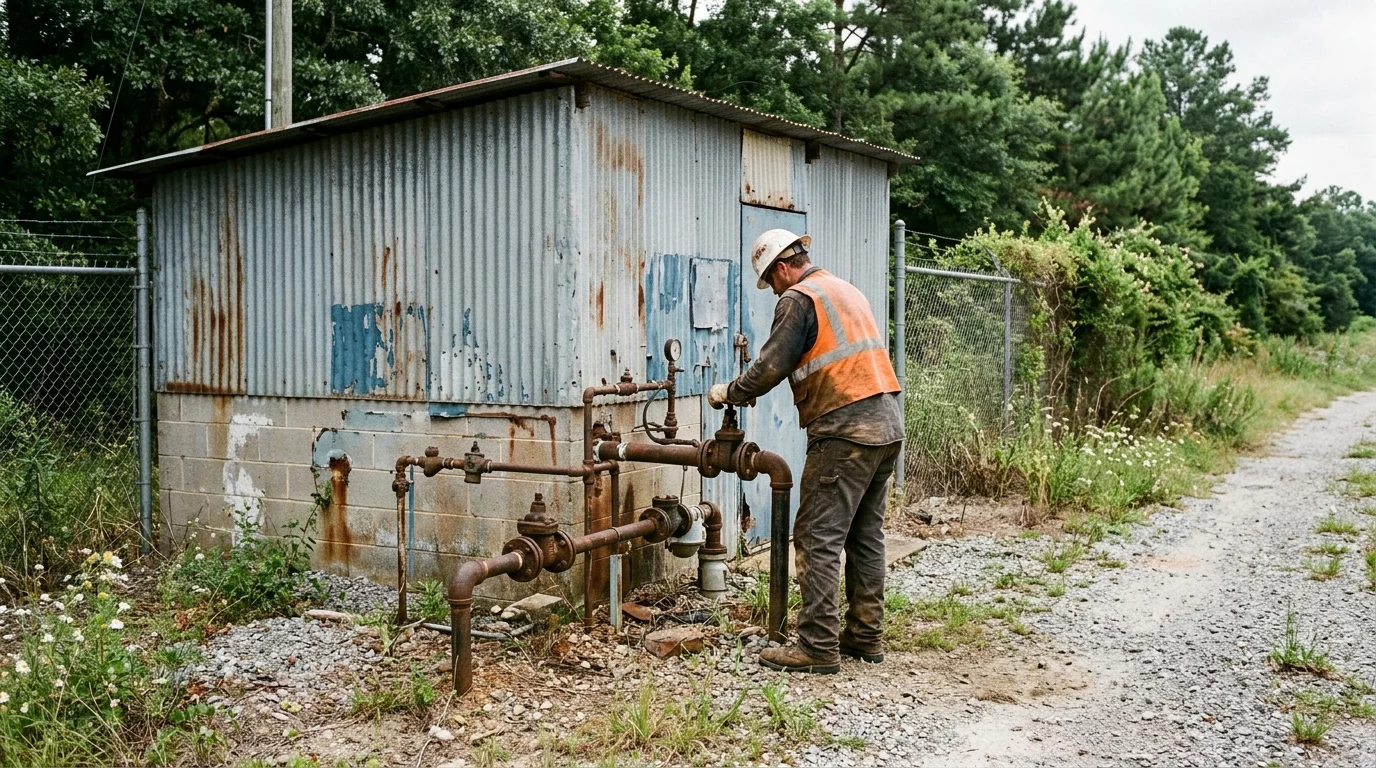
Wadley, Georgia has 1,549 residents, one stoplight, and, as of July 26, 2026, an active engineering RFQ titled "Engineering Services For Clean Water Infrastructure Resilience Projects." It is the clearest signal yet that $493 million in post-Hurricane Helene federal water money has finally reached the smallest communities in the state, and that they are now racing a hard deadline to spend it.
Five Georgia institutions issued water infrastructure RFPs in the trailing 30 days after issuing none in the prior 12-plus months. The cohort spans an enormous size range, from Cobb County (pop. 275,746) seeking fire hydrant parts to Wadley, a Jefferson County town smaller than most Georgia high schools. But the most instructive cases are the smallest three: Forsyth (pop. 5,027), Wadley (pop. 1,549), and Bulloch County. Their RFQ titles and explicit grant citations directly echo the language of GEFA's Hurricane Helene Resilience Funding program, "Clean Water Infrastructure Resilience Projects," "GEFA WIIF Grant Program", in ways that routine capital maintenance procurements simply do not.
The mechanism is specific. Congress's American Relief Act, passed in December 2024, directed more than $3 billion in supplemental Clean Water and Drinking Water State Revolving Fund disaster relief nationally; Georgia's share exceeded $493 million. GEFA opened a formal Hurricane Helene Resilience Funding call for projects with a deadline of December 31, 2025, bundling CWSRF, DWSRF, and a new Helene-specific tranche. The program targets FEMA-designated public assistance areas, counties hit hardest by the September 2024 flooding that damaged water and wastewater systems across northwest and central Georgia.
The procurement trigger is embedded in the program's rules. GEFA requires all Helene Resilience Funding recipients to complete a qualifications-based engineering selection process regardless of project cost. For a town like Wadley, that requirement is not a formality: it mandates a formal RFQ that many small Georgia municipalities have no institutional template for. The wave of first-time engineering procurements now appearing in the data is, in a direct sense, a compliance artifact, federal money arriving with paperwork requirements attached.
Forsyth illustrates the pace. The Monroe County seat, with just over 5,000 residents, issued two separate RFQs in a single week, one of them explicitly naming the GEFA WIIF grant program as the funding source. That kind of back-to-back procurement from a town of that size is unusual under any circumstances; under normal capital planning cycles, it would not happen at all. The implication is that Forsyth's engineering selection deadlines are being driven by grant timelines, not by the town's own budget calendar.
Georgia has over 500 incorporated municipalities, and a significant share of them are small rural towns with minimal procurement infrastructure, places that hire engineers by phone call, if they hire them at all. The Helene Resilience Funding program, by requiring formal qualifications-based selection, is in practice asking those towns to build a procurement muscle they may never have exercised. The five RFPs now visible in the data are likely an early signal, not a ceiling. GEFA's active DWSRF portfolio stands at $368 million obligated across 11 active grants; its CWSRF portfolio adds another $141 million across 7 grants, roughly $509 million in active federal capital now moving toward project-level execution.
The broader GEFA pipeline reinforces the scale. In March 2026, GEFA awarded $34.3 million in WIIN Act grants to 16 Georgia communities for drinking water upgrades and PFAS compliance. In May 2025, it approved $82 million in water infrastructure loans to 14 communities, with FY2026 loan program limits set at $275 million (Georgia Fund), $120 million (CWSRF), and $90 million (DWSRF). Communities that received loan or grant commitments in that earlier cycle are the natural next cohort to issue engineering RFPs, meaning the current five-institution count could grow substantially before the end of summer.
For residents in affected counties, the practical change is straightforward: the water and wastewater systems that took on damage or deferred maintenance after Helene are now moving toward contracted engineering work. What to watch next is whether communities that received GEFA commitments in the May 2025 and March 2026 rounds follow Wadley and Forsyth into formal procurement, and whether GEFA's December 2025 project deadline produces a second procurement surge as communities scramble to get engineering contracts in place before funding eligibility closes.