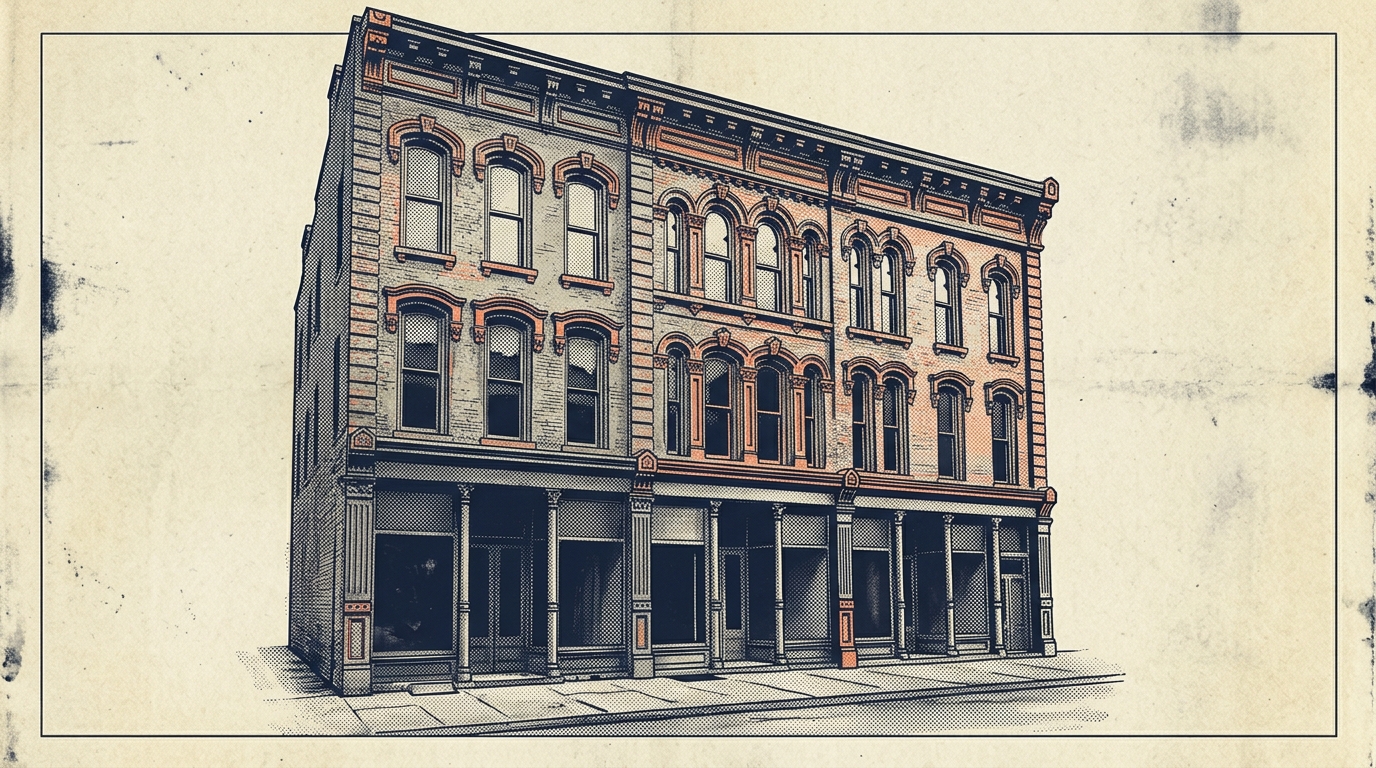
Beverly, Massachusetts is moving to sell a long-vacant historic building at the center of its downtown commercial corridor, handing off the Rogers Building to a private developer in hopes of finally returning the Cabot Street landmark to productive use.
The Rogers Building, which spans 218-226 Cabot Street, has sat empty as a visible reminder of the vacancy problem that has dogged Beverly's traditional Main Street even as the city of roughly 43,000 has worked to attract new restaurants and retailers to the neighborhood. The city now owns the property outright and is seeking a buyer willing to take on a full rehabilitation.
The challenge is a familiar one for historic commercial buildings across New England: bringing aging 19th- and early 20th-century storefronts up to modern building codes and accessibility standards often requires capital investment that's hard to justify on rents alone. Developers who take on projects like this typically piece together financing from multiple sources, including the Massachusetts Historic Tax Credit program and the federal Historic Tax Credit, to make the numbers work. Cities like Salem, Lowell, and Haverhill have used similar disposition strategies to catalyze downtown revivals, with mixed results depending on market conditions and the appetite of local developers.
Beverly has some genuine advantages in making this work. The city sits about 25 miles north of Boston with commuter rail service to downtown Boston, and its demographics, with median household income above the state average, suggest demand for the kind of upscale mixed-use development that has worked in neighboring Salem. Mayor Michael Cahill, who has led the city since 2008, has made downtown investment a stated priority, and Beverly has earned a Housing Choice Community designation from the state for its efforts to encourage new housing production. Residential units above ground-floor commercial space has become the standard formula for historic downtown rehabs across the North Shore.
Still, the Rogers Building will test whether that formula holds in a market where parking remains a persistent political flashpoint and where downtown Beverly continues to compete with both Salem's tourism-driven revival and suburban retail options. The city's decision to pursue a full sale rather than a lease or renovation contract suggests officials have concluded that private ownership, with the right conditions attached, offers the clearest path to a long-term fix.
What those conditions will look like, and who steps forward to meet them, will become clear as the city reviews responses to its solicitation posted through the Beverly municipal procurement portal.