Manatee County, Florida is moving to restore oyster reefs along its Gulf Coast shoreline, betting on a centuries-old shellfish to do what concrete seawalls cannot: filter polluted water, rebuild habitat, and absorb the energy of incoming storm surge.
The county posted a request for restoration contractors this week, framing the project around both ecological recovery and hurricane resilience. Specific budget figures, acreage targets and site locations were not publicly listed in the posting.
The timing reflects years of compounding damage to Manatee County's waterways. In March 2021, roughly 215 million gallons of polluted wastewater spilled from the Piney Point phosphate plant in Palmetto into Tampa Bay, triggering massive fish kills and stripping oxygen from the estuary. Red tide blooms in 2018 and 2021 fouled the county's beaches. Then Hurricanes Ian in 2022 and Idalia in 2023 exposed how little buffer the county's coastline offers against storm surge, a lesson reinforced again by Hurricanes Helene and Milton in 2024.
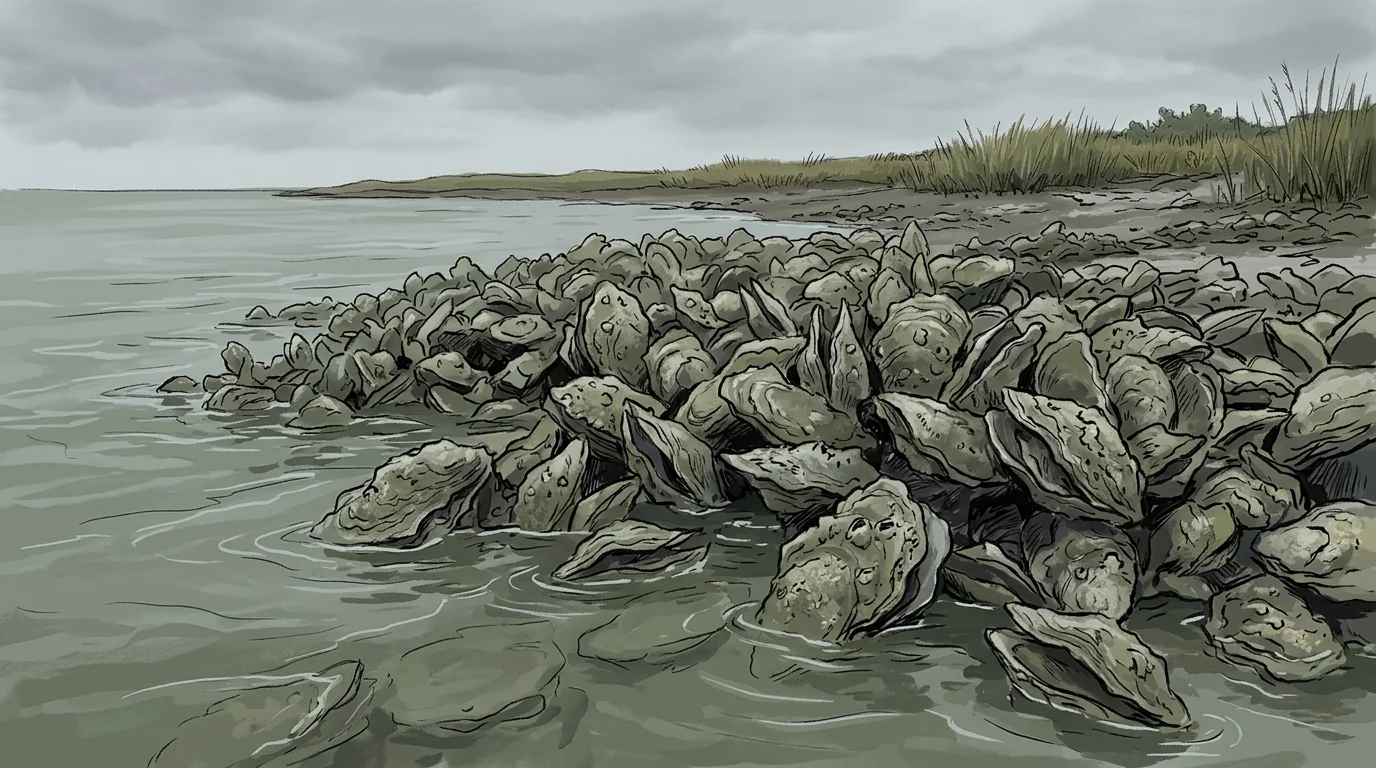
Oyster reefs address several of those problems at once. A single adult oyster filters up to 50 gallons of water per day, pulling out the excess nitrogen and phosphorus that feeds algae blooms and red tide. The reefs also reduce shoreline erosion and attenuate wave energy during storms, functioning as what coastal managers call a "living shoreline." Unlike a seawall, a healthy reef repairs itself.
Florida has lost an estimated 85% of its historic oyster reefs since the early 1900s, a collapse driven by overharvesting, dredging, pollution and freshwater diversion. The scale of that loss became undeniable in 2020, when state officials shut down Apalachicola Bay, once the source of 90% of Florida's oysters, after the fishery collapsed entirely. That moratorium remains in place.
For Manatee County, the push fits within a broader regional effort. Both the Tampa Bay Estuary Program and the Sarasota Bay Estuary Program have prioritized oyster reef rebuilding in their management plans, and federal funding through NOAA's Restoration Center has backed similar projects across the Gulf Coast. As we've reported previously, local restoration advocates have been pushing for this kind of investment since the Piney Point disaster.
How much reef the county plans to build, and where along its coastline the work will be focused, should become clearer once a contractor is selected and project details are finalized.