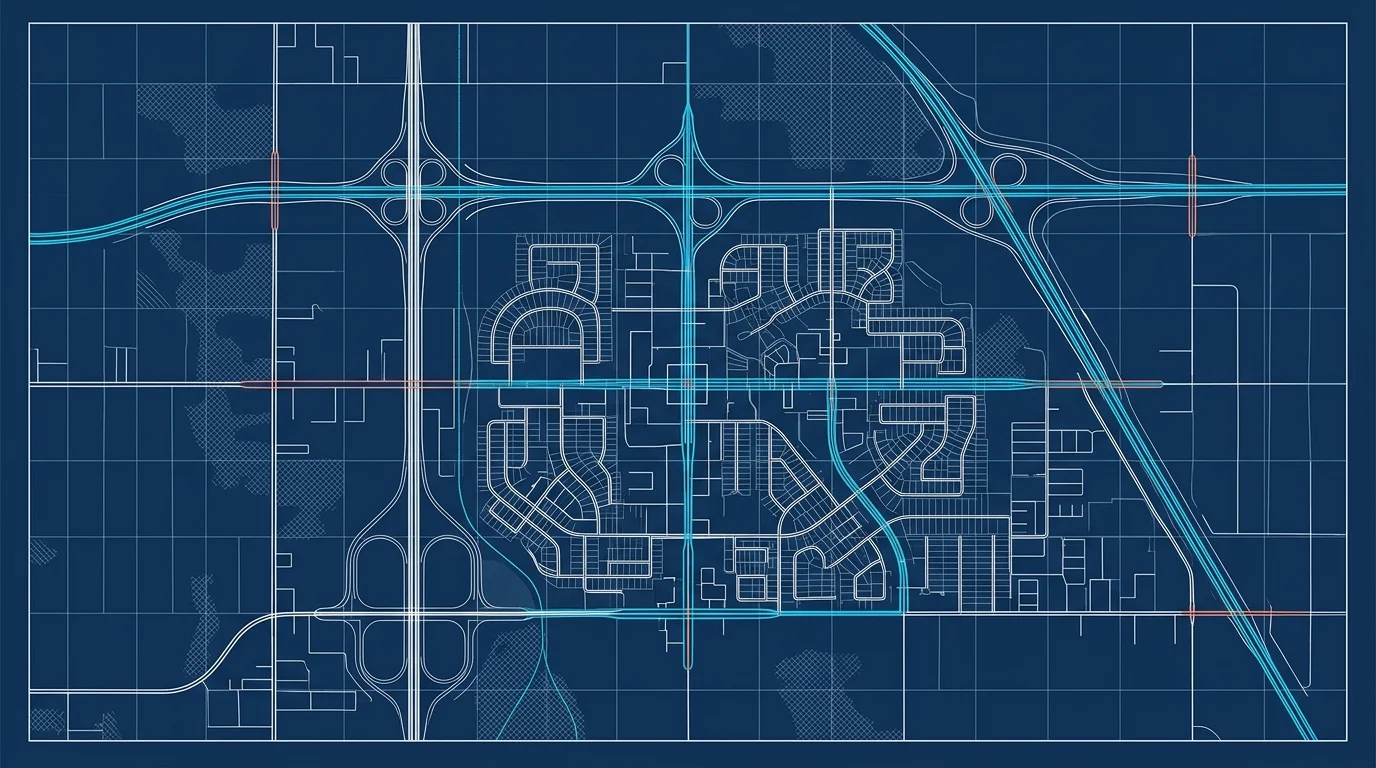
Hesperia, California has some of the hallmarks of a dangerous place to walk: wide, high-speed arterials built for desert driving, limited sidewalks, and a road network that largely reflects decades of sprawl-era planning. Now the fast-growing San Bernardino County city is using $1.58 million in federal funding to take a hard look at where people are getting hurt and why.
The money comes from the Safe Streets and Roads for All program, a federal initiative created under the 2021 Bipartisan Infrastructure Law that pushes communities to adopt Vision Zero, a framework built on the idea that traffic deaths are preventable rather than inevitable. Hesperia will use the grant to develop a Vision Zero Action Plan and Complete Streets Plan, and to conduct baseline safety analysis including traffic surveys, crash data review, and safety audits to identify the highest-risk corridors in the city.
The stakes are real. San Bernardino County ranks among California's worst counties for per-capita traffic fatalities, and the High Desert subregion, which includes Hesperia, Victorville, and Apple Valley, faces particular challenges. Its major roads were designed to move cars quickly, not to protect people walking across them. Hesperia's population has roughly doubled since 2000, now approaching 99,000 residents, but infrastructure investment hasn't kept pace with growth.
Nationally, pedestrian and cyclist deaths have climbed sharply over the past decade, driven by bigger vehicles, higher speeds, and roads that prioritize throughput over safety. The U.S. recorded roughly 40,990 traffic deaths in 2023, a figure that remains far above pre-pandemic levels and two to three times higher per capita than in comparable wealthy countries.
This grant covers planning, not construction. The safety plans Hesperia produces will serve as the foundation for applying to future SS4A implementation rounds, which fund actual infrastructure projects like protected crosswalks, redesigned intersections, and traffic calming measures. Similar planning efforts have helped other car-dependent communities build a case for redesigning dangerous corridors, as [Corpus Christi did when it developed its first road safety plan](articles/corpus-christi-taps-federal-funds-to-build-its-first-road-safety-plan) using the same federal program.
Whether the plans lead to real changes on the ground is an open question. Transportation advocates have noted that federally funded safety studies sometimes sit on shelves without follow-through, particularly in communities that lack the staff capacity or political will to pursue implementation funding. How aggressively Hesperia pursues the next step will determine whether this investment translates into safer streets.