Federal electric vehicle and transit grants to Minnesota hit $45.3 million in the last 90 days, a 497% jump over the same window a year ago, and nearly all of it flows through a single award: an FTA State of Good Repair grant to the Metropolitan Council, the Twin Cities regional transit authority, dated September 10, 2026.
The number is striking, but the story behind it is about deadline pressure, not a steady policy ramp.
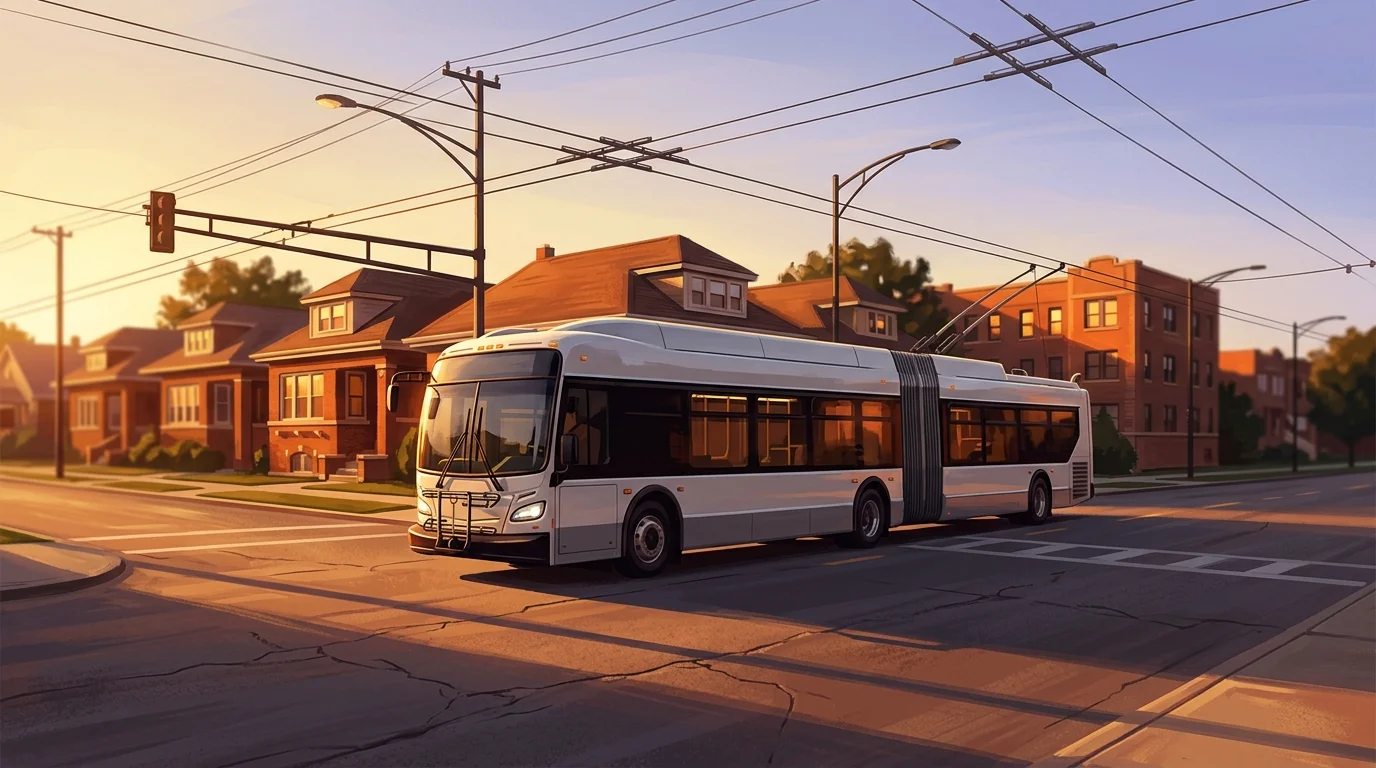
The grant, which runs through December 2029, funds rehabilitation and modernization of Metro Transit's fixed-guideway and bus infrastructure. It is one of three distinct federal programs now pouring money into Minnesota's electrification push, and it is the one that pushed this quarter's total into record territory. The prior-year comparison point, $7.6 million, came from a separate Low or No Emissions bus grant to the City of Rochester, a different program with a different purpose. The two figures measure different things, which makes the 497% headline both accurate and worth unpacking.
Source: NationGraph.
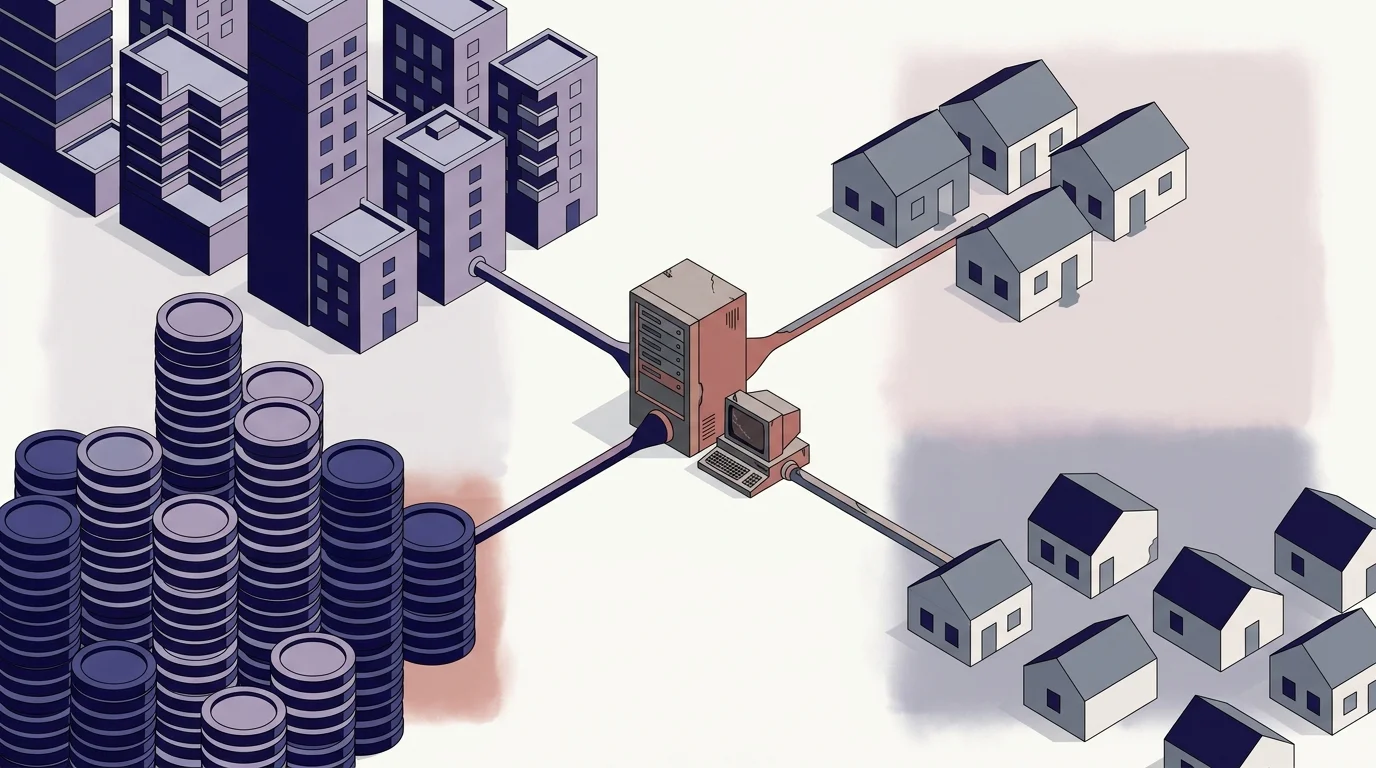
Here is the underlying machinery. Three separate Bipartisan Infrastructure Law programs are running simultaneously. The FTA State of Good Repair program (Section 5337) is formula-based and funds infrastructure upkeep for existing transit systems, including electrification-related upgrades. The Low or No Emissions program (Section 5339) is competitive and funds zero-emission bus purchases and supporting charging infrastructure. Metropolitan Council has already secured $147.5 million and $85.8 million in successive Low/No awards, both still disbursing. The third program, the NEVI Formula Program, is administered not by FTA but by FHWA through MnDOT, and it funds public DC fast-charging along designated highway corridors. These are not one program. They target different assets, different agencies, and different users.
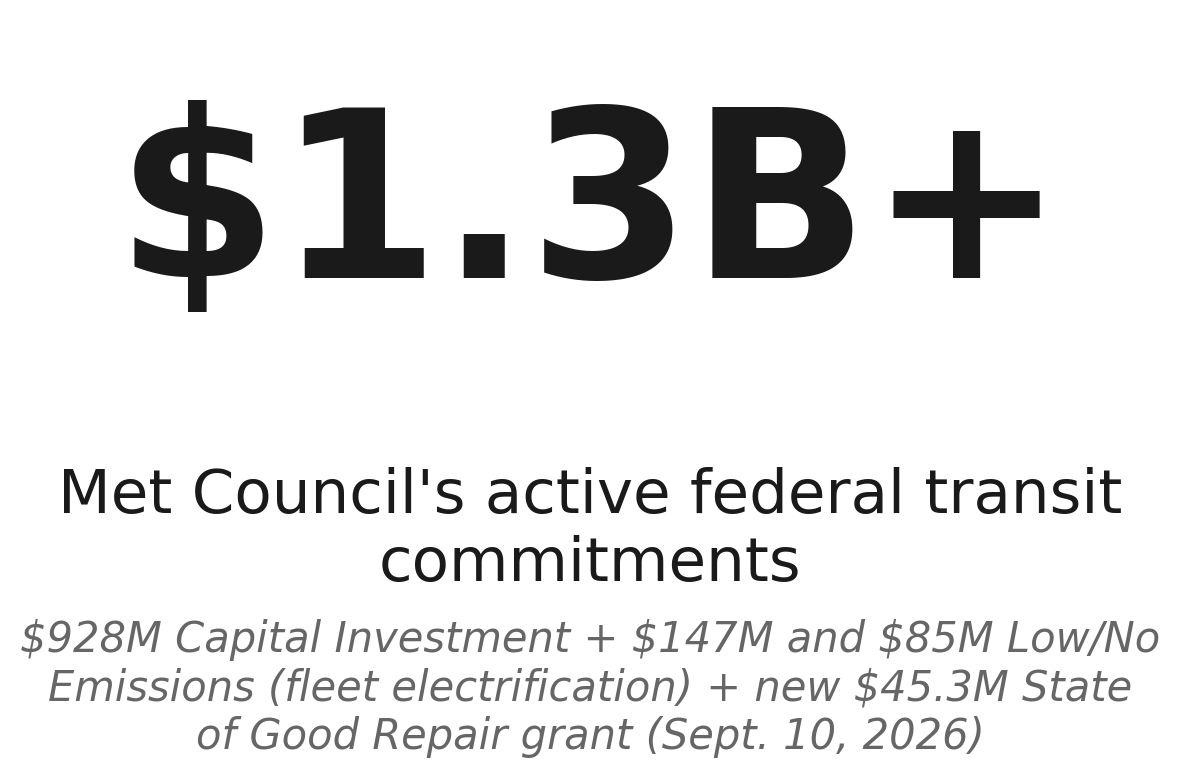
Combined, Metropolitan Council's active federal transit commitments now exceed $1.3 billion, including a $928 million Capital Investment grant for the Southwest Light Rail extension. The $45.3 million State of Good Repair award adds to a stack of obligations that makes the Twin Cities one of the most federally supported transit electrification markets in the country.
The urgency behind all of it is real. The NEVI program's statutory authorization under the Bipartisan Infrastructure Law expires at the end of federal fiscal year 2026, making this the last structured year for states to obligate their share of the original $5 billion. Minnesota's total NEVI allocation across the five-year program is approximately $68 million. Of that, $41.8 million was obligated through a STIP amendment in September 2025, after a protracted legal battle forced the federal government's hand.
That battle matters. The Trump administration froze NEVI program funds in February 2025, blocking obligations for nearly five months across 21 participating states. Minnesota was among the states that joined the multistate lawsuit, Washington v. U.S. DOT, that ultimately ended the freeze. On January 23, 2026, U.S. District Judge Tana Lin issued a permanent injunction restoring state access to the funds. As Electrek reported at the time, the ruling put billions in previously frozen charging infrastructure dollars back in motion.
But the court victory did not eliminate the risk. A pending FY2026 congressional appropriations bill would redirect $879 million in NEVI funds to other FHWA programs. If that transfer takes effect, states that have not yet fully obligated their allocations could lose access to the remaining pool. That is the fiscal gun behind Minnesota's acceleration. A Sierra Club Minnesota report from April 2026 noted that despite 2025 being the most productive year in the NEVI program's history, the vast majority of funding still remained unspent nationally.
MnDOT has run two competitive RFP rounds for fast-charging along three Alternative Fuel Corridors, Interstate 94, Interstate 90, and Interstate 35, with 24 locations in pre-construction or construction as of early 2026. That physical buildout represents the public-facing side of the federal dollars; the Metropolitan Council grants are more about the transit fleet and infrastructure serving daily riders in the seven-county metro.
For Minnesotans, the practical effect is this: the federal dollars currently funding EV charging and electric bus infrastructure carry most of the state's EV policy weight right now. The state's $15 million EV rebate program, passed in 2023, has been fully exhausted. Federal EV purchase tax credits expired September 30, 2025. The infrastructure grants are what remain.
The next signal to watch is the FY2026 appropriations outcome in Congress. If the $879 million NEVI transfer survives the final spending bill, MnDOT will need to have obligated its remaining NEVI allocation before the reallocation takes effect. The Metropolitan Council's September 2026 grant is already locked in. What is not yet settled is how much of the highway charging buildout Minnesota can finalize before the authorization window closes for good.