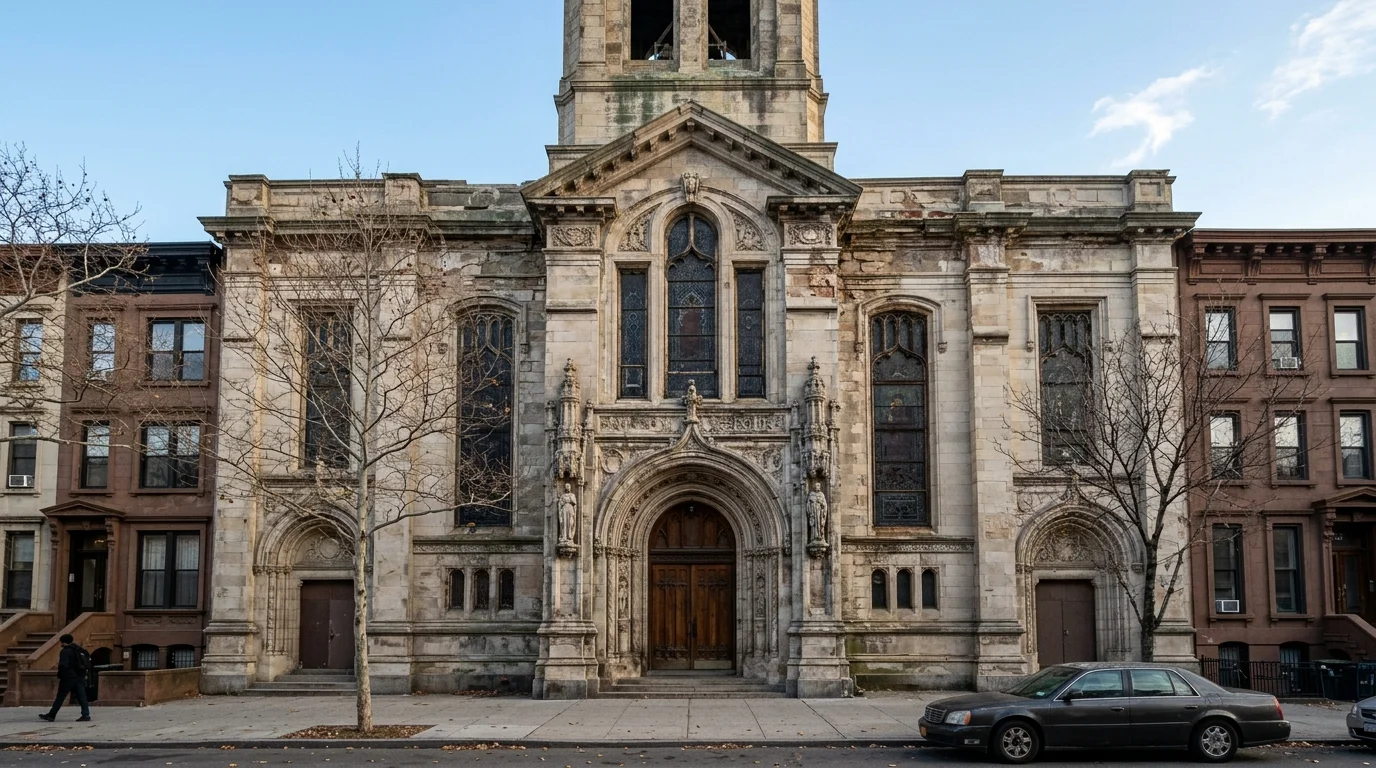
Harlem is moving to restore what is believed to be its oldest church, a project that arrives as historic Black congregations across the neighborhood grapple with shrinking memberships, crumbling buildings, and relentless pressure from one of the most intense real estate markets in the country.
The specific church and contract value weren't publicly visible without a login to the New York State Contract Reporter, where the project was posted on Oct. 2, 2026. The most commonly cited candidate for Harlem's oldest church is Elmendorf Reformed Church, founded in 1660 as the Reformed Low Dutch Church of Harlem, more than a century before American independence. Several other congregations, including Mother AME Zion (founded 1796) and St. Andrew's Episcopal (1829), also hold historical claims to the neighborhood.
Whatever the specific building, the restoration fits into a broader crisis playing out block by block across Harlem. Many of the neighborhood's grandest church buildings were constructed in the late 19th and early 20th centuries and were passed to Black congregations during the Great Migration, when Harlem became the cultural capital of Black America. Those buildings are now 100 to 150 years old, and the deferred maintenance bills, aging roofs, crumbling masonry and failing mechanical systems have grown into the millions. Meanwhile, the congregations sustaining them have thinned dramatically. Harlem's Black population share dropped from over 87% in 1990 to roughly 54% today as gentrification pushed longtime residents out and median home prices more than tripled.
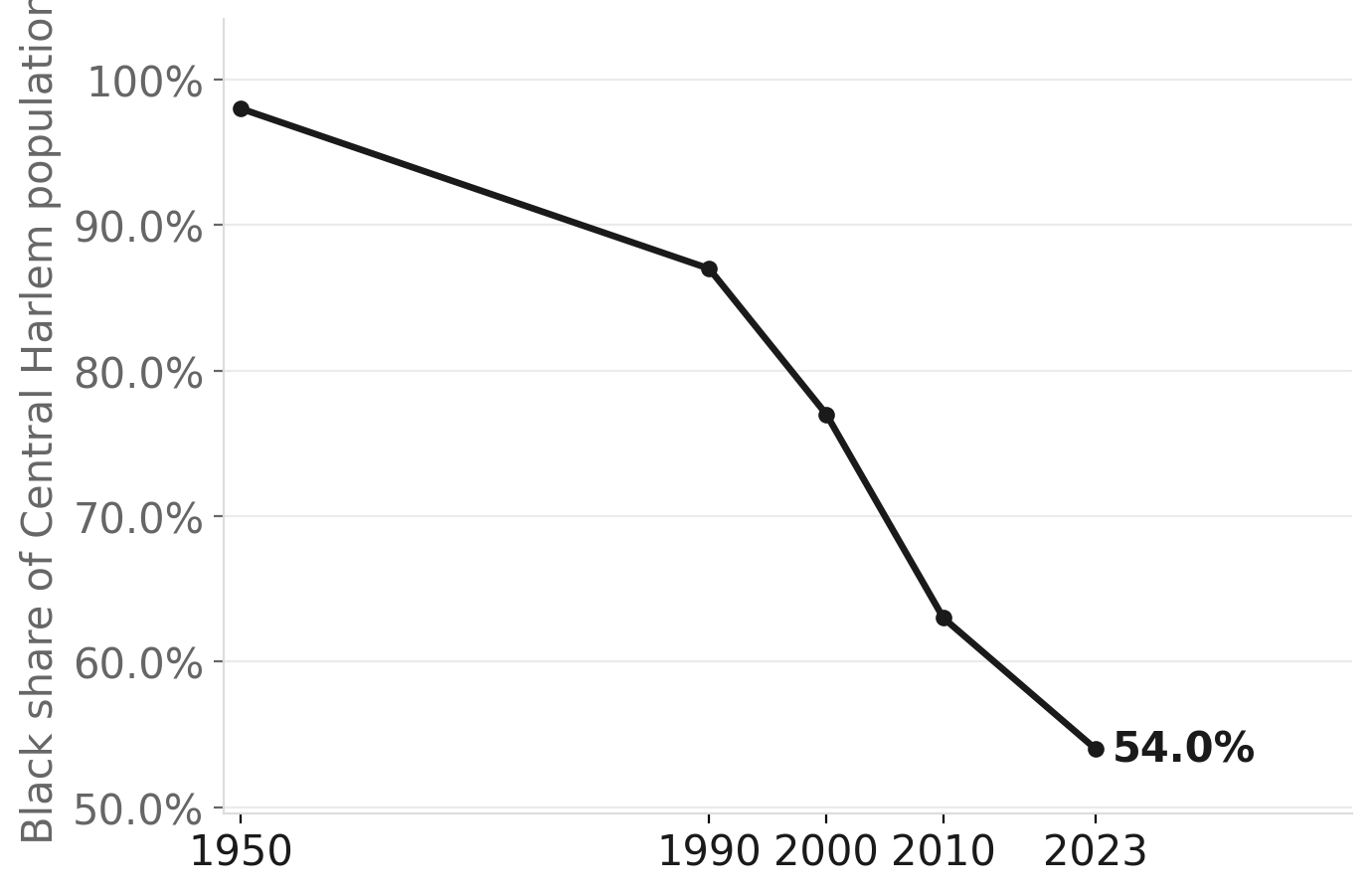
Source: NationGraph.
The result has been a wave of sales, demolition threats and condo conversions that advocates describe as irreversible. When a historic church sells, it rarely comes back. These buildings serve not just as places of worship but as anchors of neighborhood life, housing food pantries, senior programs, after-school services, and community gathering space that few other institutions in a gentrifying neighborhood can replicate.
New York State has responded with expanded preservation funding, including the NY Landmarks Conservancy's Sacred Sites program, which has directed more than $14 million to religious properties since 1986. The posting through the state contracting system suggests state funding is backing the effort.
The specific timeline for the restoration and a contractor selection will become clearer once the procurement process concludes. The full project details are available to registered users through the New York State Contract Reporter.